




Modelling in Mathematical Programming : Methodology and Techniques
This book provides basic tools for learning how to model in mathematical programming, from models without much complexity to complex system models. It presents a unique methodology for the building of an integral mathematical model, as well as new techniques that help build under own criteria. It allows readers to structure models from the elements and variables to the constraints, a basic modelling guide for any system with a new scheme of variables, a classification of constraints and also a set of rules to model specifications stated as logical propositions, helping to better understand models already existing in the literature. It also presents the modelling of all possible objectives that may arise in optimization problems regarding the variables values. The book is structured to guide the reader in an orderly manner, learning of the components that the methodology establishes in an optimization problem. The system includes the elements, which are all the actors that participate in the system, decision activities that occur in the system, calculations based on the decision activities, specifications such as regulations, impositions or actions of defined value and objective criterion, which guides the resolution of the system.
كتب مشابهة

Global perspectives on AI, ethics, and business economics : Charting the future
Offers an in-depth exploration of the complex and rapidly evolving world of artificial intelligence (AI), focusing on its ethical, economic, and business dimensions. it provides a comprehensive analysis that intertwines historical context, philosophical ethics, global economic impacts, regulatory landscapes, workforce dynamics, corporate governance, consumer behavior, data ethics, and the use of AI for the good of society. after reviewing the evolution of AI, it offers insights into its historical milestones and the trajectory it may take in the future. this sets the stage for a broader discussion on how AI is not just a technological phenomenon but also a catalyst for ethical, economic, and societal transformation. the book emphasizes the importance of understanding AI’s historical development in order to gauge its potential impacts on our future.

Factors influencing the readiness of adoption of ISSB standards in Syrian companies : An applied Study at Damascus securities exchange
Aims to identify the main factors influencing this readiness, with particular emphasis on the relationship between company size and profitability and the preparedness to implement these standards. Data was collected from a sample of companies listed on the Damascus Securities Exchange, and the analysis was conducted using logistic regression to understand the impact of various factors. The findings of this study will provide valuable insights for policymakers, corporate leaders, and stakeholders on the critical role of company size and profitability in the adoption of ISSB standards.
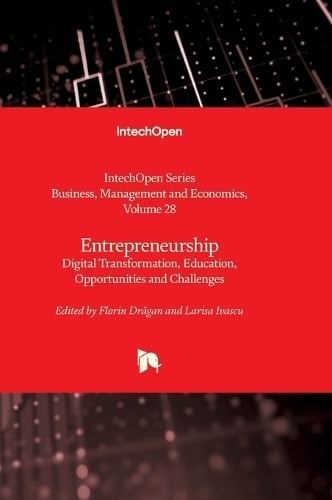
Entrepreneurship : Digital transformation, education, opportunities and challenges ; Vol. 28
Digital transformation and artificial intelligence play an important role in entrepreneurship. this book adopts a multidisciplinary approach to entrepreneurship, exploring how entrepreneurial processes contribute to developing new products and services and innovative business models. recent shifts in business models focus on digital transformation and well-being. entrepreneurship is evolving with innovative approaches, and artificial intelligence is revolutionizing marketing strategies and market engagement. this volume presents a comprehensive overview of entrepreneurship, digital transformation, and entrepreneurial education.

Digital project management strategic theory and practice ; Vol 31
Foundational resource for courses on digital project management methods, offering step-by-step guidance and real-world examples. It provides actionable insights into implementing digital tools in project management studies, from data collection to visualization. The book also highlights the role of strategic theory and practice in project management strategic decision-making across project planning, execution, monitoring and control management.
