




Manufacturing Execution Systems - MES
The production plants of today develop into modern service centers. Economic efficiency of modern added value is not a property of products alone but of the process. Decisive potential in business now is a question of process capability, rather than production capability. Process capability in business requires real-time systems for optimization. Business-IT needs to be developed from telecommunications and ERP to real time services, which are not offered by the prevailing ERP systems. Today, only modern Manufacturing Execution Systems (MES) offer real-time applications. They generate current as well as historic mappings of production facilities and thus they can be used as basis for optimizations. It is important to map the supply chain in real time. Increasing complexity in production requires an integrated view of the production and service facilities: detailed scheduling, status collection, quality, performance analysis, tracing of material and so on have to be recorded and displayed in an integrated way.
كتب مشابهة
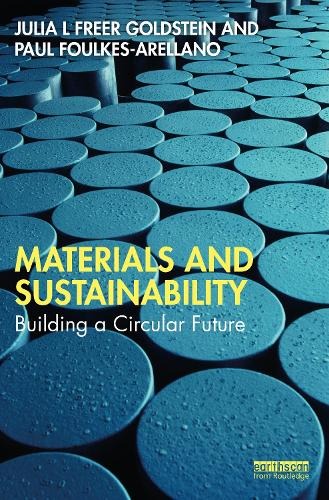
Materials & sustainability building a circular future
Examines sustainable manufacturing, from the extraction of materials to processing, use, and disposal, and argues that significant changes in all of the above are needed for the world to progress toward a more circular economy. Materials and processing methods are usually chosen with performance as the key metric.

Composite materials : sustainable and eco-friendly materials and application
Covers innovations in the field of composite materials with a specific focus on eco-friendly and environmentally sustainable systems. All composite fields are explored, including polymer, metal, and ceramic matrix composites with an emphasis on sourcing raw materials in a sustainable way as well as the development of composite materials for environmental sustainability.

Building construction methods and systems : principles, requirements and application details
Presents practical information about the design and construction of building projects by addressing the principles of each method, unveiling background factors for requirements, and state-of-the-art application details, and presents general design and application principles of construction methods and technologies without diving into engineering calculations and formulas to keep the content easily understandable by all AEC practitioners and participants.
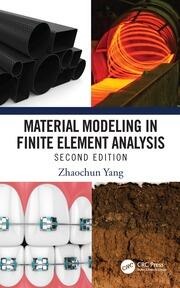
Material Modeling in Finite Element Analysis
Presents some specific problems including the metal-forming process, combustion room, Mullins effect of rubber tires, viscoelasticity of liver soft tissues, small punch test, tunnel excavation, slope stability, concrete slump test, orthodontic wire, and piezoelectric microaccelerometer.
