


تحسين النتائح
ترتيب حسب
من
الى

Avalanches, debris, mudflows and landslides are common and natural phenomena that occur worldwide, predominantly in mountainous regions. With an emphasis on snow avalanches, this book sets out to provide a survey and discussion about the motion of avalanche-like flows from initiation to run out. An important aspect of this book is the formulation and investigation of a simple but appropriate continuum mechanical model for the realistic prediction of geophysical flows of granular material. This will help the practitioners in the field to better understand the physical input and provide them with a tool for their work. Originating from many lectures the authors have given over the years, this instructive volume brings the reader to the forefront of research - an aim also supported by an extensive bibliogrpahy of almost 500 entries.
The purpose of this book is to address the challenging problem of Autonomous Navigation in Dynamic Environments, and to present new ideas and approaches in this newly emerging technical domain. The book surveys the state-of-the-art, discusses in detail various related challenging technical aspects, and addresses upcoming technologies in this field. The aim of the book is to establish a foundation for a broad class of mobile robot mapping and navigation methodologies for indoor, outdoor, and exploratory missions.Three main topics located on the cutting edge of the state of the art are addressed, from both the theoretical and technological point of views: Dynamic world understanding and modelling for safe navigation, Obstacle avoidance and motion planning in dynamic environments, and Human-robot physical interactions. Several models and approaches are proposed for solving problems such as Simultaneous Localization and Mapping (SLAM) in dynamic environments, Mobile obstacle detection and tracking, World state estimation and motion prediction, Safe navigation in dynamic environments, Motion planning in dynamic environments, Robust decision making under uncertainty, and Human-Robot physical interactions.
This collection of peer reviewed papers represents a concise, up-to-date summary of our current knowledge of planetary boundary layer (PBL) physics and parameterization. As such, it makes a major contribution to the interchange of knowledge and ideas between physicists, meteorologists and environmental modellers and sets out the course to be followed in subsequent research to improve PBL parameterizations in climate, numerical weather prediction, air quality, and emergency preparedness models. Major themes covered are: Nature and theory of turbulent boundary layers, Boundary layer flows - modelling and applications to environmental security, Nature, theory and modelling of boundary-layer flows, and Air flows within and above urban and other complex canopies - air-sea-ice interactions.
Petroleomics is the prediction of all properties of petroleum based on the Petroleome, or complete listing of all components in a given crude oil. As it is developed, petroleomics will lead petroleum science into a bright new future, and it is the major focus of this book. A necessary step has been to resolve the molecular size and structure of asphaltene and its hierarchical aggregate structures, as well as the dynamics of asphaltenes. This is especially important for heavy oils. Flow assurance concerns and interfacial science are also treated. The technological development of downhole fluid analysis addresses the most important issues in deepwater production of oil.
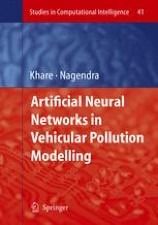
Artificial neural networks (ANNs), which are parallel computational models, comprising of interconnected adaptive processing units (neurons) have the capability to predict accurately the dispersive behavior of vehicular pollutants under complex environmental conditions. This book aims at describing step-by-step procedure for formulation and development of ANN based VP models considering meteorological and traffic parameters. The model predictions are compared with existing line source deterministic/statistical based models to establish the efficacy of the ANN technique in explaining frequent dispersion complexities in urban areas. The book is very useful for hardcore professionals and researchers working in problems associated with urban air pollution management and control.
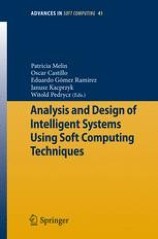
This book comprises a selection of papers from IFSA 2007 on new methods for analysis and design of hybrid intelligent systems using soft computing techniques. Soft Computing (SC) consists of several computing paradigms, including fuzzy logic, neural networks, and genetic algorithms, which can be used to produce powerful hybrid intelligent systems for solving problems in pattern recognition, time series prediction, intelligent control, robotics and automation. Hybrid intelligent systems that combine several SC techniques are needed due to the complexity and high dimensionality of real-world problems. Hybrid intelligent systems can have different architectures, which have an impact on the efficiency and accuracy of these systems, for this reason it is very important to optimize architecture design. The architectures can combine, in different ways, neural networks, fuzzy logic and genetic algorithms, to achieve the ultimate goal of pattern recognition, time series prediction, intelligent control, or other application areas.

Numerical weather prediction is receiving increased attention as weather forecasters aim to improve the numerical models used to forecast the weather. This is a textbook on global spectral modeling, which is an important component for global weather forecasts at numerous operational centers. This book covers all areas of model development including numerical analysis, treatment of clouds, mountains, radiation, precipitation processes, and the surface layers over land and the ocean. The objectives of this book are to provide a systematic and sequential background for students, researchers, and operational weather forecasters in order to develop comprehensive weather forecast models. This is designed for a one semester introductory graduate level course on weather prediction methodologies. As a prerequisite it requires a basic background in meteorology, applied mathematics, and numerical analysis.
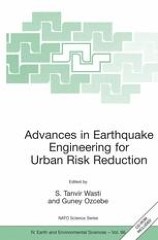
It is the vulnerable buildings - liable to cause damage and loss of life - that need immediate attention and urgent appraisal in order to decide if structural rehabilitation and upgrading are feasible. Current economic, efficient and occupant-friendly rehabilitation techniques vary widely and include the application either of precast concrete panels or layers, strips and patches of fiber reinforced polymers (FRP) in strategic locations. The papers in this book, many by renowned authorities in earthquake engineering, chart new and vital directions of research and application in the assessment and rehabilitation of buildings in seismic regions. While several papers discuss the probabilistic prediction and quantification of structural damage, others present approaches related with the in-situ and occupant friendly upgrading of buildings and propose both economical and practical techniques to address the problem.

سوريا - اتستراد درعا - غباغب
+963-15 2050 - 15 860 380 /1/2/3 - 11 662 3900