


تحسين النتائح
ترتيب حسب
من
الى


This book provides a compendium of material properties, demonstrates several successful examples of bio-based materials’ application in building facades, and offers ideas for new designs and novel solutions. It features a state-of-the-art review, addresses the latest trends in material selection, assembling systems, and innovative functions of facades in detail. Selected case studies on buildings from diverse locations are subsequently presented to demonstrate the successful implementation of various biomaterial solutions, which defines unique architectural styles and building functions. The structures, morphologies and aesthetic impressions related to bio-based building facades are discussed from the perspective of art and innovation; essential factors influencing the performance of materials with respect to functionality and safety are also presented. Special emphasis is placed on assessing the performance of a given facade throughout the service life of a building, and after its end.

In the twentieth century bridge engineers have seen many changes. Advances in technology, materials and engineers understanding of structural behaviour and methods of analysis has presented opportunities for innovation and have led to increasingly sophisticated solutions to the basic problem of providing a bridge over an obstacle. However, despite these innovative technological changes, the masonry arch bridge has shown itself to be a durable, cost-effective structure, tolerant of its modern environment and out-performing many of its competitors.

The implementation of material flow management offers enterprises a high potential for realizing new economic competitive advantages. The eco-efficient optimization of material flows aims at reducing costs while simultaneously achieving long-term sustainability with regard to ecological and societal aspects. Knowledge of existing methods and the latest trends is a key prerequisite for successfully implementing, refining and disseminating material flow management approaches.

This book focuses on Switzerland-based medium-sized companies with a longstanding export tradition and a proven dominance in global niche markets. Based upon in-depth documentation and analysis of 36 Swiss companies over their entire history, an expert team of authors presents several parallels in the pathways and success factors which allowed these firms to become dominant and operate from a high-cost location such as Switzerland.
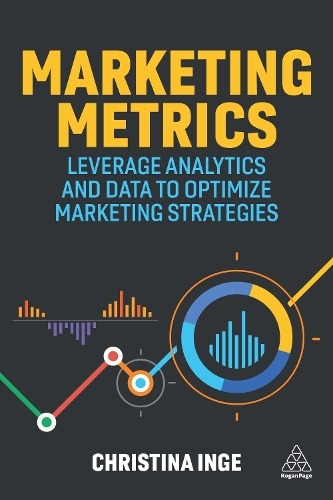
Featuring examples from a range of organizations including Coca-Cola and Mercedes-Benz, it shows how to create a strategy which leverages consumer data for customer-centric marketing, establishes the ROI of channels and campaigns, strengthens brands and creates data-driven product strategies. Covering the range of new global laws that impact consumer privacy and data collection and usage, Marketing Metrics shows how to use data in a non-invasive, secure and ethical way.

In this volume economists, ecology experts, geographers, agronomists, sociologist, and business experts come together to address marginality. The inter-disciplinary research offers conceptual innovations and presents the dimensions of marginality in developing countries. Economic, political, and environmental drivers are assessed and mapped globally and in detail for countries in Africa and Asia, especially Ethiopia, India, Bangladesh, China, Indonesia. Economic growth especially in rural areas remains and farming communities is central to poverty reduction but needs to be complemented with specific actions to reach those at the margins.
Chapters provide a valuable frame of reference for the 21st-century manager of public services by assessing the renewal of existing practices such as strategic costing, performance management, digitization and procurement and innovations in management practices, including branding, Lean Management, resilience and risk management. The book suggests that, as the management of public services is imbued with financial, social, economic and political uncertainties, management needs to be flexible and responsive to new ideas and practices to fulfil its purpose. This book ultimately supports the reflective manager, those who think about their job and are open to new ideas on how their job can be done better, by revisiting existing practices and examining innovations in public management.
Explores how organisations need to manage their innovation processes in order to compete in the global marketplace. Innovation is essential to the ongoing competitiveness of organisations but can be difficult to capture and disseminate. This book states that there needs to be guidelines about how to manage innovation in an organisational context. This includes focusing on different types of innovation from incremental to radical. This book will focus on ways to manage innovation from incorporating it into organisational practices to implementing it into beneficial partnerships.

Managing in the Information Economy: Current Research Issues presents the recent research directions that address the issue of management in this economy. The contributors include leading researchers with interests in a diverse set of topics. While the volume cannot give a complete and comprehensive picture, it can provide introductions to important areas, and point to some important topics for future research. Therefore the book begins with perspectives at the level of the economy as a whole and then progressively addresses industrial structure, sectors, functions (e-commerce) and business practices. Introductions to the main sections and the papers in each section are provided. The volume is organized around six sections: The Information Economy; Structure and the Organization of the Information Economy; Marketing and Ecommerce
Expands on the previous editions’ explorations of management essentials including handling stress, building diverse teams, running inclusive meetings, and how to lead in times of crisis. The education of a great leader never stops, and Lopp applies crucial insights to help continue your never-ending leadership education. Whether it is approaching a myriad of engineering personalities or handling unexpected conflict, you will come away with the wisdom to handle any team situation.
"Managing Global Innovation is a rich compendium of new concepts of global R&D, enlivened by 18 excellent best-in-class case studies. What is especially impressive, the authors bridge seamlessly theoretical and practical issues about how companies create, transform and implement new technology in an expanding marketplace. This will be intriguing to both the industry and the academic world. The lessons learned are invaluable. The book is a real tour de force, probably destined to become a standard in this field for some time to come." Professor Jeff Huang, Harvard University "This excellent book demonstrates how the dynamics of innovation and creativity can be mastered. Important reading for senior management and a must for R&D leaders."
The emergence of the Internet of Things (IoT), combined with greater heterogeneity not only online in cloud computing architectures but across the cloud-to-edge continuum, is introducing new challenges for managing applications and infrastructure across this continuum.
This book showcases examples of excellent manufacturing companies who have succeeded in creating value and job growth in Western Europe. The examples show managers of industrial firms how a clearly articulated strategic position can be combined with excellent execution to achieve competitiveness in Europe, in spite of the usually cited disadvantage of high labor costs and rigidity. Not every company is alike — strategic positions differ, and the means of execution differ, but what is common is a clear plan together with mobilization of all employees to apply their abilities in supporting this common plan. The book is indispensable reading for all managers that are interested in improving competitiveness.

Despite the innumerable number of p- lications and recommendations on innovation, competitive innovativeness is still a rare competency. The latest publication of UNICE – the European Industry - ganization representing 20 million large, midsize and small companies – speaks a clear language: Europe qualifies to roughly 60% (70%) of the innovation strength of the US (Japan).

This book focuses on the following questions: Which are the implications of different approaches towards management of systemic innovations? Do differences matter and why do they matter? The author shows that Europeans can learn from the Japanese and gives advice for future approaches to developments in the European telecommunications industry.
Throughout the past decade, the phenomenon of technological convergence has increasingly gained managerial attention. In this special form of technological change, the coming-together of previously distinct knowledge bases gives rise to the creation of new applications and business models. When such innovations emerge at the intersection of industries, the resulting creative destruction may exceed previously established industry boundaries. As a consequence, convergence does not only promise the creation of new value, but may imply significant disruptions to established industries. Based on investigating 26 firms within the ICT industry, this book highlights implications of the convergence phenomenon on firms’ innovation management practices, and derives strategic guidelines for building and sustaining business models beyond blurring industry boundaries.

In recent years the field of Corporate Social Responsibility (CSR) has impressively progressed. This has resulted in a number of tried and tested management models - models that have demonstrated added value in everyday organisational practice.
With the widespread transformation of information into digital form throughout society – firms and organisations are embracing this development to adopt multiple types of IT to increase internal efficiency and to achieve external visibility and effectiveness – we have now reached a position where there is data in abundance and the challenge is to manage and make use of it fully. This book addresses this new managerial situation, the post-digitalisation era, and offers novel perspectives on managing the digital landscape.

Management: Leading and Collaborating in a Competitive World is the perspective of a current or future manager and emphasizes six essential performance dimensions: cost, quality, speed, innovation, service, and sustainability. This bottom-line, results-oriented approach is a unique hallmark of this text. Leadership is also a vital theme and includes working collaboratively toward outstanding results
Growth is the key goal of management. It's not just an indicator of a company's performance, but also the basis for its future success. But growth doesn't just mean getting bigger – it also means getting better. In other words, growth must be profitable, otherwise it destroys the company's value long term. And this is not the only challenge. Growth must also be made continuous. The traditional V-curve paradigm (first downsize, then grow) no longer applies. Today, companies must follow a parallel strategy of growth coupled with reorganization, in the sense of permanently increasing efficiency.

سوريا - اتستراد درعا - غباغب
+963-15 2050 - 15 860 380 /1/2/3 - 11 662 3900