


تحسين النتائح
ترتيب حسب
من
الى

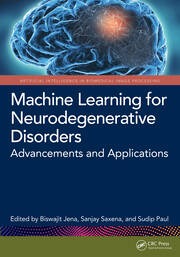
Explores the application of machine learning to the understanding, early diagnosis, and management of neurodegenerative disorders. With a specific focus on its role in ongoing clinical trials, the book covers essential topics such as data collection, pre-processing, feature extraction, model development, and validation techniques. It delves into the applications of neuroimaging techniques like magnetic resonance imaging (MRI), computed tomography (CT), and positron emission tomography (PET) in the diagnosis and understanding of neurodegenerative disorders. Additionally, the book examines various machine-learning algorithms employed for biomarker discovery in neurodegenerative disorders. It highlights the role of neuroinformatics and big data analysis in advancing the understanding and management of neurodegenerative disorders. Furthermore, the book reviews future prospects and presents the ethical considerations and regulatory challenges associated with implementing machine learning approaches in the diagnosis, treatment, and prevention of neurodegenerative disorders.

Timely coverage of cleaning validation for the pharmaceutical industry, a dynamic area in terms of health-based limits. Encourages pharmaceutical manufacturers, and particularly upper management, to meet the challenges of the science-based and riskbased approaches to cleaning validation. Draws on the author’s vast experience in the field of cleaning validation and hazardous materials. Discusses EMA vs. ISPE on Cleaning Limits and revised Risk-MaPP for highly hazardous products in shared facilities. A diverse list of topics from protocol limits for yeasts and molds to cleaning validation for homeopathic drug products.

Guide readers through circular RNA purification, in silico characterization, circRNA detection, sequence validation, quantification , techniques related to gain- and loss-of-function approaches, circular RNA synthesis, split ligation, engineering, nanoparticle packaging, RNA modifications on circular RNA biogenesis, RNA translation potential, and vaccines based on circular RNAs.

Presents both theoretical guidance and protocols on chemogenomics including chemogenomics library assembly, compound profiling, and phenotypic assays. The chapters in this book cover topics such as the assembly and use of Kinase Chemogenomics; data mining for chemogenomic compound candidates; protocols for protein family-focused assay systems to profile chemogenomic compounds; functional and target engagement assays in cellular settings for broad characterization; and a discussion on phenotypic assays where chemogenomic sets may be applied.
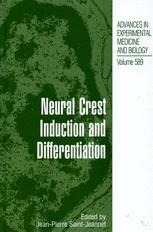
The biological sciences are dominated by the idea that cells are the functionally autonomous, physically separated, discrete units of life. This concept was propounded in the 19th century by discoveries of the cellular structuring of both plants and animals. Moreover, the ap parent autonomy of unicellular eukaryotes, as well as the cellular basis of the mammalian brain (an organ whose anatomy for a long while defied attempts to validate the idea of the cellular nature of its neurons), seemed to provide the final conclusive evidence for the completeness of *cell theory', a theory which has persisted in an almost dogmatic form up to the present day. However, it is very obvious that there are numerous observations which indicate that it is not the cells which serve as the basic units of biological life but that this property falls to some other, subcellular assemblage. To deal with this intricate problem concerning the fundamental unit of living matter, we proposed the so-called Cell Body concept which, in fact, devel ops an exceedingly original idea proposed by Julius Sachs at the end of the 19th century. In the case of eukaryotic cells, DNA-enriched nuclei are intimately associated with a microtubular cytoskeleton. In this configuration—as a Cell Body—these two items comprise the fundamental functional and struc tural unit of eukaryotic living matter. The Cell Body seems to be inherent to all cells in all organisms.

Focuses on innovative treatment options for breast cancer, including surgery, radiotherapy, systemic therapy and of course immunotherapy that is changing outcomes in some aggressive breast cancer histotypes. Subsequent chapters also address the ongoing emerging research in the screening, diagnostics, and management of all subtypes of breast cancers. All current landscapes and future perspectives in each molecular subtype: luminal, HER2-positive, and triple-negative breast cancers are discussed within the different chapters. Breast cancer is still the most common cancer and cause of cancer deaths among women worldwide. The improvement of breast cancer outcome appears to be strictly related to the validation of precise biomarkers that enable us to better select personalized approaches in breast cancer management. The closing chapters deal with the challenges of low income countries of conducting research in the era of precision medicine for cancer. The book is edited and authored by leading experts in this field and will be of interest for clinicians and scientists alike
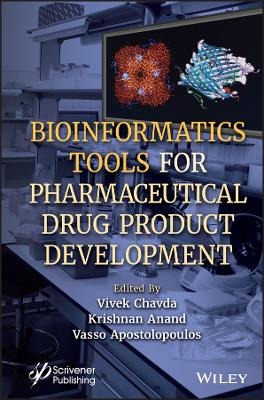
Presents the latest information on bioinformatics tools, artificial intelligence, machine learning, computational methods, protein interactions, peptide-based drug design, and omics technologies. And include bioinformatics tools for the pharmaceutical sector and the healthcare sector. Bioinformatics brings a new era in research to accelerate drug target and vaccine design development, improving validation approaches as well as facilitating and identifying side effects and predicting drug resistance. As such, this will aid in more successful drug candidates from discovery to clinical trials to the market, and most importantly make it a more cost-effective process overall.

The field of androgen excess disorders has advanced substantially since the original publication of this book. The Androgen Excess Society (AES) was founded to bring together investigators in the field. A better understanding of the screening, progression, and molecular genetics of nonclassic adrenal hyperplasia (NCAH) has improved the clinical care and diagnostic accuracy of these patients. New criteria for the diagnosis of the polycystic ovary syndrome (PCOS) were proposed in Rotterdam, criteria that have resulted in controversy and, hopefully, initiation of new studies. The association of insulin resistance with PCOS has been strengthened, and the role of metformin in tre- ing the infertility of the PCOS has been validated. Risks for diabetes and, more cont- versially, cardiovascular disease in women with PCOS have received substantial investigation. Our understanding of the epidemiology and economic impact of these disorders has expanded, emphasizing their critical importance.

Discusses the integration of artificial intelligence to revolutionize disease detection approaches, with case studies of AI in disease detection as well as insight into the opportunities and challenges of AI in healthcare as a whole. The book explores a wide range of individual AI components such as computer vision, natural language processing, and machine learning as well as the development and implementation of AI systems for efficient practices in data collection, model training, and clinical validation.

This volume is the first book to cover the general topic of targeted cancer therapy. It presents a range of targets such as tumor angiogenesis, cell cycle control and cell signalling, COX-2, apoptosis/cell survival, invasion and metastasis and approaches like kinase inhibitors, antisense, and antibody-based therapeutics. The emphasis is on preclinical development, including target validation, development of biomarkers, strategies for combination approaches, and development of resistance. The particular challenges involved in translating these data to clinical application are discussed.
Organized into five parts. Part One presents the fundamentals of ML. Part Two looks at the main types of data used to characterize brain disorders, including clinical assessments, neuroimaging, electro- and magnetoencephalography, genetics and omics data, electronic health records, mobile devices, connected objects and sensors. Part Three covers the core methodologies of ML in brain disorders and the latest techniques used to study them. Part Four is dedicated to validation and datasets, and Part Five discusses applications of ML to various neurological and psychiatric disorders.
Embedded systems are ubiquitous. They appear in cell phones, microwave ovens, refrigerators, consumer electronics, cars, and jets. Some of these embedded s- tems are safety- or security-critical such as in medical equipment, nuclear plants, and X-by-wire control systems in naval, ground and aerospace transportation - hicles. With the continuing shift from hardware to software, embedded systems are increasingly dominated by embedded software. Embedded software is complex. Its engineering inherently involves a mul- disciplinary interplay with the physics of the embedding system or environment. Embedded software also comes in ever larger quantity and diversity. The next generation of premium automobiles will carry around one gigabyte of binary code. The proposed US DDX submarine is e?ectively a ?oating embedded so- ware system, comprising 30 billion lines of code written in over 100 programming languages. Embedded software is expensive. Cost estimates are quoted at around US$15– 30 per line (from commencement to shipping). In the defense realm, costs can range up to $100, while for highly critical applications, such as the Space Shuttle, the cost per line approximates $1,000. In view of the exponential increase in complexity, the projected costs of future embedded software are staggering.

If you work at all with Internet-facing solutions, you know that the lack of an identity metasystem is a critical vulnerability in the design. Various consortiums have worked to define a system of identity—a platform-agnostic way of communicating and validating claims of identity. If you work with identity solutions or structures, you will find Beginning Information Cards and CardSpace: From Novice to Professional essential to understanding and successfully implementing CardSpace solutions.
This book includes best practices and comprehensive discussions about key database and XML principles, which are essential for you to become effective with ASP.NET. The book also emphasizes the invaluable coding techniques of object orientation and code behind, which will enable you to build real-world websites immediately rather than just scraping by with simplified coding practices. By the time you've finished this book, you will have mastered the core techniques and possess the necessary knowledge to begin work as a professional ASP.NET developer.
This book provides thorough coverage of ASP.NET, guiding you from beginning to advanced techniques, such as querying databases from within a web page and performance-tuning your site. You'll find tips for best practices and comprehensive discussions of key database and XML principles. The book also emphasizes the invaluable coding techniques of object orientation and code-behind, which will enable you to build real-world websites instead of just scraping by with simplified coding practices. By the time you finish this book, you will have mastered the core techniques essential to professional ASP.NET developers.
Beginning Apache Struts will provide you a working knowledge of Apache Struts 1.2. This book is ideal for you Java programmers who have some JSP familiarity, but little or no prior experience with Servlet technology. Organized in a condensed tutorial and lab format, the material in this book has been tested in real classroom environments. It takes a step-by-step, hands-on approach to teaching you Struts. The book even previews the next generation of Struts, the Apache Shale. The overall result is that you can quickly apply Struts to your work settings with confidence.

Beginning Ajax with PHP: From Novice to Professional is the first book to introduce how these two popular technologies can work together to create next-generation applications. Author Lee Babin covers what you commonly encounter in daily web application development tasks.

This book demonstrates how nonlinear/non-Gaussian Bayesian time series estimation methods were used to produce a probability distribution of potential MH370 flight paths. It provides details of how the probabilistic models of aircraft flight dynamics, satellite communication system measurements, environmental effects and radar data were constructed and calibrated. The probability distribution was used to define the search zone in the southern Indian Ocean. The book describes particle-filter based numerical calculation of the aircraft flight-path probability distribution and validates the method using data from several of the involved aircraft’s previous flights. Finally it is shown how the Reunion Island flaperon debris find affects the search probability distribution.
This collection of reusable ASP.NET components serves two purposes. First, the components are ready to use, so you may add exciting features to your own ASP.NET websites. Second, each component's design and implementation is discussed, and you'll discover tips and tricks applicable for developing your own controls. Controls can be cut and pasted or used as templates for you to build your own controls. And the 15 included controls (programs) cover a broad range of situations, providing you both working coded solutions to your problem and the rationalization behind those solutions. Overall, this highly anticipated book provides immediate solutions to range of common problems.
As software systems become increasingly ubiquitous, the issues of dependability become more and more crucial. Given that solutions to these issues must be considered from the very beginning of the design process, it is reasonable that dependability is addressed at the architectural level. This book was born of an effort to bring together the research communities of software architectures and dependability.

سوريا - اتستراد درعا - غباغب
+963-15 2050 - 15 860 380 /1/2/3 - 11 662 3900