


تحسين النتائح
ترتيب حسب
من
الى


The hemodynamic monitoring of intensive care patients is undergoing major changes. Technological advances such as computerization and miniaturization have made it possible to considerably expand the range of assessment tools available at the bedside. Thus, the approach to cardiovascular monitoring - which was once readily "invasive" and global - is gradually becoming non-invasive and locoregional or even tissue. At the same time, the combined evolution of technology and physiological and pathophysiological concepts now provides the clinician with access to a variety of "functional hemodynamic monitoring". The aim of this book is to provide a better understanding of the interest and the limits of the hemodynamic parameters accessible by current hemodynamic monitoring techniques. It thus aims to ensure that the use of these techniques is perfectly mastered by resuscitators and anesthetists-resuscitators so that patient care is ultimately optimal.

In this newly updated second edition of Blood Pressure Monitoring in Cardiovascular Medicine and Therapeutics, William B. White, MD, and a panel of highly distinguished clinicians give a critical review of every aspect of the evaluation of high blood pressure. This includes home and ambulatory blood pressure monitoring, the relationship between whole-day blood pressure and the cardiovascular disease process, and the effects of antihypertensive therapies on these blood pressure parameters. World-class contributors describe the significant advances in our understanding of the circadian pathophysiology of cardiovascular disorders and demonstrate that ambulatory blood pressure values are independent predictors of cardiovascular morbidity and mortality.
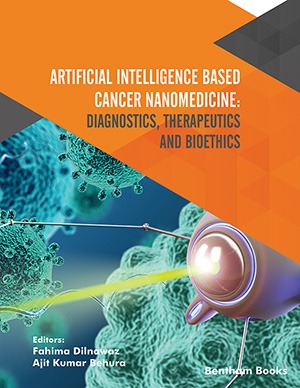
Nanomedicine is evolving with novel drug formulations devised for multifunctional approaches towards diagnostics ad therapeutics. Nanomedicine-based drug therapy is normally explored at a fixed dose. The drug action is time-dependent, dose-dependent and patient-specific. To overcome challenges of nanomedicine testing, artificial intelligence (AI) serves as a helping tool for optimizing the drug and dose parameters. Real time conversions between these two features enables upgradation of patient data acquisition and improved design of nanomaterials. In this scenario, AI-based pattern analysis and algorithms models can greatly improve accuracy of diagnostics and therapeutics.
This book provides a perspective on the current status of bioimaging technologies developed to assess the quality of musculoskeletal tissue with an emphasis on bone and cartilage. It offers evaluations of scaffold biomaterials developed for enhancing the repair of musculoskeletal tissues. These bioimaging techniques include micro-CT, nano-CT, pQCT/QCT, MRI, and ultrasound, which provide not only 2-D and 3-D images of the related organs or tissues, but also quantifications of the relevant parameters. The advance bioimaging technologies developed for the above applications are also extended by incorporating imaging contrast-enhancement materials.

Matching Properties of Deep Sub-Micron MOS Transistors examines this interesting phenomenon. Microscopic fluctuations cause stochastic parameter fluctuations that affect the accuracy of the MOSFET. For analog circuits this determines the trade-off between speed, power, accuracy and yield.

Biomedicine is a multidisciplinary branch of medical science that consists of many scientific disciplines, e.g., biology, biotechnology, bioinformatics, and genetics; moreover, it covers various medical specialties. In recent years, this field of science has developed rapidly. This means that a large amount of data has been generated, due to (among other reasons) the processing, analysis, and recognition of a wide range of biomedical signals and images obtained through increasingly advanced medical imaging devices. The analysis of these data requires the use of advanced IT methods, which include those related to the use of artificial intelligence, and in particular machine learning. It is a summary of the Special Issue “Machine Learning for Biomedical Application”, briefly outlining selected applications of machine learning in the processing, analysis, and recognition of biomedical data, mostly regarding biosignals and medical images.
Presents some spectacular new results in the area of decoding algorithms for error-correcting codes. Specifically, it shows how the notion of “list-decoding” can be applied to recover from far more errors, for a wide variety of err- correcting codes, than achievable before. A brief bit of background : error-correcting codes are combinatorial str- tures that show how to represent (or “encode”) information so that it is - silient to a moderate number of errors. Speci?cally, an error-correcting code takes a short binary string, called the message, and shows how to transform it into a longer binary string, called the codeword, so that if a small number of bits of the codewordare ?ipped, the resulting string does not look like any other codeword. The maximum number of errorsthat the code is guaranteed to detect, denoted d, is a central parameter in its design. A basic property of such a code is that if the number of errors that occur is known to be smaller than d/2, the message is determined uniquely. This poses a computational problem, called the decoding problem : compute the message from a corrupted codeword, when the number of errors is less than d/2.
Probabilistic graphical models and decision graphs are powerful modeling tools for reasoning and decision making under uncertainty. As modeling languages they allow a natural specification of problem domains with inherent uncertainty, and from a computational perspective they support efficient algorithms for automatic construction and query answering. This includes belief updating, finding the most probable explanation for the observed evidence, detecting conflicts in the evidence entered into the network, determining optimal strategies, analyzing for relevance, and performing sensitivity analysis. The book introduces probabilistic graphical models and decision graphs, including Bayesian networks and influence diagrams.It contians two parts. The first part focuses on probabilistic graphical models. Compared with the previous book, the new edition also includes a thorough description of recent extensions to the Bayesian network modeling language, advances in exact and approximate belief updating algorithms, and methods for learning both the structure and the parameters of a Bayesian network. The second part deals with decision graphs, and in addition to the frameworks described in the previous edition, it also introduces Markov decision processes and partially ordered decision problems.
This book presents the first comprehensive overview of general methods in Automated Machine Learning (AutoML), collects descriptions of existing systems based on these methods, and discusses the first series of international challenges of AutoML systems. The recent success of commercial ML applications and the rapid growth of the field has created a high demand for off-the-shelf ML methods that can be used easily and without expert knowledge. However, many of the recent machine learning successes crucially rely on human experts, who manually select appropriate ML architectures (deep learning architectures or more traditional ML workflows) and their hyperparameters. To overcome this problem, the field of AutoML targets a progressive automation of machine learning, based on principles from optimization and machine learning itself.

This book explores the potential of ANNs for applications in different fields. Itincludes eight chapters that discuss deep learning, ANN tools, and other cutting-edgetechnologies. It also suggests avenues for further research into ANN techniques formedical imaging to detect breast tumors, classification of COVID-19 surveillancedatasets, health management, estimation of materials processing parameters, solarenergy management, and control of a petrochemical unit.
Focuses on the fundamental concepts and at the same time on practical aspects of implementing neural networks and deep learning for your research projects. This book is designed so that you can focus on the parts you are interested in. You will explore topics as regularization, optimizers, optimization, metric analysis, and hyper-parameter tuning. In addition, you will learn the fundamentals ideas behind autoencoders and generative adversarial networks. All the code presented in the book will be available in the form of Jupyter notebooks which would allow you to try out all examples and extend them in interesting ways. A companion online book is available with the complete code for all examples discussed in the book and additional material more related to TensorFlow and Keras. All the code will be available in Jupyter notebook format and can be opened directly in Google Colab (no need to install anything locally) or downloaded on your own machine and tested locally. You will: Understand the fundamental concepts of how neural networks work / Learn the fundamental ideas behind autoencoders and generative adversarial networks / Be able to try all the examples with complete code examples that you can expand for your own projects / Have available a complete online companion book with examples and tutorials.
Contains the 11 papers that were accepted and published in the Special Issue “Applied and Computational Mathematics for Digital Environments” of the MDPI Mathematics journal. The topics of interest include, among others, scientific research, applied tasks, and problems in the following areas: The construction of mathematical and information models of intelligent computer systems for monitoring and controlling the parameters of digital environments; The development of intelligent optimization algorithms that search for optimal parameter values of mathematical and information models in digital environments; Software and mathematical technologies in the implementation of intelligent monitoring and computer control of the parameters of digital environments; The development and application of mathematical and information models, machine learning methods, and artificial intelligence for the analysis and processing of big data in digital environments.

Radar systems can provide the all-weather and all-time detection and tracking of targets of interest, and they have been extensively applied by the remote sensing community, in applications such as geological exploration, disaster forecasting, traffic monitoring, urban planning, environmental sciences, hydrology, littoral zones, oceans, etc. This reprint contains the several advance research studies on radar systems for target detection and tracking. It includes multipath ghost suppression, maneuvering target tracking, target detection, and other topics.
Contains contributions on the latest developments in mobile robotic systems and related research. Various topics with different ideas and applications from mobile robotics have found their place. New ideas are presented for mobile robots that specialise in cleaning floors, power lines and HVAC systems. We also find innovative approaches for navigation path planning using local minima-free potential fields, novel path primitives and/or their parameterisation for minimum-time planning, and various control approaches ranging from visual serving to model predictive and adaptive trajectory tracking, applied to wheeled robots, humanoid manipulators and flying robots. Localisation approaches using LiDAR, motion capture systems, fingerprint-based and biomechanical gait systems are also discussed.
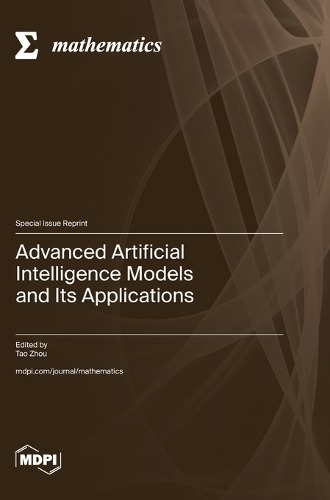
The field of artificial intelligence (AI) has undergone enormous expansion since its inception in the mid-20th century, as demonstrated by its application across an array of engineering and scientific challenges. Particularly in the last decade, AI has witnessed a significant breakthrough with the advent of deep learning, which has facilitated the employment of various AI models across a multitude of domains. This reprint features ten papers accepted for publication in the Special Issue titled "Advanced Artificial Intelligence Models and Their Applications," published in the MDPI Mathematics journal. These papers explore numerous facets of advanced artificial intelligence models and their applications, covering areas such as cybersecurity, image classification, logistics optimization, automatic music generation, human capital investment, writer recognition, remote sensing image indexing, target tracking, and more.
investigates the role of artificial input delay in approximating unknown system dynamics, referred to as time-delayed control (TDC), and provides novel solutions to current design issues in TDC. Its central focus is on designing adaptive-switching gain-based robust control (ARC) for a class of Euler–Lagrange (EL) systems with minimal or no knowledge of the system dynamics parameters. The newly proposed TDC-based ARC tackles the commonly observed over- and under-estimation issues in switching gain. The consideration of EL systems lends a practical perspective on the proposed methods, and each chapter is supplemented by relevant experimental data
This book provides theoretical and practical knowledge for develop ment of algorithms that infer linear and nonlinear models. It offers a methodology for inductive learning of polynomial neural network mod els from data. The design of such tools contributes to better statistical data modelling when addressing tasks from various areas like system identification, chaotic time-series prediction, financial forecasting and data mining. The main claim is that the model identification process involves several equally important steps: finding the model structure, estimating the model weight parameters, and tuning these weights with respect to the adopted assumptions about the underlying data distrib ution. When the learning process is organized according to these steps, performed together one after the other or separately, one may expect to discover models that generalize well.

Applied Geotechnics for Construction Projects 1 first defines, identifies and classifies soils, exploring their complexities and weaknesses, and then outlines the basic principles of stresses and strains that establish and develop within soils. The third chapter of the book introduces and develops methods of soil investigation in order to experimentally determine the geotechnical parameters that are useful in the design stage of construction projects.

Mass Customization: Challenges and Solutions defines the parameters of the emerging business strategy, mass customization. The book will cover the main categories of the area with a systematic examination of the following themes: manufacturing systems and mass customization, supply chain management and mass customization, and information systems and mass customization.

Florian Zainhofer uses the theory of life cycle investing, i.e. how we should optimally choose our savings rate and risky asset share throughout our lives, as a framework to study the implications of a potential BVG individualization. Following an introduction on the Swiss system of old-age provision, the author reviews recent life cycle models of portfolio choice and covers their numerical solution algorithms in depth. He presents an empirical analysis of Swiss workers’ earnings dynamics since these are important determinants of life cycle investment behavior. To further investigate the implications of a flexible contribution rate and risky asset share in the mandatory BVG, the author proposes a model adapted to Swiss conditions and parameterized with the estimated earnings dynamics.

سوريا - اتستراد درعا - غباغب
+963-15 2050 - 15 860 380 /1/2/3 - 11 662 3900