


تحسين النتائح
ترتيب حسب
من
الى

This volume acknowledges and celebrates the contributions of Dr. Frederick S. Szalay to the field of Mammalian Evolutionary Morphology. Professor Szalay has published about 200 articles, four monographs, and six books on this subject. Throughout his career Professor Szalay has been a strong advocate for biologically and evolutionarily meaningful character analysis. In his view, this can be accomplished only through an integrated strategy of functional, adaptational, and historical analysis. Dr. Szalay worked on several different mammalian groups during his career, and the contributions to this volume reflect his broad perspective. Chapters focus on Primates, a group to which Professor Szalay dedicated much of his career. However, other mammalian groups on which he conducted a significant amount of research, such as marsupials and xenarthrans, are also covered in the volume.

Presents the proceedings of "Chemical Signals in Vertebrates 11", hosted by the University of Liverpool and held July 25 - 28, 2006 at the University of Chester in the United Kingdom. Chemical Signals in Vertebrates 11 contains the latest research on chemical communication relevant to vertebrates, particularly focusing on new research since the last meeting in 2003. Topics covered include chemical ecology, biochemistry, behavior and neurobiology of both the main olfactory and vomeronasal systems of vertebrates, from amphibia to mammals including humans. A broad range of taxonomic groups and topics are discussed, including sections on new directions in semiochemistry, olfactory response and function, recognition within species, sexual communication, maternal-offspring communication, communication between species, and applications for zoo animal enrichment and pest control. The volume is dedicated to the memory of Dr. Bets Rasmussen and includes a special tribute chapter on her ground-breaking research on elephant communication.
This book also represents the tenth in a series of books on chemical communication, chemical ecology, olfactory and vomeronasal research in vertebrate species. The species covered in the chapters herein range from fish to mammals including humans. By taxonomic breakdown the mammals are the most represented in number of species and chapter contributions. However, the hosts of the meeting endeavored to have some representative contributions covering all of the major vertebrate taxa.
This book provides an overview of chemical ecology related to different ecosystems. It offers an outlook at novel directions that can be taken in chemical ecology through a molecular-ecological or eco-genomic approach. The book addresses aboveground and belowground terrestrial systems as well as aquatic systems, and the organisms involved are micro- and macro-organisms, such as plants, arthropods and mammals.
It is one of the major "classics" of the neurological world. Even today it forms the basis for so-called "localisation" of function in the cerebral cortex. Brodmann's "areas" are still used to designate functional regions in the cortex, the part of the brain that brings the world that surrounds us into consciousness, and which governs our responses to the world. For example, we use "area 4" for the "motor" cortex, with which we control our muscles, "area 17" for "visual" cortex, with which we see, and so on. This nomenclature is used by neurologists and neurosurgeons in the human context, as well as by experimentalists in various animals. Indeed, Brodmann's famous "maps" of the cerebral cortex of humans, monkeys and other mammals must be among the most commonly reproduced figures in neurobiological publishing. The most famous of all is that of the human brain. There can be few textbooks of neurology, neurophysiology or neuroanatomy in which Brodmann is not cited, and his concepts pervade most research publications on systematic neurobiology.
Cell biologists have recently become aware that the asymmetry of cell division is an important regulatory phenomenon in the fate of a cell. During development, cell diversity originates through asymmetry; in the adult organism asymmetric divisions regulate the stem cell reservoir and are a source of the drift that contributes to the aging of organisms with renewable cell compartments. Because of the concept of semi-conservative DNA synthesis, it was thought that the distribution of DNA between daughter cells was symmetric. The analysis of the phenomenon in cells during mitosis, however, revealed the asymmetry in the distribution of the genetic material that creates the drift contributing to aging of mammals. On the other hand, cancer cells can originate from a deregulation of asymmetry during mitosis in particular during stem cell expansion. The book describes the phenomenon in different organisms from plants to animals and addresses its implications for the development of the organism, cell differentiation, human aging and the biology of cancers.
This book presents selected works of contemporary evolutionary morphologists and includes such topics as broad scale reconstructions of the brain and ear of dinosaurs, inference of locomotor habits from cancellous bone architecture in fossil primates, and a comparison of the independently evolved manipulating apparatuses in the lesser and giant pandas. Insight is provided into the application of modern noninvasive technologies, including digital imaging techniques and virtual 3D reconstruction, to the investigation of complex anatomical features and coherences. In combination with traditional methods, this allows for the formulation of improved hypotheses on coordinated function and evolution. The creation of virtual translucent specimens makes it possible to realize the age-old dream of the classical anatomists: looking through the skin into the inner organization of an organism. On full display here is the dramatic and promising impact that modern imaging techniques have on scientific progress in evolutionary morphology.

The present book combines three main aspects: five major mass extinctions; contributions on some other minor extinctions; and more importantly contributions on the current mass extinction.
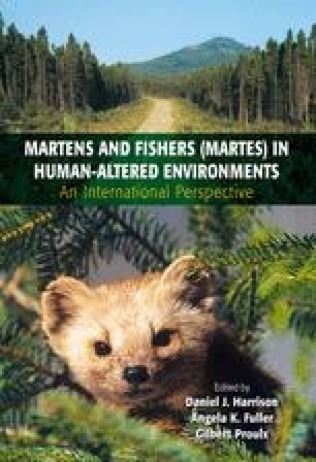
Examines the conditions where humans and martens are compatible and incompatible, and promotes land use practices that allow Martes to be representatively distributed and viable. All Martes have been documented to use forested habitats and 6 species (excluding the stone marten) are generally considered to require complex mid- to late-successional forests throughout much of their geographic ranges. All species in the genus require complex horizontal and vertical structure to provide escape cover protection from predators, habitat for their prey, access to food resources, and protection from the elements. Martens and the fisher have high metabolic rates, have large spatial requirements, have high surface area to volume ratios for animals that often inhabit high latitudes, and often require among the largest home range areas per unit body weight of any group of mammals. Resulting from these unique life history characteristics, this genus is particularly sensitive to human influences on their habitats, including habitat loss, stand-scale simplification of forest structure via some forms of logging, and landscape-scale effects of habitat fragmentation. Given their strong associations with structural complexity in forests, martens and the fisher are often considered as useful barometers of forest health and have been used as ecological indicators, flagship, and umbrella species in different parts of the world. Thus, efforts to successfully conserve and manage martens and fishers are associated with the ecological fates of other forest dependent species and can greatly influence ecosystem integrity within forests that are increasingly shared among wildlife and humans.We have made great strides in our fundamental understanding of how animals with these unique life history traits perceive and utilize habitats, respond to habitat change, and how their populations function and perform under different forms of human management and mismanagement.
This volume contains the collection of papers from the second workshop on Experimental Acoustic Inversion Techniques for Exploration of the Shallow Water Environment. Acoustic techniques provide the most effective means for remote sensing of ocean and sea floor processes, and for probing the structure beneath the sea floor. No other energy propagates as efficiently in the ocean: radio waves and visible light are severely limited in range because the ocean is a highly conductive medium. However, sound from breaking waves and coastal shipping can be heard throughout the ocean, and marine mammals communicate acoustically over basin scale distances.

سوريا - اتستراد درعا - غباغب
+963-15 2050 - 15 860 380 /1/2/3 - 11 662 3900