


تحسين النتائح
ترتيب حسب
من
الى

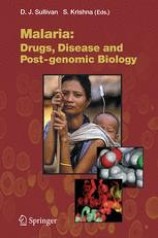
This volume brings some of the worlds best investigators to describe recent advances in both the scientific and clinical aspects of malaria, and bridges between the two. The opening chapters discuss antimalarials and resistance to them in Africa and Asia. Then there are reviews of the different clinical manifestations of malaria, ranging from uncomplicated infections to severe disease and its complications.
Begins with a short history of malaria and follows with a summary of its biology. It then traces the fascinating history of the discovery of quinine for malaria treatment, and then describes quinine’s biosynthesis, its mechanism of action, and its clinical use, concluding with a discussion of synthetic antimalarial agents based on quinine’s structure. It also covers the discovery of artemisinin and its development as the source of the most effective current antimalarial drug, including summaries of its synthesis and biosynthesis, its mechanism of action, and its clinical use and resistance. A short discussion of other clinically used antimalarial natural products leads to a detailed treatment of additional natural products with significant antiplasmodial activity, classified by compound type.
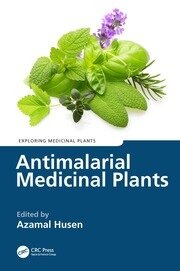
Malaria continues to affect a large population of the world, especially in third world countries. The spread of drug-resistant parasites demonstrates the need for antimalarial agents with various modes of action. The search for remedies derived from medicinal plants for the treatment of malaria is reliant on accurate ethnobotanical and ethnopharmacological information obtained from traditional medical practitioners. Antimalarial Medicinal Plants provides information on bioactive compounds and therapeutic potentials of several antimalarial plant species found around the globe. This book evaluates these plant species with respect to their biology, diversity, distribution, and pharmacological values.
This book was originally conceived at a conference at the University of Turin in Italy. The conference was organized to examine the so-called “Malaria Hypothesis”, that is to say, the higher fitness of t- lassemia heterozygotes in a malarial environment, and to pay tribute to the proponent of that hypothesis, J.B.S. Haldane. Contributors to this book examine certain genetic and evolutionary aspects of malaria which is a major killer of human populations, especially in Africa and Asia. There were attempts to discredit Haldane’s contribution from two directions: (a) it has been suggested that the “Malaria Hypothesis” was known long before Haldane and that there was nothing original about his idea (Lederberg 1999), and that (b) the hypothesis of heterozygote su- riority was first suggested by the Italian biologist Giuseppe Montalenti who communicated his idea to Haldane (Allison 2004).
Bioactive Heterocycles III provides readers with a comprehensive overview of the most recent breakthroughs in the ?eld of heterocycles. This volume contains 8 chapters written by experts in their respective ?elds from all over the world. The chapters summarize years of extensive research in each area, and providein sight in the new themesofnaturalproduct research.Manyofthe contributors illustrate their laboratory experiences. It's obvious that readers will gain exciting and essential information fromthe volume. In the ?rst chapter, Kayser et al. describe the chemistry, biosynthesis and biological activities of artemisinin, one of the most promising antimalarial molecules, and its related natural peroxides.

سوريا - اتستراد درعا - غباغب
+963-15 2050 - 15 860 380 /1/2/3 - 11 662 3900