



الصفحة 1
الصفحة 1

Modern apartment design
Provides guidelines to the design of modern apartment buildings as well as a summation of current cutting-edge practice in engineered timber construction.The book covers a brief history of apartment buildings around the world, a broad outline of different types of apartment blocks, and a strong focus on the design and actual construction of apartment buildings, especially those utilising mass timber, such as cross laminated timber and laminated veneer lumber. It also features six Case Study chapters from industry-leading practitioners in the area, enabling best practice in architecture and engineering of these new apartment building types to be more widely understood and propagated worldwide.

Micromechanics of Contact and Interphase Layers
Micromechanics provides a link between the structure and the properties at different scales of observation. This book deals with micromechanical analysis of interfaces and interface layers and presents several modelling tools, ranging from the rigorous method of asymptotic expansions to practical finite element simulations, suitable for this class of problems. Two application areas are discussed. Boundary layers associated with contact of rough bodies are modelled by applying a scale transition approach in which a macroscopic interface of zero thickness is seen at the micro-scale as a layer with some finite thickness. Secondly, evolution of laminated microstructures accompanying stress-induced martensitic transformations in shape memory alloys (SMA) is analyzed as an illustration of the case when the local interfacial phenomena – here the propagation of phase transformation fronts – govern the macroscopic behaviour of a heterogeneous material.

Mechanics of Composite Materials with MATLAB
This textbook makes use of the popular computer program MATLAB as the major computer tool to study Mechanics of Composite Materials. It is written specifically for students in Engineering and Materials Science examining step-by-step solutions of composite material mechanics problems using MATLAB.

Integrated Circuit Packaging, Assembly and Interconnections
Integrated Circuit Packaging, Assembly and Interconnections is intended as a multi-purpose text, serving individuals looking for an introduction, or a review, or an update of the various IC packaging, assembly, and interconnection technologies. To this end, it provides an overview of the materials and the processes, as well as the trends and available options that encompass electronic manufacturing. It covers both the technical issues and touches on some of the reliability concerns with the various technologies applicable to packaging and assembly of the IC. The focus is on the electronic manufacturing process which, in its simplest form, involves assembly of the IC into a package or interconnect substrate or board. The book discusses the various packaging approaches available, namely, single chip, multichip, and Chip On Board; the assembly options, chip & wire, tape automated bonding, and flip chip; and the essential high density package/substrate manufacturing technologies, thin film, thick film, cofired ceramic, and laminate printed wiring board (PWB) processes. Included also is a discussion of high density PWBs using build up/sequential processes.

Genetic control of neuronal migrations in human cortical development
Introduction Cortical development is a complex, tightly regulated process that eventually leads to the six-layered adult human neocortex, the substrate of the unique cognitive, emotional, and social abilities of our species. The basic mechanisms of early cortical development are believed to be very similar among mammals, which has led to a tendency of extrapolating experimental data from rodents on humans.

Esthetic and functional management of Diastema : A multidisciplinary approach
Offers detailed guidance on integrated orthodontic, periodontal, and restorative solutions for the treatment of diastema, highlighting the advantages of such a multidisciplinary approach and presenting suitable clinical protocols for esthetic reconstruction and functional improvement.

Direct and indirect resin composite veneers
Re-establishing a patient’s lost dental asthetic appearance is one of the most important topics for contemporary dentistry.New treatment materials and methods have been coming on the scene, day by day, in order to achieve such an aim. Most dentists prefer more conservative and aesthetic approaches. Laminate veneers are restorations which are envisioned to correct existing abnormalities, esthetic deficiencies and discolorations. Laminate veneer restorations may be processed in two different ways: direct or indirect. Direct resin composite veneers are one of the most commonly used restorations in the treatment of poor esthetics in anterior teeth presenting unsatisfactory colour and shape, defective restorations, slight misalignment and fractures.
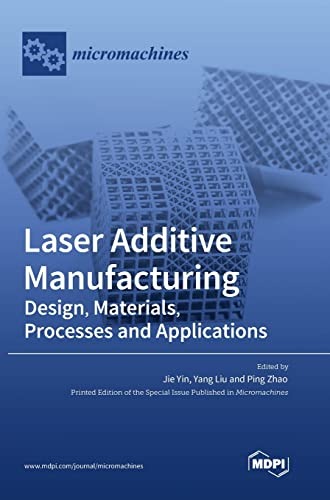
Laser additive manufacturing: design, materials, processes and applications
Laser-based additive manufacturing (LAM) is a revolutionary advanced digital manufacturing technology developed in recent decades, which is also a key strategic technology for technological innovation and industrial sustainability. This technology unlocks the design and constraints of traditional manufacturing and meets the needs of complex geometry fabrication and high-performance part fabrication. A deeper understanding of the design, materials, processes, structures, properties and applications is desired to produce novel functional devices, as well as defect-free structurally sound and reliable LAM parts.The topics in this Special Issue reprint include macro- and micro-scale additive manufacturing with lasers, such as structure/material design, fabrication, modeling and simulation, in situ characterization of additive manufacturing processes and ex situ materials characterization and performance, with an overview that covers various applications in aerospace, biomedicine, optics and energy.
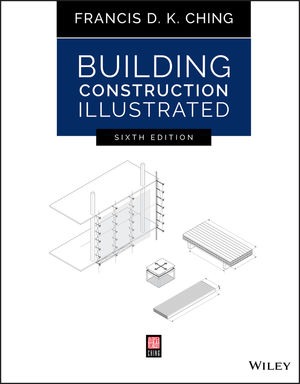
Building construction illustrated
A leading visual guide to the principles of building construction. Filled with rich illustrations and in-depth content by renowned author Francis D.K. Ching, it offers students and practicing professionals the information needed to understand concepts in residential and commercial construction, architecture, and structural engineering. Includes all new sections on resilient design; diagrids; modular foundation systems; smart façade types and systems; lighting sources and systems; and mass timber materials, cross laminated timber (CLT) and nail laminated timber (NLT) Revised to reflect that latest updates in codes and standards requirements: 2018 International Building Code (IBC), LEED v4, and CSI MasterFormat 2018 Includes updated information on sustainability and green building; insulation materials; stair uses; stoves and inserts; and fire-rated wall and floor assemblies

BioNanoFluidic MEMS
BioNanoFluidic MEMS explains nanofabrication and nanomaterials synthesis suitable for the development of biosensors. The fundamentals initiate an awareness for engineers and scientists who would like to develop and implement novel biosensors for various applications. In addition, the material covered includes: BioNanoFluidic MEMS connection between the interdisciplinary nature of BioNanoFluidics and MEMS BioNanoFluidics and sensor technology including Micro-Mechanical Sensors and Chemical Sensor Technologies ands-on steps for implementation of biosensor fabrication including a discussion of the clean room lithography process and etching, microsensor systems lamination, PDMS moulding, parylene deposition, and others Interconnection between the interdisciplinary nature of BioNanoFluidics and MEMS BioNanoFluidics and sensor technology including Micro-Mechanical Sensors and Chemical Sensor Technologies
Analysis of failure in fiber polymer laminates : the theory of Alfred Puck
This book presents for the first time comprehensively the Theory of Alfred Puck on failure in Fiber Polymer Laminates. After a brief introduction into the failure analysis of laminates and its history, the text focuses first on Puck’s fracture criteria and gives detailed information on their physical background, mathematical derivation and application. Another core part of Puck’s Theory is his concept for Post Failure Analysis. Here, too, the physical background and the analytical procedure are presented. The theoretical chapters are completed by the presentation of the latest developments, namely the consideration of residual stresses and probabilistic effects. The second main part of the book deals with the extensive experimental verification program which has been accomplished since the mid 1990’s. As a result of this work, the Puck Theory can be regarded as better verified than any other theory. All experimental set ups and the major results are presented and explained.
