


تحسين النتائح
ترتيب حسب
من
الى


Mammalian and Avian Transgenesis presents a collection of novel methods for the production of a wide range of transgenic animals. The manual focuses largely on mice, but also contains protocols for successful transgenesis in rats, cows, pigs and birds. The manual provides detailed, step-by-step protocols covering all aspects of the production of transgenic animals, including the use of lentiviral vectors in gene transfer, intracytoplasmic sperm injection, nuclear transfer, large insert transgenesis, conditional gene expression systems, the use of reporter genes in transgenesis and transgenesis in large animals and birds. The text is supplemented by superb color photos. While the focus is on newly established techniques, the fundamental methods of transgenesis are also covered for those new to the field. Thus this manual is perfectly suited for those wishing to adopt new technologies in transgenesis.

Since the identificationof two sequences fromKSHV,wehave learnedmuch about this pathogen as reflected in this book. As it turned out, KSHV itself encodes for a number of cytokines, and induces cellular cytokine secretion, contributing to tumour growth. Moreover, KSHV vFLIP targets the IKKNFκB axis to encourage the inflammatory microenvironment observed by Gallo and his colleagues. KSHV continues to elucidate both mechanisms of viral oncogenesis, and cellular and immune pathways involved in non-viral driven neoplasia.

Computational and Statistical Approaches to Genomics, 2nd Edition, aims to help researchers deal with current genomic challenges. During the three years after the publication of the first edition of this book, the computational and statistical research in genomics have become increasingly more important and indispensable for understanding cellular behavior under a variety of environmental conditions and for tackling challenging clinical problems. In the first edition, the organizational structure was: data à analysis à synthesis à application. In the second edition, the same structure remains, but the chapters that primarily focused on applications have been deleted.
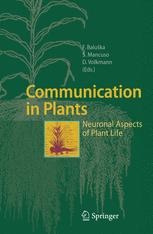
Plant neurobiology is a newly emerging field of plant sciences. It covers signalling and communication at all levels of biological organization – from molecules up to ecological communities. In this book, plants are presented as intelligent and social organisms with complex forms of communication and information processing. Authors from diverse backgrounds such as molecular and cellular biology, electrophysiology, as well as ecology treat the most important aspects of plant communication, including the plant immune system, abilities of plants to recognize self, signal transduction, receptors, plant neurotransmitters and plant neurophysiology. Further, plants are able to recognize the identity of herbivores and organize the defence responses accordingly. The similarities in animal and plant neuronal/immune systems are discussed too. All these hidden aspects of plant life and behaviour will stimulate further intense investigations in order to understand the communicative plants in their whole complexity.

Chronic lymphocytic leukaemia (CLL) is the most common leukaemia in the Western world. It is also the prototype of B-cell chronic lymphoid malignancies and of their ramifications within the fields of hematology, immunology and oncology. developments of basic science into effective new approaches to the patient.
It is more evident now than ever before that dynamic organization of human genome into nucleoprotein structure, chromatin confers the unique regulatory mechanisms for most of the cellular phenomena, which include replication, transcription, DNA repair, recombination and also apoptosis. The dynamic nature of the chromatin is regulated by chromatin modifications (epigenetic alterations), remodeling, histone chaperones and functional interactions of different chromatin interacting n- histone proteins. Dysfunction of this highly inter connected machineries disturb the cellular homoeostasis, and thereby causes several diseases. As we advance in our knowledge of chromatin function and also disease mechanisms in more details, their causal relationship is becoming more evident. This has lead to the identification of chromatin function as target for new generation therapeutics.
The present book provides a comprehensive overview of our current knowledge on plastid biogenesis, plastid-nuclear communication, the regulation of plastid gene expression at all levels, and also assesses the state of the art in key technologies, such as proteomics and chloroplast transformation. Written by recognized experts in the field, it covers plastid differentiation and division, genome structure and function, plastid inheritance, recombination, DNA replication and repair, transcription, RNA processing and translation as well as crucial posttranslational processes in plastid biogenesis and function, including protein processing, the assembly of multiprotein complexes, protein stability and degradation, protein import and sorting.
Medical information science requires analytic tools. This is achieved by developing and assessing methods and systems for the acquisition, processing, and interpretation of patient data, aided by scientific discovery. Cancer Informatics in Post-Genomic Era provides both the necessary methodology and practical information tools.Key challenges include integrating research and clinical care, sharing data, and establishing partnerships within and across sectors of patient diagnosis and treatment.Addressing important clinical questions in cancer research will benefit from expanding computational biology.

Tumors can be induced by a variety of physical and chemical carcinogens. The resulting tumor cells are usually abnormal in their morphology and behavior and transmit their abnormalities to their daughter tumor cells. Most theories of the pathogenesis of tumors suggest that carcinogens in some way cause alterations either of the genomes or of inheritable patterns of gene expression in normal cells, which then cause morphological and behavioral changes. This volume presents a collection of articles aimed at the question by what genetic or epigenetic mechanisms carcinogens can cause morphological abnormalities of tumor cells. It includes reviews of cellular targets of known carcinogens, and presents varying viewpoints of how morphological abnormalities and the actions of carcinogens might be related.
The conference was organized by the Laboratory of Theoretical Genetics, Institute of Cytology and Genetics, Siberian Branch of the Russian Academy of Sciences, Novosibirsk, Russia. The material covers the most recent topics in bioinformatics, including (i) regulatory genomic sequences: databases, knowledge bases, computer analysis, modeling, and recognition; (ii) large-scale genome analysis and functional annotation; (iii) gene structure detection and prediction; (iv) comparative and evolutionary genomics; (v) computer analysis of genome polymorphism and evolution; computer analysis and modeling of transcription, splicing, and translation; structural computational biology: structure- function organization of genomic DNA, RNA, and proteins; (vi) gene networks, signal transduction pathways, and genetically controlled metabolic pathways: databases, knowledge bases, computer analysis, and modeling; principles of organization, operation, and evolution; (vii) data warehousing, knowledge discovery and data mining; and (viii) analysis of basic patterns of genome operation, organization, and evolution.
Volume 1 is divided into two sections: "Malignant Transformation and Metastasis" and "Molecular Basis of Disease Therapy." Volume 2 follows a similar structure and is divided into sections entitled "Kinases and Phosphate" and "Molecular Basis of Cell Death." All of the contributors are at the forefront of scientific discovery, and the reviews they present systemically examine the most exciting and innovative aspects of their particular areas of expertise. Researchers will find these volumes of major benefit as they search for novel and more effective treatments for human diseases.
Reflects the spirit and scientific excellence of the 18th ESACT meeting in different chapters. This book presents, in form of short papers, a high number of the contributions to the meeting, and has been prepared with the aim to provide a relevant reference of the research efforts in Animal Cell Technology

Active specific immunotherapy is a promising but investigational modality in the management of cancer patients. Currently, several different cancer vaccine formulations such as peptides, proteins, antigen-pulsed dendritic cells, whole tumor cells, etc. in combination with various adjuvants and carriers are being evaluated in clinical trials (1-3). To determine the optimal cancer
Splicing of primary RNA transcript, i.e. removal of introns and joining of exons to produce mature mRNAs competent for translation into proteins, is a quasi-systematic step of gene expression in higher organisms. However, this process is not unequivocal but can follow alternate pathways. Alternative splicing of a given transcript can therefore yield several distinct mRNAs encoding as many different proteins. Its full biological significance has not been appreciated until it was recognized that alternative splicing is so general as to affect about 75% of all human genes. Therefore, alternative splicing not only vastly increases protein diversity but also offers numerous opportunities for aberrant splicing events with pathological consequences.
Proceedings of the 7th International Conference on Alzheimer’s Disease and Parkinson’s Disease (ADPD), held March 9-13, 2005 in Sorrento, Italy.The subject matter of the ADPD conferences is unique in that it deals not only with issues related individually to Alzheimer’s disease and Parkinson’s disease, but also with the integration of these and other related diseases. The most up-to-date techniques and research findings are illustrated in this volume, covering topics such as immunology, neuroscience, pharmacology, genetics, molecular biology, biochemistry and the history, epidemiology, clinical phenomenology, diagnosis, imaging, treatment ,and future perspectives of Alzheimer’s and Parkinson’s Diseases.

The focus is on selected critical molecular determinants of AML pathogenesis and pathophysiology and the exploitation of these factors by diverse therapeutic agents and modalities. Bringing together new concepts and findings in the basic and clinical science of AML, the book emphasizes the molecular basis for new therapies that stand to have the greatest potential impact on the clinical face of these diseases. The text provides insights into selected novel strategies currently and prospectively being developed, including interruption of specific signal transduction pathways, modulation of gene expression, attempts to reinstate differentiation, and immunomodulation.

This volume, written by experts in the field, is the first to deal with the relationship between human disease and the actin cytoskeleton. It provides overviews of actin and selected actin-binding proteins, and then focuses on diseases that involve these proteins. Specific chapters deal with actin, cofilin, profilin, gelsolin and thymosin ¾4. Other chapters discuss the roles of multiple actin-binding proteins in cancer and metastasis, leukocyte disorders, and heart failure, and there is a chapter that describes how intracellular pathogens use the host actin cytoskeleton. This seminal volume is intended for researchers, clinicians, physicians, and graduate students in the fields of biochemistry, cell biology, microbiology, immunology, and genetics.

This book uses modern biological knowledge to tackle the question: "What distinguishes living organisms from the non-living world?" In the first few chapters, the authors draw on recent advances in cell and molecular biology to develop an account of the "living state" that applies to all organisms, but only to organisms. Subsequent chapters use this account to explore questions about evolution, the origin of life and the possibility of extraterrestrial life. Towards the end of the book the authors consider human evolution, intelligence and the extent to which our species can be regarded as biologically unique. About Life is written as far as possible in non-technical language; all scientific terms are explained straightforwardly when they are introduced. It is aimed at the general, non-specialist reader, but the novel approach that it takes to general issues in biology will also interest students of the life sciences.
This book constitutes the refereed proceedings of the Second International Bioinformatics Research and Development Conference, BIRD 2008, held in Vienna, Austria in July 2008.

One area that has attracted much attention is the use of cell factories for the production of a wide range of chemicals. This area illustrates very well the definition of biochemical engineering , and it has therefore been chosen as the focus of this volume. The use of cell factories for production of chemicals dates back to the production of penicillin, ethanol, acetone–butanol, glycerol and further to enzymes and other antibiotics. All these products were traditionally produced by cell factories that naturally produce these compounds. With the introduction of genetic engineering it has,This volume therefore contains chapters on concepts of metabolic engineering on detailed modeling of cellular systems

سوريا - اتستراد درعا - غباغب
+963-15 2050 - 15 860 380 /1/2/3 - 11 662 3900