تحسين النتائح
ترتيب حسب
من
الى



الكليات في الجامعة العربية الدولية
الخدمات الطلابية والأكاديمية

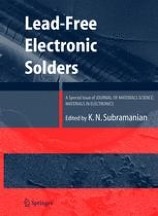
In the last few decades the effect of lead contamination on human health has received significant attention. Based on such concerns, elimination of lead from ceramic glaze, paint, plumbing etc. has been legislated and implemented. However, until recently, solders used in electronics, based on suitability and knowledge-base developed over a long period of time, remained lead-based. Successive rapid advances in microelectronic devices in recent decades make them obsolete within a very short period after their introduction resulting in significant quantities of electronic wastes in landfills. Leaching of toxic lead from such electronic wastes can result in contamination of the human food chain causing serious health hazards. As a consequence, several European and Pacific Rim countries have passed legislations warranting elimination of lead from electronic solders by fast approaching deadlines. Global economic pressures brought on by such legislations have resulted in a flurry of research activities to find suitable lead-free substitutes for the traditional leaded electronic solders.
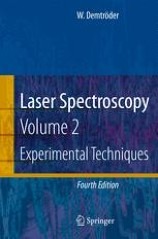
Keeping abreast of the latest techniques and applications, this new edition of the standard reference and graduate text on laser spectroscopy has been completely revised and expanded. While the general concept is unchanged, the new edition features a broad array of new material, e.g. frequency doubling in external cavities, reliable cw-parametric oscillators, tunable narrow-band UV sources, more sensitive detection techniques, tunable femtosecond and sub-femtosecond lasers (X-ray region and the attosecond range), control of atomic and molecular excitations, frequency combs able to synchronize independent femtosecond lasers, coherent matter waves, and still more applications in chemical analysis, medical diagnostics, and engineering.
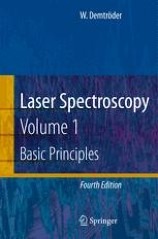
Keeping abreast of the latest techniques and applications, this new edition of the standard reference and graduate text on laser spectroscopy has been completely revised and expanded. While the general concept is unchanged, the new edition features a broad array of new material, e.g., frequency doubling in external cavities, reliable cw-parametric oscillators, tunable narrow-band UV sources, more sensitive detection techniques, tunable femtosecond and sub-femtosecond lasers (X-ray region and the attosecond range), control of atomic and molecular excitations, frequency combs able to synchronize independent femtosecond lasers, coherent matter waves, and still more applications in chemical analysis, medical diagnostics, and engineering.
