


تحسين النتائح
ترتيب حسب
من
الى

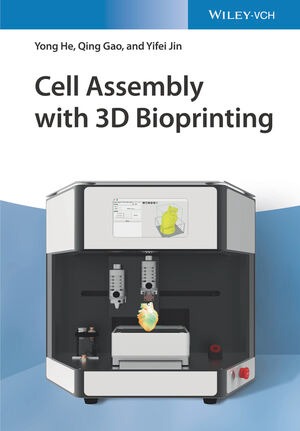
Detailed, highly illustrated chapters cover different bioprinting approaches and their applications, including coaxial bioprinting, digital light projection, direct ink writing, liquid support bath-assisted 3D printing, and microgel-, microfiber-, and microfluidics-based biofabrication. The book includes practical examples of 3D bioprinting, a protocol for typical 3D bioprinting, and relevant experimental data drawn from recent research.

Discusses the latest techniques used to identify cancer drug resistance determinants at the molecular, cellular, and functional levels. Chapters in this book cover up-to-date topics including tumor-microenvironment cell co-culture methods and microfluidics systems; workflows for functional assessment of drug resistance in vitro and in vivo; quantitative techniques for identifying quiescent blood-flow circulating cells; and single-cell characterization methods, such as mass cytometry.
The goal of this book is to disseminate information on the worldwide status and trends in biosensing R&D to government decisionmakers and the research community. The contributors critically analyze and compare biosensing research in the United States with that being pursued in Japan, Europe and other major industrialized countries.
BioNanoFluidic MEMS explains nanofabrication and nanomaterials synthesis suitable for the development of biosensors. The fundamentals initiate an awareness for engineers and scientists who would like to develop and implement novel biosensors for various applications. In addition, the material covered includes: BioNanoFluidic MEMS connection between the interdisciplinary nature of BioNanoFluidics and MEMS BioNanoFluidics and sensor technology including Micro-Mechanical Sensors and Chemical Sensor Technologies ands-on steps for implementation of biosensor fabrication including a discussion of the clean room lithography process and etching, microsensor systems lamination, PDMS moulding, parylene deposition, and others Interconnection between the interdisciplinary nature of BioNanoFluidics and MEMS BioNanoFluidics and sensor technology including Micro-Mechanical Sensors and Chemical Sensor Technologies
This volume contains 18 chapters focused on ‘Biomolecular Sensing, Processing and Analysis’, written by experts in the field of BioMEMS and biomedical nanotechnology. The chapters are groups into three broad categories of Sensors and Materials, Processing and Integrated Systems, and Microfluidics.Prof. Taun Vo-Dinh from Oakridge National Labs begins the Sensors and Materials section by providing a review of biosensors and biochips. This review is followed by an example of mechanical cantilever sensor work described by Prof. Arun Majumdar’s group at UC Berkeley and Prof. Tom Thundat at Oakridge National Laboratory.
Numerous miniaturized DNA microarray, DNA chip, Lab on a Chip and biosensor devices have been developed and commercialized. Such devices are improving the way many impor-tant genomic and proteomic analyses are performed in both research and clinical diagnostic laboratories. The development of these technologies was enabled by a synergistic combina-tion of disciplines that include microfabrication, microfluidics, MEMS, organic chemistry and molecular biology. Some of these new devices and technologies utilize sophisticated mi-crofabrication processes developed by the semiconductor industry.
Here, a new discipline evolved which focuses on microsystems for living systems called "BIOMEMS". In this review at a glance the exciting field of bio-microsystems, from their beginnings to indicators of future successes are presented. It will also show that a broad penetration of micro and nano technologies into biology and medicine will be mandatory for future scientific and new product development progress in life science.

The present volume focuses on three main subtopics (biological water, protein solutions as well as transport and replication), presenting for each of the them the on-going debates on recent results. The role of water in biological processes, the mechanisms of protein folding, the phases and cooperative effects in biological solutions, the thermodynamic description of replication, transport and neural activity, all are subjects that are revised in this volume, based on new experiments and new theoretical interpretations.
Robot algorithms are abstractions of computational processes that control or reason about motion and perception in the physical world. Because actions in the physical world are subject to physical laws and geometric constraints, the design and analysis of robot algorithms raises a unique combination of questions in control theory, computational and differential geometry, and computer science. Algorithms serve as a unifying theme in the multi-disciplinary field of robotics. This volume consists of selected contributions to the sixth Workshop on the Algorithmic Foundations of Robotics. This is a highly competitive meeting of experts in the field of algorithmic issues related to robotics and automation.

سوريا - اتستراد درعا - غباغب
+963-15 2050 - 15 860 380 /1/2/3 - 11 662 3900