


تحسين النتائح
ترتيب حسب
من
الى


There are many shallow lakes in the world. Many of them play an important socio-economic role as contributors to the drinking water supply, in flood attenuation, fisheries and recreation activities. Because of the current anthropogenic changes in the environment, such lakes rapidly respond to eutrophication and swamping. It is often hard to address these issues because many changes in the ecosystems of shallow lakes are associated with little studied physical processes. This interaction between the aquatic biota and the physical and chemical environment increases the complexity of shallow lake ecosystems. Lake Taihu, located in the delta of Yangtze River, is a typical large, shallow eutrophic lake with area of 2338 km2 and maximum depth of less than 3m . This book provides basic data on various aspects of this lake and summarizes research work on the interaction between its ecology and physical limnology. It will be a reference for teachers and students of freshwater ecology and biology, the aquatic environment in general, and, most strikingly, for all those interested in physical limnology.
Interactions among different TCSs enable one system to respond to multiple signals, which is important for bacteria to minutely adjust themselves to complex environmental changes. Such interactions are found or predicted in various bacteria in this book. Over the past decade, a vast amount of exciting new information on the signal transduction pathway in bacteria has been brought to light. Reports on these develop› ments have been put together in this book, Bacterial Signal Transduction: Networks andDrug Targets. This book Offers an incentive for graduate students, academic scientists, and researchers in the pharmaceutical industry to further elucidate the TCS networks and apply them in the search for novel drugs.

In this volume economists, ecology experts, geographers, agronomists, sociologist, and business experts come together to address marginality. The inter-disciplinary research offers conceptual innovations and presents the dimensions of marginality in developing countries. Economic, political, and environmental drivers are assessed and mapped globally and in detail for countries in Africa and Asia, especially Ethiopia, India, Bangladesh, China, Indonesia. Economic growth especially in rural areas remains and farming communities is central to poverty reduction but needs to be complemented with specific actions to reach those at the margins.
Organizations need to identify risks and chances of environmental changes in order to adapt to or possibly even to influence them. Early warning which comprises scanning and interpretation plays an important role in this process. Whereas the traditional contingency approach considers early warning as a part of the organizational structure, the extended contingency theory assumes the additional influence of an individual’s personality on early warning. Andreas Kirschkamp empirically analyses the early warning behavior of Chief Executive Officers in German medium-sized companies. First, he presents the design variables of early warning, then the influencing contingency variables. On the basis of the scholarly research on psychological and contingency theory, the author deduces hypotheses and tests them. The results show that early warning behavior is not only influenced by traditional contingency variables but also by personal attitudes.
Intensifying worldwide environmental changes as well as political, cultural, religious, and economic crises have made intergovernmental organisations (IGOs) important instruments in international and global cooperation. In order to cope with their diverse stakeholders, it is more imperative than ever for intergovernmental organisations to engage in personnel policy on an international scale. Successful diversity management is an essential prerequisite for organisational performance, conflict management, and dynamics of IGOs. Björn A. Peters examines the challenges of diversity and managing diversity in IGOs on the basis of the Mekong River Commission case study.

The remote mountain loch of Lochnagar is one of the most studied freshwater bodies in Europe. This book brings together knowledge gained over two decades of multi-disciplinary scientific study, with the results of lake sediment research covering millennia, to show how the loch has developed both naturally and as a result of human impact
The book presents recent estimates of the rates in changes of major land classes such as forest, cropland and pasture. Among the causative mechanisms behind land change, synergetic factor combinations are found to be more common than single key factor explanations. Aggregated globally, multiple impacts of local land changes are shown to significantly affect central aspects of Earth System functioning. Innovative developments and applications in the fields of modeling and scenario construction are presented. Finally, conclusions are drawn about the most pressing implications for the design of appropriate intervention policies, and on new directions and frontiers of research.
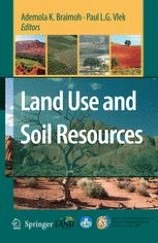
Land-use change is one of the main drivers of many environmental change processes. It influences the basic resources of land use, including the soil. Its impact on soil often occurs so creepingly that land managers hardly contemplate initiating ameliorative or counterbalance measures. Poor land management has degraded vast amounts of land, reduced our ability to produce enough food, and is a major threat to rural livelihoods in many developing countries. To date, there has been no single unifying volume that addresses the multifaceted impacts of land use on soils. This book has responded to this challenge by bringing together renowned academics and policy experts to analyze the patterns, driving factors and proximate causes, and the socioeconomic impacts of soil degradation. Policy measures to prevent irreversible degradation and rehabilitate degraded soils are also identified.
This monograph presents state of the art applications and new developments of isotopes in hydrology, environmental disciplines and climate change studies. Coverage ranges from the assessment of groundwater resources in terms of recharge and flow regime to studies of the past and present global environmental and climate changes.
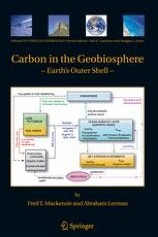
Carbon and carbon dioxide always played an important role in the geobiosphere that is part of the Earth’s outer shell and surface environment. The book’s eleven chapters cover the fundamentals of the biogeochemical behavior of carbon near the Earth’s surface, in the atmosphere, minerals, waters, air-sea exchange, and inorganic and biological processes fractionating the carbon isotopes, and its role in the evolution of inorganic and biogenic sediments, ocean water, the coupling to nutrient nitrogen and phosphorus cycles, and the future of the carbon cycle in the Anthropocene. This book is mainly a reference text for Earth and environmental scientists; it presents an overview of the origins and behavior of the carbon cycle and atmospheric carbon dioxide, and the human effects on them. The book can also be used for a one-semester course at an intermediate to advanced level addressing the behavior of the carbon and related cycles.
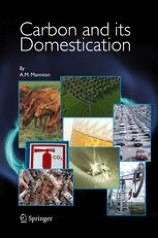
Carbon is chemically versatile and is thus the body and soul of biological, geological, ecological and economic systems. Its appropriation by humans through diversion of its biogeochemical cycle has been a mainstay of development. This domestication is characterized by a number of thresholds: control of fire, development of agriculture, expansion of Europe, fossil-fuel use and biotechnology. All have exacted an environmental toll, not least being climatic change and biodiversity loss. Carbon management now and in the future is a ‘hot’ political issue.
The biological effects of asteroid and comet impacts have been widely viewed as primarily destructive. The role of an impactor in the K/T boundary extinctions has had a particularly important influence on thinking concerning the role of impacts in ecological and biological changes. th During the 10 and final workshop of the ESF IMPACT program during March 2003, we sought to investigate the wider aspects of the involvement of impact events in biological processes, including the beneficial role of these events from the prebiotic through to the ecosystem level. The ESF IMPACT programme (1998-2003) was an interdisciplinary effort that is aimed at understanding impact processes and their effects on the Earth environment, including environmental, geological and biological changes.
This valuable study of environmental subsystems functioning under various climatic and anthropogenic conditions provides a unique insight into the social context of global changes in biogeochemical cycles and demonstrates current understanding of globalization and sustainable development.
The Asia-Pacific region is home to the world’s largest region of coral reefs and mangroves. It accommodates two-thirds of the world’s human population and its economic activities have the highest growth rate in the world. Ongoing degradation of the environment, resulting from coastal development, deforestation, desertification and over-harvesting, are becoming a matter of great concern, as floods and droughts occur as a result of this degradation. Threats of global environmental change, such as climate change and sea-level rise, will exacerbate such problems. Therefore, appropriate policies and measures are needed for coastal management, to address both the local and global trends. This book gives an overview of the state-of-the-art understanding on the drivers, state, and responses to coastal environmental changes in the Asia-Pacific region. It provides excellent perspectives on current and anticipated environmental changes in the region’s coastal areas, to researchers, students, policy makers, coastal managers and other stakeholders.

Formerly nomadic livestock-keeping pastoralists have settled in many regions of the world in the past century. Some groups, including those in the former Soviet Union, Iran, and Israel, have settled in response to state-enforced measures; others including Saami in Norway or Bedouins in Saudi Arabia, in response to changing economic opportunities. East Africa, home to many cattle- and camel-keeping pastoral societies, has been among the most recent to change. The shift to sedentism by East African pastoralists increased d- matically in the late 20th century as a result of sharp economic, political, demographic, and environmental changes.
This book addresses the significant environmental changes experienced by high latitude and high altitude ecosystems at the beginning of the 21st c- tury. Increased temperatures and precipitation, reduction in sea ice and glacier ice, the increased levels of UV-radiation and the long-range tra- ported contaminants in arctic and alpine regions are stress factors that challenge terrestrial and aquatic ecosystems. The large natural variation in the physical parameters of these extreme environments is a key factor in structuring the biodiversity and biotic productivity, and the effect of the new stress factors can be critical for the population structures and the - teraction between species. These changes may also have socio-economic effects if the changes affect the bio-production, which form the basis for the marine and terrestrial food chains. The book is uniquely multidisciplinary and provides examples of va- ous aspects of contemporary environmental change in arctic and alpine - gions. The 21 chapters of the book are organised under the fields of •Climate change and ecosystem response, •Long range transport of poll- ants and ecological impacts, and •UV radiation and biological effects, each also including aspects of the •Socio-economic effects of environmental change. The introductory chapter presents and explains the internal c- nection and integration of all chapters.

This book is the result of the Proceedings of the NATO Advanced Research Workshop on Air, Water and Soil Quality Modelling for Risk and Impact Assessment,The aim of the NATO Advanced Research Workshop on was to further joint environmental compartment modelling and applications of control theory to environmental management. The articles of the proceedings provide an overview of ongoing research in this field regarding assessment of environmental risks and impacts. Besides selected issues of practical application they address questions of forward and inverse modelling, integrated treatment of environmental changes and economic impacts as well as aspects of future development of numerical environmental modelling.

As is now generally accepted mankind’s burning of fossil fuels has resulted in the mass transfer of greenhouse gases to the atmosphere, a modification of the delicately-balanced global carbon cycle, and a measurable change in world-wide temperatures and climate. Although not the most powerful greenhouse gas, carbon dioxide (CO) drives climate 2 change due to the enormous volumes of this gas pumped into the atmosphere every day. Produced in almost equal parts by the transportation, industrial and energy-generating sectors, atmospheric CO concentrations have 2 increased by about 50% over the last 300 years, and according to some sources are predicted to increase by up to 200% over pre-industrial levels during the next 100 years. If we are to reverse this trend, in order to prevent significant environmental change in the future, action must be taken immediately.
This book deals with recent developments and applications of environmental monitoring technologies, with emphasis on optical and biological methods that are rapidly progressing through the integration of emerging technologies from various disciplines.

سوريا - اتستراد درعا - غباغب
+963-15 2050 - 15 860 380 /1/2/3 - 11 662 3900