


تحسين النتائح
ترتيب حسب
من
الى

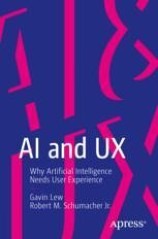
Great effort has been put forth to continuously make AI “smarter.” But, will smarter always equal more successful AI? It is not just about getting a product to market, but about getting the product into a user’s hands in a form that will be embraced. This demands examining the product from the perspective of the user. Authors Gavin Lew and Robert Schumacher have written AI and UX to examine just how product managers and designers can best strike this balance. From exploring the history of the parallel journeys of AI and UX, to investigating past product examples and failures, to practical expert knowledge on how to best execute a positive user experience, AI and UX examines all angles of how AI can best be developed within a UX framework.
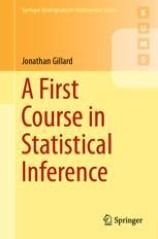
Offers a modern and accessible introduction to Statistical Inference, the science of inferring key information from data. Aimed at beginning undergraduate students in mathematics, it presents the concepts underpinning frequentist statistical theory. Written in a conversational and informal style, this concise text concentrates on ideas and concepts, with key theorems stated and proved. Detailed worked examples are included and each chapter ends with a set of exercises, with full solutions given at the back of the book. Examples using R are provided throughout the book, with a brief guide to the software included. Topics covered in the book include: sampling distributions, properties of estimators, confidence intervals, hypothesis testing, ANOVA, and fitting a straight line to paired data.
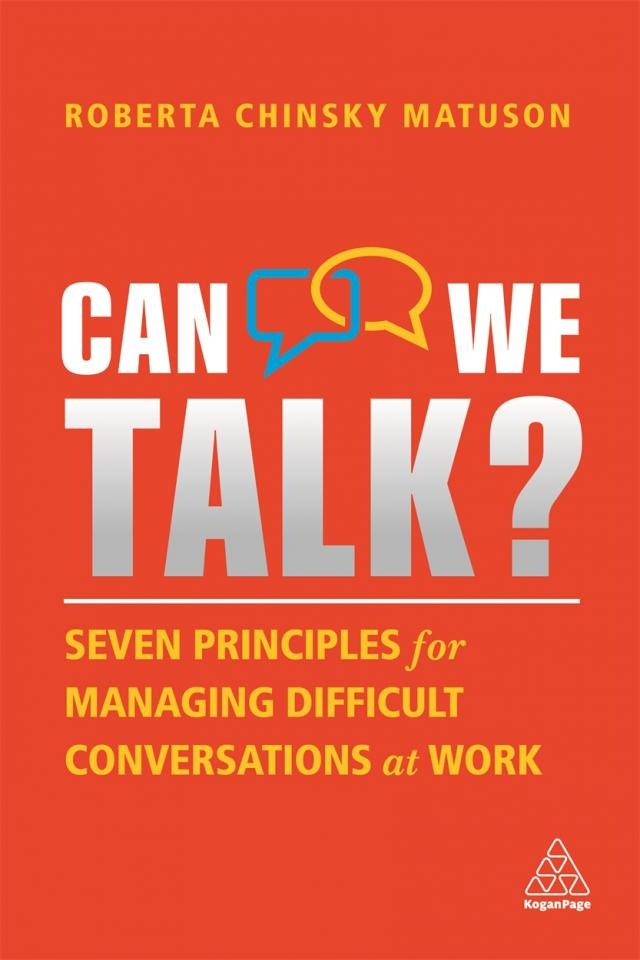
This book offers guidance on how to create the right conditions for a meaningful discussion. The author identifies the seven key principles that enable both parties to gain a deeper understanding of what the other person may be thinking and will help establish their point of view more clearly: confidence, clarity, compassion, curiosity, compromise, credibility, courage.
Explores the pluriverse of art and design through epistemological and methodological considerations. What kinds of sustainable ways are there for knowledge transfer, supporting plural agendas, finding novel ways for unsettling conversations, unlearning and learning and challenging power structures with marginalised groups and contexts through art and design? The main themes of the book are art and design methods, epistemologies and practices that provide critical, interdisciplinary, pluriversal and decolonial considerations. The book challenges the domination of the white logic of art and design and shifts away from the Anglo-European one-world system towards the pluriverse.
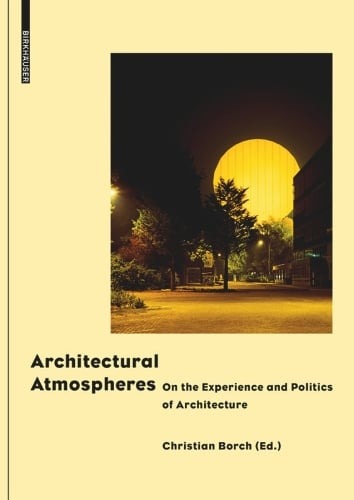
Addresses the growing awareness of the atmospheric dimension of architecture and provides a current, programmatic discussion of this topic. What possibilities does this approach open to architecture, what value does this knowledge have? Three essays and a conversation lead a cross-discipline discussion on the impact of architecture, and contribute to the debate first initiated by Peter Zumthor. The texts are accompanied by approximately forty color images that capture architectural moods in a variety of ways
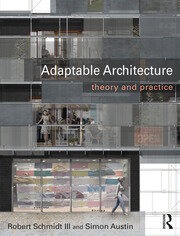
provides thought-provoking and inquisitive insights into how we can prolong the useful life of buildings by designing them to be more adaptable, and hence create a more sustainable built environment. The book provides a theoretical foundation counterpointed by the experiences and ideas of those involved in the design and use of buildings. It explains many approaches to designing for change, with lessons from history, and case studies including The Cedar Rapids Public Library, Kentish Town Health Centre and Folkestone Performing Arts Centre, which stretch our thinking beyond the conventional notions of adaptability. The authors reveal the many conditions that make it a complex design phenomenon, by considering the purpose, design and business case of buildings as well as the physical product. Full of summaries, diagrams, reference charts, tables, and photos of exemplar solutions for use as conversational tools or working aids, this book is for any professional or student who wants to research, question, imagine, illustrate - and ultimately design for - adaptation.
Banter, chit-chat, gossip, natter, tete-a-tete: these are just a few of the terms for the varied ways in which we interact with one another through conversation. David Crystal explores the factors that motivate so many different kinds of talk and reveals the rules we use unconsciously, even in the most routine exchanges of everyday conversation. We tend to think of conversation as something spontaneous, instinctive, habitual.
This book discusses a core question in many fields of the social sciences, namely how to create, share and adopt new knowledge. It creates an original space for conversation between two lines of research that have developed largely in parallel for a long time: social network theory and the geography of knowledge. This book considers that relational thinking has become increasingly important for scholars to capture societal outcomes by studying social relations and networks, whereas the role of place, space and spatial scales has been somewhat neglected outside an emergent geography of knowledge.

Einstein's Enigma, or black holes in my foam bath, tells the story of the theory of gravitation, from its beginnings to the latest developments in astrophysics, focusing on Albert Einstein's theory of general relativity and the physics of black holes. Through engaging conversations and diagrams scribbled on paper napkins, the rudiments of relativity, space-time and many aspects of modern physics follow one another. In skits narrated with pedagogical skill and remarkable literary talent, the reader will come across the informal lessons that a cosmopolitan astrophysicist gives to his friend Alfie, a free lance organizer of research projects. Join in the intellectual fun and get excited with sparkling ideas, while with your imagination you enjoy a relaxing soak in this magical tub!

The idea for this book emerged from a conversation between Vivian Forbes and Charles Eaton following two seminars held in the Department of Geography at the University of Western Australia given by Trevor So?eld and Christopher Grif?n more than ?ve years ago. One seminar involved papers from Charles Eaton and Christopher Grif?n on the recent Speight coup in Fiji; the other, given by Trevor So?eld, was on the Solomon Islands. The seminars were attended by, among others, Dennis Rumley, who on getting involved in the conversation, suggested the idea of a book and then followed through on its scope, structure, planning, and possible contributors. Looking back now, we owe a special debt of gratitude to Charles Eaton both for his enthusiasm and his ideas then, and for his continued support throughout the whole project. Since that time ?ve years ago, many people have boarded and have left the Arc.

Telecommunication systems and human-machine interfaces start employing multiple microphones and loudspeakers in order to make conversations and interactions more lifelike, hence more efficient. This development gives rise to a variety of acoustic signal processing problems under multiple-input multiple-output (MIMO) scenarios, encompassing distant speech acquisition, sound source localization and tracking, echo and noise control, source separation and speech dereverberation, and many others. The last decade has witnessed a growing interest in exploring these problems, but there has been little effort to develop a theory to have all these problems investigated in a unified framework. This unique book attempts to fill the gap.

سوريا - اتستراد درعا - غباغب
+963-15 2050 - 15 860 380 /1/2/3 - 11 662 3900