



الصفحة 1
الصفحة 1

Natural Products : Drug Discovery and Therapeutic Medicine
Although the natural product drug discovery programs of the large drug companies are now equaled by programs for the high throughput screening of synthetic compounds generated through combinatorial chemistry, natural compounds still hold great promise to overcome such problems as antibiotic resistance, the emergence of new diseases, the failure to conquer old diseases, and the toxicity of some contemporary medical products. In Natural Products: Drug Discovery and Therapeutic Medicine, a panel of recognized experts and leaders in the field discuss the past successes of natural products as medicines and review future possibilities arising from both conventional and new technologies. High-performance liquid chromatography profiling, combinatorial synthesis, genomics, proteomics, DNA shuffling, bioinformatics, and genetic manipulation all now make it possible to rapidly evaluate the activities of extracts as well as purified components derived from microbes, plants, and marine organisms. The authors apply these methods to new natural product drug discovery, to accessing microbial diversity, to investigating specific groups of products (Chinese herbal drugs, antitumor drugs from microbes and plants, terpenoids, and arsenic compounds), and to exploiting specific sources (the sea, rainforest, and endophytes). These new opportunities show how research and development trends in the pharmaceutical industry can advance to include both synthetic compounds and natural products, and how this paradigm shift can be more productive and efficacious.

Insights into Receptor Function and New Drug Development Targets
G-Protein Coupled receptors (GPCRs) and other receptors are significant targets for drug discovery, due to their roles in fundamental physiological processes. Among these roles are: regulation of growth, food intake, reproduction, water balance, sensory perception, blood pressure and heart rate. GPCR-directed drugs account for approximately $40 billion in sales and, of drugs at market, approximately 70% target GPCR function. The availability of combinatorial chemistry coupled with high throughput screening techniques have facilitated discovery of peptidic and non-peptidic ligands of membrane receptors. Mutant receptor models have revealed their role in health and disease and provided insight to new therapeutic approaches, based on control of protein trafficking. Understanding receptor-receptor interactions has provided one mechanism for receptor cross-talk and revealed unexpected interactions.

Frontiers in Anti-Infective Drug Discovery ; Vol.9
Covers a range of topics including rational drug design and drug discovery, medicinal chemistry, in-silico drug design, combinatorial chemistry, high-throughput screening, drug targets, recent important patents, and structure-activity relationships. Frontiers in Anti-Infective Drug Discovery is a valuable resource for pharmaceutical scientists and post-graduate students seeking updated and critically important information for developing clinical trials and devising research plans in this field. The ninth volume of this series features 5 reviews that cover some aspects of clinical and pre-clinical antimicrobial drug development, with 2 chapters focusing on drugs to treat leishmaniasis and dengue fever, respectively. - Use of preclinical and early clinical data for accelerating antimicrobial drug development - Post-translational modifications: host defence mechanism, pathogenic weapon, and emerged target of anti-infective drugs - Scope and limitations on the potent antimicrobial activities of hydrazone derivatives - Current scenario of anti-leishmanial drugs and treatment - Dengue hemorrhagic fever: the potential repurposing drugs

Combinatorial Chemistry on Solid Supports
In this volume, state-of-the-art solid-phase synthesis is presented from different angles. Ranging from methodology development to application in the synthesis of complex native and designed structures, a complete overview is presented. We are confident that addressing the fascinating interface between chemistry and biology is only possible by innovative methods in both disciplines. Combinatorial chemistry is surely one of these.This book, written by an international group of renowned experts in their respective field, covers recent advances in important topics regarding combinatorial chemistry on solid supports
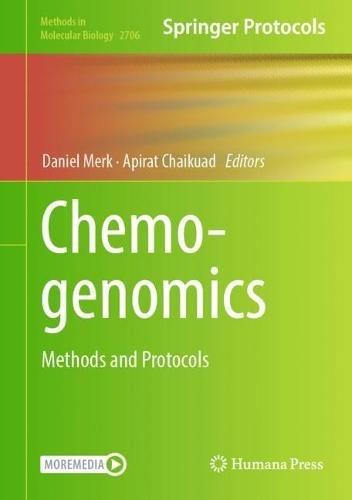
Chemogenomics : Methods and protocols
Presents both theoretical guidance and protocols on chemogenomics including chemogenomics library assembly, compound profiling, and phenotypic assays. The chapters in this book cover topics such as the assembly and use of Kinase Chemogenomics; data mining for chemogenomic compound candidates; protocols for protein family-focused assay systems to profile chemogenomic compounds; functional and target engagement assays in cellular settings for broad characterization; and a discussion on phenotypic assays where chemogenomic sets may be applied.
Advances in Mass Data Analysis of Images and Signals in Medicine, Biotechnology, Chemistry and Food Industry ; 3rd International Conference, MDA 2008 Leipzig, Germany, July 14, 2008 Proceedings
Presents the broad and growing scientific evidence linking mass data analysis with challenging problems in medicine, biotechnology and chemistry.
