


تحسين النتائح
ترتيب حسب
من
الى

Explains how artificial intelligence is applied to medicine, illustrating not only its enormous potential but also ancillary issues and the limits and risks inherent in its use on a large scale. The book focuses on the intersection between medicine and AI and its implications on the impact of human health care delivery. Topics discussed include wearable devices, health data, Internet of Things, virtual reality, robotic assistance system, and digital intelligence in the health sector. Additionally, sections discuss diagnostics and decision-making systems and machine/deep learning in clinical setting.

Provides you with an in-depth understanding of the pharmacologic principles needed for safe and effective dental treatment and oral health care. It discusses drug properties and mechanisms of action, dosages, intended effects, interactions, and adverse reactions - both for the medications a patient may already be taking and for the drugs prescribed by the dentist. This new edition has been updated throughout to give you a firm foundation in pharmacology in order to assess and educate patients so they can maintain optimal oral health!
Mass immunization is the blitzkrieg of vaccination practice. It serves to rapidly protect populations, both because of the high coverage achieved and because of the herd immunity thereby induced. However, as in war, mass immunization campaigns must be conducted intelligently, with careful strategy and strong attention to logistics of supply and deployment. If conducted badly, mass immunization may fail or even be counter-productive. In this volume, some of the most successful practitioners of mass im- nization tell us about its art and science. David Heymann and Bruce Aylward of WHO begin the book with a theoretical and practical overview of mass immunization. Michael Lane, who participated in the successful effort to eradicate smallpox relates how this was done using mass vaccination and other strategies. Application of mass immunization by the US military is c- ered by John Grabenstein and Remington Nevin, who have a large experience in these matters. Karen Noakes and David Salisbury recount the striking s- cesses of mass immunization in the United Kingdom. The global control of the clostridia that produce diphtheria toxin is described by Charles Vitek. Hepa- tis A is decreasing dramatically under the impact of large-scale vaccination, as Francis André illustrates. The French experience with Hepatitis B vac- nation has been mixed, and François Denis and Daniel Levy-Bruhl explain the circumstances. In?uenza vaccination is an annual example of large-scale campaigns, the complexity of which is recounted by Benjamin Schwartz and Pascale Wortley.
Healthcare quality is not a new issue, but it is often underestimated. The doctor focuses on his relationship with the patient, and is led to believe that technique and technology are sufficient to guarantee effective and efficient performance, regardless of the organizational system. Quality understood as "Total Quality Management" is a way to cross a border, to create knowledge, to break the armor of self-referentiality and that individualistic vision of work learned during university studies and consolidated by professional practice. The path of professional peer accreditation is the tool that the scientific society Associazione Medici Diabetologi has developed and provided to diabetologists to facilitate the understanding of ways of looking at the world of healthcare that are different from those they usually use.
Deals with the skin and mucous membrane manifestations observed during infectious, metabolic and toxic diseases. It is intended not only for dermatologists and internists, but also for healthcare professionals concerned with infectious, metabolic and toxic diseases.
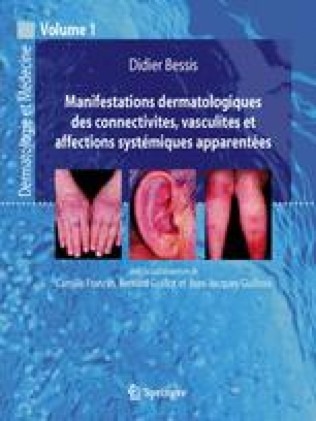
Deals with all the skin and mucous membrane manifestations observed during the various so-called systemic, common or rare diseases. Each chapter covers in an exhaustive and original way the clinical, anatomopathological and therapeutic knowledge essential to the practice of dermatology and internal medicine. The work is abundantly illustrated with color clinical iconography, carefully selected for its clinical representativeness. The didactic anatomopathological figures have been enriched with explanatory diagrams facilitating their reading by the practitioner unfamiliar with dermatological histology. Produced by a group of leading authors in their field, this book is intended for dermatologists, rheumatologists and internists as well as all professionals concerned with systemic diseases and internal medicine.
لThe text is logically organized and key information is easily accessible. The introductory section offers the reader important background and rationale for evaluating and treating addiction in primary care. Following a useful presentation of addiction "basics" (i.e., definitions, neurobiology, genetics, and the disease model), the majority of the book focuses on helping the physician gain insight and develop practical skills that can be readily implemented. A wealth of clinical assessment tools is provided, and the underlying psychosocial processes common to all forms of addiction are discussed. Both pharmacologic interventions and nonpharmalogic modalities are clearly outlined. Of particular note are specific cognitive-behavioral and motivational strategies that can be administered in an office-based setting. The role of community-based recovery support systems is considered as well. Since a complete understanding of why and when to refer is critical to the management of this often life-threatening condition, criteria for referral are detailed. Bulleted clinical "pearls" further aid the reader in gaining insight into treating this difficult patient population.
This practical volume focuses on the medical management of heart failure and outlines the causes, etiopathology and mechanisms in such a way that most health care professionals can grasp the concepts.

Breast cancer, its causes, early detection and treatment have received considerable attention, since this widespread disease is one of the most important health concerns for women. This book provides a comprehensive overview of the diagnostic and therapeutic aspects of the management of early-stage breast cancer, including essential information on basic topics like pathology, and radiology, as well as the latest developments. Further, it discusses all aspects of surgical care, chemotherapy and radiation therapy, together with the controversies and current management guidelines.

This volume acknowledges and celebrates the contributions of Dr. Frederick S. Szalay to the field of Mammalian Evolutionary Morphology. Professor Szalay has published about 200 articles, four monographs, and six books on this subject. Throughout his career Professor Szalay has been a strong advocate for biologically and evolutionarily meaningful character analysis. In his view, this can be accomplished only through an integrated strategy of functional, adaptational, and historical analysis. Dr. Szalay worked on several different mammalian groups during his career, and the contributions to this volume reflect his broad perspective. Chapters focus on Primates, a group to which Professor Szalay dedicated much of his career. However, other mammalian groups on which he conducted a significant amount of research, such as marsupials and xenarthrans, are also covered in the volume.
Male Sexual Function: A Guide to Clinical Management, Second Edition, completely updates and reviews newer developments, including linking erectile dysfunction (ED) with lower urinary tract systems, advances in erectile physiology, and the appreciation of ED as a form of endothelial dysfunction and a harbinger of other potentially lethal forms of vascular disease. Treatments of ED as well as the background, causes, associated conditions, and diagnostic tools are also provided. This new updated edition also presents the facts of sexual function and dysfunction so that the practitioner can properly treat basic problems with easily prescribed therapies. Also included is a new chapter on cardiovascular disease as well as chapters on pelvic surgeries, intracavernous injections with vasoactive agents, and vacuum erection devices.
The work stems from the desire to provide the cardiologist or non-imaging physician with the basis for understanding technical principles and methods of acquiring and reconstructing images. At the same time, even the radiologist who does not have specific experience in cardiac imaging will be able to acquire basic knowledge of coronary anatomy and pathophysiology.
This unique and engaging open access title provides a compelling and ground-breaking account of the patient safety movement in the United States, told from the perspective of one of its most prominent leaders, and arguably the movement’s founder, Lucian L. Leape, MD. Covering the growth of the field from the late 1980s to 2015, Dr. Leape details the developments, actors, organizations, research, and policy-making activities that marked the evolution and major advances of patient safety in this time span. In addition, and perhaps most importantly, this book not only comprehensively details how and why human and systems errors too often occur in the process of providing health care, it also promotes an in-depth understanding of the principles and practices of patient safety, including how they were influenced by today’s modern safety sciences and systems theory and design. Indeed, the book emphasizes how the growing awareness of systems-design thinking and the self-education and commitment to improving patient safety, by not only Dr. Leape but a wide range of other clinicians and health executives from both the private and public sectors, all converged to drive forward the patient safety movement in the US.
Contained in this book are the outcome of a colloquium sponsored by Fondation IPSEN in which interdisciplinary perspectives were brought to bear on conceptual, empirical and clinical aspects of this relationship. The result is a unique, innovative and timely blend of papers on topics ranging from frailty concepts in animal models and early Homo sapiens, to documentation of progress in morbidity compression, on the relationships between frailty and impairments and inflammation, and perspectives on long-term health care needs in an aging world.
Describes the theoretical underpinnings and operational aspects of delivering longer-term inpatient psychiatric care to adolescents experiencing severe, unremitting mental illness. The authorship is drawn from the multidisciplinary team that supports the Walker Adolescent Unit, located in Sydney, Australia. The book begins with an account of the planning and development of the unit, an examination of the physical environment, and the adaptations that have been made to ensure its functionality. There follows a consideration of the therapeutic milieu. The book describes clinical processes such as admission and discharge planning, formulation and case review. There is information about the specific roles of professionals and the therapies that they provide. The book describes the steps taken to maintain and enhance the physical wellbeing of patients. There are chapters dedicated to governance, and to training and education. The final chapter describes how the unit responded to challenges created by the COVID-19 pandemic.
Acute heart failure is one of the oldest described medical conditions. However, although its clinical symptomatology is fairly obvious and known to everyone: dyspnea, liver pain, crackles on auscultation, the epidemiology has only been explored for very recent years. In all of the cardiology and resuscitation books of the past 40 years, acute heart failure has been considered a catch-all ranging from acute simple lung edema in hypertensive crisis to cardiogenic shock following heart attack. myocardium. It was all called "acute heart failure." This book is based on the recent Recommendations of the European Society of Cardiology and the European Society of Intensive Care Medicine which advocate the designation "Acute heart failure syndrome" in which the decompensation of heart failure chronic, hypertensive surge, cardiogenic shock, right heart failure, and high output heart failure are separate entities.

Lifestyle medicine is a practice which adopts evidence-based lifestyle interventions as a primary modality to prevent, treat, and reverse chronic diseases. The six main pillars of this specialty include physical activity, nutrition, stress resilience, cessation or risk reduction of substance use, quality sleep, and connectivity. Lifestyle psychiatry is a rapidly emerging area within healthcare informed by rigorous research within the social and biological sciences, public health, and medicine. A volume in the Lifestyle Medicine series, this book uses a comprehensive biopsychosocial approach to prevent and treat psychiatric disorders and promote mental and physical well-being through evidence-based lifestyle interventions.
The only book devoted exclusively to this specialty, Lessons Learned details the risk management issues involved in genetic counseling practice, and offers solid strategies for minimizing the risk of costly, career-damaging malpractice suits. Schmerler clearly identifies areas of practitioner liability and demonstrates how they may be averted, so counselors can better manage their practice while lowering the risk of legal action. Examples drawn from relevant court cases illustrate typical issues in malpractice, negligence, and breach of contract suits. With this in-depth knowledge, readers can refine their goals toward increased self-protection as well as client care.
The hemodynamic monitoring of intensive care patients is undergoing major changes. Technological advances such as computerization and miniaturization have made it possible to considerably expand the range of assessment tools available at the bedside. Thus, the approach to cardiovascular monitoring - which was once readily "invasive" and global - is gradually becoming non-invasive and locoregional or even tissue. At the same time, the combined evolution of technology and physiological and pathophysiological concepts now provides the clinician with access to a variety of "functional hemodynamic monitoring". The aim of this book is to provide a better understanding of the interest and the limits of the hemodynamic parameters accessible by current hemodynamic monitoring techniques. It thus aims to ensure that the use of these techniques is perfectly mastered by resuscitators and anesthetists-resuscitators so that patient care is ultimately optimal.

This book thus proposes, reconnecting with the most clinical and frankly psychodynamic vein, to bear witness to the encounter with the reality of cancerous disease and with all the imagination that it arouses. It is also a tribute to the sick - but just as much to their loved ones and their caregivers - who then engage in these territories of the crash, the unpredictable, where everything leads to think and do.

سوريا - اتستراد درعا - غباغب
+963-15 2050 - 15 860 380 /1/2/3 - 11 662 3900