



الصفحة 1
الصفحة 1

Biotechnologies for plant mutation breeding : Protocols
This book offers 19 detailed protocols on the use of induced mutations in crop breeding and functional genomics studies, which cover topics including chemical and physical mutagenesis, phenotypic screening methods, traditional TILLING and TILLING by sequencing, doubled haploidy, targeted genome editing, and low-cost methods for the molecular characterization of mutant plants that are suitable for laboratories in developing countries. The collection of protocols equips users with the techniques they need in order to start a program on mutation breeding or functional genomics using both forward and reverse-genetic approaches. Methods are provided for seed and vegetatively propagated crops (e.g. banana, barley, cassava, jatropha, rice) and can be adapted for use in other species.

Bee products : Chemical and biological properties
Presents an updated discussion on the chemical composition and biological properties of the main bee products, which until now have been presented separately in different editions This book scoops out studies about bee products most used in marketing and in traditional medicine such as honey, royal jelly, propolis, bee pollen and bee venom Discusses chemical composition and biological function of the different bee products on topics such as nutrition, aging and age-related diseases, cancer, neurodegenerative diseases and pathogen infections Bee products are rich in several essential nutrients and non essential nutrients, as sugars, minerals, proteins, free amino acids, vitamins, enzymes and polyphenols, that seem to be closely related to their biological functions. The effects of these products in nutrition, aging and age-related diseases, cancer, neurodegenerative diseases and pathogen infections are discussed.
Applied biophysics for drug discovery
It is a guide to new techniques and approaches to identifying and characterizing small molecules in early drug discovery. Biophysical methods are reasserting their utility in drug discovery and through a combination of the rise of fragment-based drug discovery and an increased focus on more nuanced characterisation of small molecule binding, these methods are playing an increasing role in discovery campaigns.
An introduction to pharmacovigilance ; 2nd ed.
Designed to aid the rapid understanding of the key principles of pharmacovigilance. Packed full of examples illustrating drug safety issues it not only covers the processes involved, but the regulatory aspects and ethical and societal considerations of pharmacovigilance. Covering the basics step-by-step, this book is perfect for beginners and is essential reading for those new to drug safety departments and pharmaceutical medicine students. The second edition is thoroughly revised and updated throughout and includes a new chapter on clinical aspects of pharmacovigilance.
Legitimate expectations in the common law world
The sceptical and critical reception to Coughlan outside England is a striking contrast to the reception the case received within the UK. This book provides a detailed scholarly analysis of these issues and considers the doctrine of legitimate expectations both in England and elsewhere in the common law world. Volume 12 in the series Hart Studies in Comparative Public Law

Bordieuan Field Theory as an Instrument for Military Operational Analysis
This book uses Pierre Bourdieu’s field theory as a lens through which to examine military operations. Novel in its approach, this innovative text provides a better, more nuanced understanding of the modern ‘battlespace’, particularly in instances of prolonged low-intensity conflict. Formed in two parts, this book primarily explores the scope of Bourdien theory before secondly providing a detailed case study of the Yugoslavian succession war of 1990-1992. Gunneriusson suggests that although theories do not necessarily provide answers, they do help us ask better questions. This volume suggests news lines of interdisciplinary investigation that will be of interest to members of armed forces, practitioners from NGOs, and policymakers.
Artificial intelligence and legal analytics : new tools for law practice in the digital age
The field of artificial intelligence (AI) and the law is on the cusp of a revolution. This book - designed to explain computational processes to non-programmers - describes how text analytic programs will change the practice of law, specifically by connecting computational models of legal reasoning directly with legal text.

An introduction to description logics
Designed so that domain knowledge can be described and so that computers can reason about this knowledge. DLs have recently gained increased importance since they form the logical basis of widely used ontology languages, in particular the web ontology language OWL. Written by four renowned experts, this is the first textbook on description logics. It is suitable for self-study by graduates and as the basis for a university course. Starting from a basic DL, the book introduces the reader to their syntax, semantics, reasoning problems and model theory and discusses the computational complexity of these reasoning problems and algorithms to solve them.
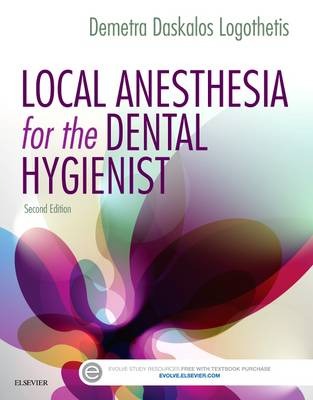
Local anesthesia for the dental hygienist
Provides complete instructions for the safe and effective administration of local anesthesia. Written by noted dental hygiene educator Demetra Logothetis, the first edition won a 2012 PROSE Honorable Mention award. This edition adds a new chapter on children and adolescent patients, plus new coverage of anesthetic agents and advanced techniques.
Local Anaesthesia in Dentistry
A comprehensive guide to the use of local anaesthesia in dentistry that will meet the needs of both students and dental practitioners. It provides the reader with ample background information on the origin of pain and the pharmacology of anaesthetics, and describes the anatomy of the trigeminal nerve in detail. Subsequent chapters cover key are as such as general practical aspects, local anesthaesia in the upper and the lower jaw, the use of local anaesthetics in children, local and systematic complications, and the prevention of side effects. Patients at particular risk of adverse effects are identified and attention drawn to significant legal aspects.
Lasers in dentistry -- current concepts ; 1st ed.
Provides information on the basic science and tissue interactions of dental lasers and documents the principal current clinical uses of lasers in every dental discipline. The applications of lasers in restorative dentistry, endodontics, dental implantology, pediatric dentistry, periodontal therapy, and soft tissue surgery are clearly described and illustrated.
Clinical oral medicine and pathology
The book has been well received internationally by a wide audience of clinicians, including general dentists, oral surgeons, otolaryngologists, primary care physicians, nurse practitioners, dental hygienists, physician assistants, and dermatologists, and sales have been strong among students and post-graduate residents training in medical, dental, and allied health fields, supporting the versatility of this work and serving as testimony to its value in both the academic and private practice arenas. Several key updates and improvements have been made to the second edition. All informational content has been updated to ensure accuracy and relevance, particularly in the rapidly evolving fields of oncology and pharmacology. A new chapter has been added entitled "Oral Sequelae of Cancer and Cancer Therapy" which better organizes and consolidates previous content while expanding on topics such as targeted therapies and hematopoietic stem cell transplantation. Additional clinical images have been included throughout the book so that the full clinical spectrum of any given condition is well-represented. Furthermore, the print quality, as well as the positioning and layout of the clinical images has been improved for optimal utility. Lastly, the summary boxes that follow each condition have been reconfigured with color-coded icons for improved definition, ease of use and cross-referencing.
Clinical oral anatomy : A comprehensive review for dental practitioners and researchers
Presents the most current and comprehensive review of oral anatomy for clinicians and researchers alike. In 26 chapters, the reader is taken on a unique anatomical journey, starting with the oral fissure, continuing via the maxilla and mandible to the tongue and floor of the mouth, and concluding with the temporomandibular joint and masticatory muscles. Each chapter offers a detailed description of the relevant anatomical structures and their spatial relationships, provides quantitative morphological assessments, and explains the relevance of the region for clinical dentistry. All dental health care professionals require a sound knowledge of anatomy for the purposes of diagnostics, treatment planning, and therapeutic intervention. A full understanding of the relationship between anatomy and clinical practice is the ultimate objective, and this book will enable the reader to achieve such understanding as the basis for provision of the best possible treatment for each individual patient as well as recognition and comprehension of unexpected clinical findings.
Clinical Guide to Accelerated Orthodontics : Wth a Focus on Micro-Osteoperforations
A complete reference for all clinicians who are interested in incorporating into their daily practice the techniques available to reduce the duration of orthodontic treatment and to overcome other treatment limitations. It focuses especially on micro-osteoperforations (MOPs) as the most conservative, efficient, and versatile approach to increase the rate of tooth movement.
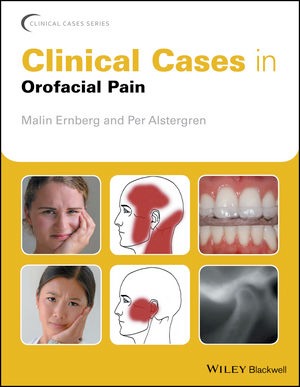
Clinical Cases in Orofacial Pain
Individual cases cover temporomandibular joint disorders, masticatory muscle disorders, headache, neuropathic pain, dental pain, tooth wear, and dystonia. Following the popular Clinical Cases series style, cases are presented with associated academic commentary, including background information, diagnostic criteria and fundamental points that might influence the diagnosis, treatment planning or management of the case.
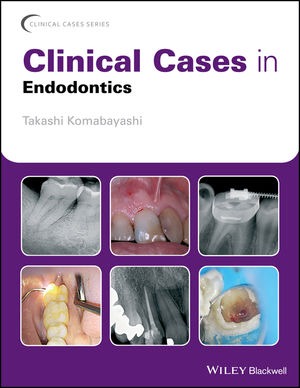
Clinical cases in endodontics
Presents actual clinical cases, accompanied by academic commentary, that question and educate the reader about essential topics in endodontic therapy. It begins with sets of cases illustrating the most common diagnoses and the steps involved in preparing a treatment plan. Subsequent chapters continue in this style, presenting exemplary cases as the basis of discussing various treatment options, including nonsurgical root canal treatment, re-treatment, periapical surgery, internal and external resorption, emergencies and trauma, and treating incompletely developed apices.
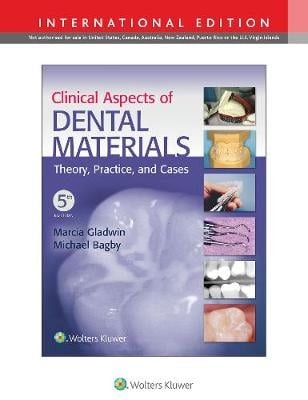
Clinical aspects of dental materials : Theory, practice, and cases
The book’s three-part structure addresses types of dental materials in the 22 chapters of Part I, includes laboratory and clinical applications (essentially a built-in lab manual) in Part II, and presents 11 case studies in Part III that serve as an overall review and help students strengthen their critical thinking skills when providing patient care.
Anesthesia Considerations for the Oral and Maxillofacial Surgeon
Strengthens the margin of safety of office-based anesthesia administration by helping practitioners determine whether the patients they treat are good candidates for office-based anesthesia. This book is organized into three sections. The first section provides a review of the principles of anesthesia, including the pharmacology of anesthetic agents, local anesthesia, patient monitoring, preoperative evaluation, the airway, and management of emergencies and complications. The major organ systems of the body are reviewed in section two, and the most common comorbid conditions that affect these systems are described in terms of their pathophysiology, diagnosis, management, and anesthesia-related considerations. Section three reviews patient groups that warrant special consideration in the administration of office-based anesthesia, such as geriatric, pediatric, pregnant, and obese patients. Spiral-bound and featuring tabs for quick and easy reference, this important book belongs on the shelf of every clinician who provides anesthesia in the office setting.
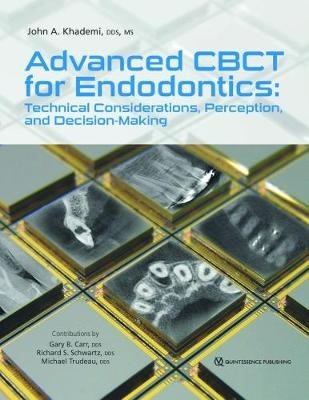
Advanced CBCT for Endodontics : Technical Considerations, Perception, and Decision-Making
This book encourages endodontists to develop a sound technical and theoretical understanding of CBCT. The authors compare the capabilities of modern CBCT imaging with traditional radiography and also present vital information about image interpretation and perception to increase competence and confidence in CBCT interpretation and minimize overdiagnosis and subsequent overtreatment.
Civil engineering structures according to the Eurocodes : Inspection and maintenance
This standard assumes that the structure, after completion, is used as intended in the project and subject to planned inspection and maintenance to meet the expected project lifetime and to detect any unforeseen weakness or behavior" (EN 13670 4.1)An important decision factor in the design of new structures and repairs to existing structures is the lifetime or expected service life. This concept, which is common for civil engineering works, has been extended to all engineering and building works by applying the European Structural Design Codes.
