


تحسين النتائح
ترتيب حسب
من
الى

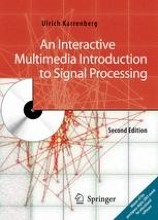
A didactic concept is undertaken for microelectronics, computer technology and communication engineering, which deals with the visualization of signals and processes in addition to graphical programming of signal processing systems. Through the utilization of a professional and globally supported software for metrology and control engineering, DasyLab, useful applications can be developed, modified and optimized. Computer supported processing of real signals is made possible over the sound card and the parallel port. Over two hundred pre-programmed signal engineering systems and design transparencies are provided. Pictures also play a dominant rule in this book: there are numerous introduction-videos, one for every chapter, more than 250 high-quality pictures and - most important – all the "living" experiments and their results are visualized. With this learning system, readers can now make use of "equipment" and software, which was practically unaffordable for individuals in the past. What's more, here is a very new concept for learning Signal Processing, not only from the physically-based scientific fundamentals, but also from the didactic perspective, based on modern results of brain research.

This study investigates the role of PowerPoint in organizational communication, particularly in terms of a functional dilemma between its application for documentation as opposed to presentation purposes. The theoretical part of the analysis combines insights from both organizational communication studies (J. R. Taylor et al.) and social systems theory (N. Luhmann et al.). The empirical analysis shows that PowerPoint documents created for cross-project learning purposes contribute to an invisibilization rather than a visibilization of decision processes and their contingency.

Il libro narra la vicenda di Rut, quindicenne, trasferitasi da poco in Germania con la famiglia, al seguito del padre che lavora per un’azienda internazionale produttrice di Software. Sarà proprio il padre a regalare a Rut un computer nuovo, mentre a scuola attraversa un periodo di crisi.E’ l’inizio di un’avventura. Nel computer è installato Vim: un programma che ascolta, capisce e risponde alle domande che la ragazza, inizialmente incredula, fa. Raccontata da Vim, la matematica prende una forma completamente nuova, sorprendente e affascinante.

Algorithms are the heart of computer science and mathematics, since without them the use of computers would not be possible. In this book, which in its English edition has been a longtime bestseller, Harel and Feldmann answer all questions relating to this topic. They talk about the evaluation, correctness and effectiveness of algorithms, but also clarify some doubts about programming techniques and also refer to the very current discussion on quantum computing. The book is useful both as a basic text for an introductory university course in computer science, and as a general introduction to natural sciences, mathematics or engineering.
The book documents the state-of-the-art in Services Science. It combines contributions in Service Engineering, Service Management and Service Marketing and helps to develop a roadmap for future R & D activities in these fields. The book is written for researchers in engineering and management.

Simple tutorial chapters introduce the reader to cutting edge technologies, such as parallel and distributed computing, object-oriented technologies, grid computing, semantic grids, agent based computing and service-oriented architectures. On such bases, a variety of EM applications is proposed: 1) parallel FDTD codes (both for antenna analysis and for metamaterial applications), 2) grid computing for computational EM (CEM) (with applications to antenna arrays, wireless and remote-sensing systems) 3) mobile agents for parametric CEM modeling 4) complex/hybrid EM software environments (with applications to planar circuits, quasi-optical systems,…) 5) semantic grids for CAE of antennas arrays.
Acollection of world class paper articles addressing the following topics: Image and Pattern Recognition: Compression, Image processing, Signal Processing Architectures, Signal Processing for Communication, Signal Processing Implementation, Speech Compression, and Video Coding Architectures. Languages and Systems: Algorithms, Databases, Embedded Systems and Applications, File Systems and I/O, Geographical Information Systems, Kernel and OS Structures, Knowledge Based Systems, Modeling and Simulation, Object Based Software Engineering, Programming Languages, and Programming Models and tools. Parallel Processing: Distributed Scheduling, Multiprocessing, Real-time Systems, Simulation Modeling and Development, and Web Applications. New trends in computing: Computers for People of Special Needs, Fuzzy Inference, Human Computer Interaction, Incremental Learning, Internet-based Computing Models, Machine Intelligence, Natural Language Processing, Neural Networks, and Online Decision Support System.
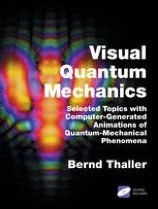
Investigate and to teach quantum mechanics with the aid of computer-generated animations. It is a self-contained textbook that combines selected topics from atomic physics (spherical symmetry, the hydrogen atom, and particles with spin) with an introduction to quantum information theory (qubits, EPR paradox, teleportation, quantum computers). It explores relativistic quantum mechanics and the strange behavior of Dirac equation solutions. A series of appendices covers important topics from perturbation and scattering theory. The book places an emphasis on ideas and concepts, with a fair to moderate amount of mathematical rigor. Though this book stands alone, it can also be paired with Thaller Visual Quantum Mechanics to form a comprehensive course in quantum mechanics. The software for the first book earned the European Academic Software Award 2000 for outstanding innovation in its field.
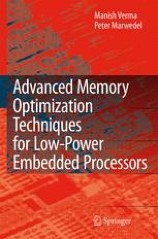
this book explores a collaborative approach by proposing novel memory hierarchies and software optimization techniques for the optimal utilization of these memory hierarchies. Linking memory architecture design with memory-architecture aware compilation results in fast, energy-efficient and timing predictable memory accesses.The evaluation of the optimization techniques using real-life benchmarks for a single processor system, a multiprocessor system-on-chip (SoC) and for a digital signal processor system, reports significant reductions in the energy consumption and performance improvement of these systems. The book presents a wide range of optimizations, progressively increasing in the complexity of analysis and of memory hierarchies. The final chapter covers optimization techniques for applications consisting of multiple processes found in most modern embedded devices.

Man-machine interaction is the gateway providing access to functions and services, which, due to the ever increasing complexity of smart systems, threatens to become a bottleneck. This book therefore introduces not only advanced interfacing concepts, but also gives insight into the related theoretical background.This refers mainly to the realization of video-based multimodal interaction via gesture, mimics, and speech, but also to interacting with virtual object in virtual environments, cooperating with local or remote robots, and user assistance. this book puts special emphasis on implementation aspects. To this end it is accompanied by software development environments for image processing, classification, and virtual environment implementation. In addition a test data base is included for gestures, head pose, facial expressions, full-body person recognition, and people tracking.
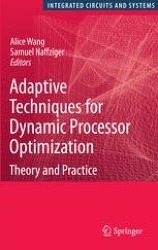
This book discusses the different approaches and responses to adaptive techniques used for processor power, frequency and functionality optimization. Adaptive Techniques for Dynamic Processor Optimization: Theory and Practice includes chapter contributions that explore promising approaches and present the supporting data.
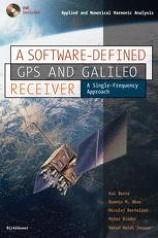
Satellite navigation receivers are used to receive, process, and decode space-based navigation signals, such as those provided by the GPS constellation of satellites. There is an increasing need for a unified open platform that will enable enhanced receiver development and design, as well as cost-effective testing procedures for various applications. This book provide hands-on exploration of new technologies in this rapidly growing field. One of the unique features of the work is the interactive approach used, giving readers the ability to construct their own Global Navigation Satellite Systems (GNSS) receivers. To construct such a reconfigurable receiver with a wide range of applications, the authors discuss receiver architecture based on software-defined radio (SDR) techniques. The presentation unfolds in a systematic, user-friendly style and goes from the basics to cutting-edge research.
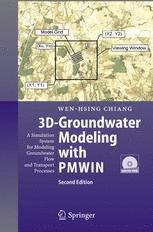
Along with a companion full-version software (PMWIN), this text offers an integrated simulation system. PMWIN comes with a professional graphical user-interface, supported models and programs and several other useful modeling tools. The graphical user-interface allows one to create and simulate models.

سوريا - اتستراد درعا - غباغب
+963-15 2050 - 15 860 380 /1/2/3 - 11 662 3900