


تحسين النتائح
ترتيب حسب
من
الى


This book offers unique in-depth, comprehensive, and comparative analyses of the motivations, context, and outcomes of recent land reforms in Africa. Whereas a considerable number of land reforms have been carried out by African governments since the 1990s, no systematic analysis on their meaning has so far been conducted. In the age of land reform, Africa has seen drastic rural changes. Analysing the relationship between those reforms and change, the chapters in this book reveal not only their socio-economic outcomes, such as accelerated marketisation of land, but also their political outcomes, which have often been contrasting.

Offers a comprehensive study on Advancements in Cybercrime Investigation and Digital Forensics, highlighting the most up-to-date tools that help to mitigate cyber-attacks and that extract digital evidence for forensic investigations to recover lost, purposefully deleted, or damaged files Vast manpower and resources are needed to investigate cybercrimes

This book is the outcome of a Global Forum on Innovation, Intellectual Property and Access to Medicines held in December 2019 at the Max Plank Instititute in Munich, organised by the South Centre and the Max Plank Institute. The academics and experts from international organisations participating have contributed chapters to this book. The book is for policy makers (in Ministries of Health, Ministries of Trade, Ministries of Foreign Affairs, patent offices), but also relevant for academics (law, trade, public health), on the flexibilities available in the Agreement on Trade Related Aspects of Intellectual Property Rights (TRIPS) of the World Trade Organization to promote access to medicines.

This book is arranged and developed around the theme of “2050 China,” it analyzes the factors and advantages of the Chinese road to socialist modernization, explores and summarizes the development goal and the basic logic of the socialist modernization of China, and further shows the general basis of the primary stage of socialism.

Mathematical Linguistics introduces the mathematical foundations of linguistics to computer scientists, engineers, and mathematicians interested in natural language processing. The book presents linguistics as a cumulative body of knowledge from the ground up, with no prior knowledge of linguistics being assumed, covering more than the average two-semester introductory course in linguistics.This comprehensive, reader-friendly volume offers readers a high-level orientation, discussing the foundations of the field and presenting both the classical work and the most recent results. It covers an extremely rich array of topics including not only syntax and semantics but also phonology and morphology, probabilistic approaches, complexity, learnability, and the analysis of speech and handwriting.

Examine the evolving enterprise security landscape and discover how to manage and survive risk. While based primarily on the author’s experience and insights at major companies where he has served as CISO and CSPO, the book also includes many examples from other well-known companies and provides guidance for a management-level audience. Managing Risk and Information Security provides thought leadership in the increasingly important area of enterprise information risk and security. It describes the changing risk environment and why a fresh approach to information security is needed. Because almost every aspect of an enterprise is now dependent on technology not only for internal operations but increasing as a part of product or service creation, the focus of IT security must shift from locking down assets to enabling the business while managing and surviving risk. This edition discusses business risk from a broader perspective, including privacy and regulatory considerations. It describes the increasing number of threats and vulnerabilities and offers strategies for developing solutions. These include discussions of how enterprises can take advantage of new and emerging technologies—such as social media and the huge proliferation of Internet-enabled devices—while minimizing risk.
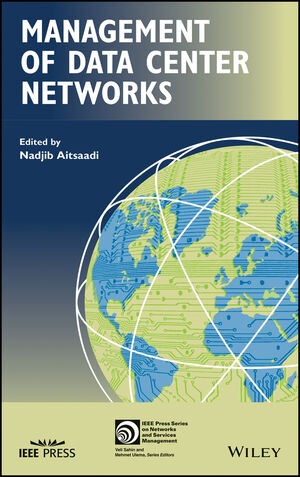
Discover state-of-the-art developments in DCNs from leading international voices in the field. Delivers a rigorous and insightful exploration of the network management challenges that present within intra- and inter-data center networks, including reliability, routing, and security. The book also discusses new architectures found in data center networks that aim to minimize the complexity of network management while maximizing Quality of Service, like Wireless/Wired DCNs, server-only DCNs, and more. offers: A thorough overview of the architectures of data center networks, including the classification of switch-centric, server-centric, enhanced, optical, and wireless DCN architectures An exploration of resource management in wired and wireless data center networks, including routing and wireless channel allocation and assignment challenges and criteria Practical discussions of inter-data center networks, including an overview of basic virtual network embedding Examinations of energy and security management in data center networks

The goal of this book is to address the use of several important machine learning techniques into computer vision applications. An innovative combination of computer vision and machine learning techniques has the promise of advancing the field of computer vision, which contributes to better understanding of complex real-world applications. The effective usage of machine learning technology in real-world computer vision problems requires understanding the domain of application, abstraction of a learning problem from a given computer vision task, and the selection of appropriate representations for the learnable (input) and learned (internal) entities of the system. In this book, we address all these important aspects from a new perspective: that the key element in the current computer revolution is the use of machine learning to capture the variations in visual appearance, rather than having the designer of the model accomplish this. As a bonus, models learned from large datasets are likely to be more robust and more realistic than the brittle all-design models.

Contains selected papers from the international conference ML4CPS – Machine Learning for Cyber-Physical Systems, which was held in Hamburg (Germany), from 29 to 31 March 2023. Cyber-physical systems are adaptive and learning: they analyze their environment and, based on observations, learn patterns, associations and predictive models. Typical applications are condition monitoring, predictive maintenance, image processing and diagnostics. Machine learning is the key technology for these developments.

Presents new approaches to Machine Learning for Cyber Physical Systems, experiences and visions. It contains selected papers from the fifth international Conference ML4CPS – Machine Learning for Cyber Physical Systems, which was held in Berlin, March 12-13, 2020.

These two fields, ML and turbulent combustion, have large body of work and knowledge on their own, and this book brings them together and explain the complexities and challenges involved in applying ML techniques to simulate and study reacting flows. This is important as to the world’s total primary energy supply (TPES), since more than 90% of this supply is through combustion technologies and the non-negligible effects of combustion on environment. Although alternative technologies based on renewable energies are coming up, their shares for the TPES is are less than 5% currently and one needs a complete paradigm shift to replace combustion sources. The book covers the current state of the art in these two topics and outlines the challenges involved, merits and drawbacks of using ML for turbulent combustion simulations including avenues which can be explored to overcome the challenges.

Key to our culture is that we can disseminate information, and then maintain and access it over time. While we are rapidly advancing from vulnerable physical solutions to superior, digital media, preserving and using data over the long term involves complicated research challenges and organization efforts. Uwe Borghoff and his coauthors address the problem of storing, reading, and using digital data for periods longer than 50 years. They briefly describe several markup and document description languages like TIFF, PDF, HTML, and XML, explain the most important techniques such as migration and emulation, and present the OAIS (Open Archival Information System) Reference Model. To complement this background information on the technology issues the authors present the most relevant international preservation projects, such as the Dublin Core Metadata Initiative, and experiences from sample projects run by the Cornell University Library and the National Library of the Netherlands. A rated survey list of available systems and tools completes the book.
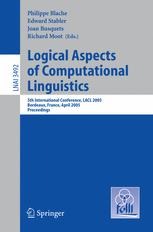
Inaugurates the new FoLLI LNAI subline. It constitutes the refereed proceedings of the 5th International Conference on Logical Aspects of Computational Linguistics, LACL 2005, held in Bordeaux, France in April 2005. The 25 revised full papers presented were carefully reviewed and selected from over 40 submissions. The papers address a wide range of logical and formal methods in computational linguistics with studies of particular grammar formalisms and their computational properties, language engineering, and traditional topics about the syntax/semantics interface.

The IFIP series publishes state-of-the-art results in the sciences and technologies of information and communication. The scope of the series includes: foundations of computer science; software theory and practice; education; computer applications in technology; communication systems; systems modeling and optimization; information systems; computers and society; computer systems technology; security and protection in information processing systems; artificial intelligence; and human-computer interaction. Proceedings and post-proceedings of referred international conferences in computer science and interdisciplinary fields are featured. These results often precede journal publication and represent the most current research. The principal aim of the IFIP series is to encourage education and the dissemination and exchange of information about all aspects of computing.

The LNCS Journal on Data Semantics is devoted to the presentation of notable work that, in one way or another, addresses research and development on issues related to data semantics. The scope of the journal ranges from theories supporting the formal definition of semantic content to innovative domain-specific applications of semantic knowledge. The journal addresses researchers and advanced practitioners working on the semantic web, interoperability, mobile information services, data warehousing, knowledge representation and reasoning, conceptual database modeling, ontologies, and artificial intelligence.

Web semantics and semi-structured data , Semantic caching , Data warehousing and semantic data mining , Spatial, temporal, multimedia and multimodal semantics , Semantics in data visualization , Semantic services for mobile users , Supporting tools , Applications of semantic-driven approaches These topics are to be understood as specifically related to semantic issues. Contributions submitted to the journal and dealing with semantics of data will be considered even if they are not from the topics in the list. While the physical appearance of the journal issues is like the books from the we- known Springer LNCS series, the mode of operation is that of a journal. Contributions can be freely submitted by authors and are reviewed by the Editorial Board.

Springer's LNCS Journal on Data Semantics aims at providing a highly visible dissemination channel for most remarkable work that in one way or another addresses research and development on issues related to the semantics of data. The target domain ranges from theories supporting the formal definition of semantic content to innovative domain-specific application of semantic knowledge. This publication channel should be of the highest interest to researchers and advanced practitioners working on the Semantic Web, interoperability, mobile information services, data warehousing, knowledge representation and reasoning, conceptual database modeling, ontologies, and artificial intelligence.

The LNCS Journal on Data Semantics is devoted to the presentation of notable work that, in one way or another, addresses research and development on issues related to data semantics. Based on the highly visible publication platform Lecture Notes in Computer Science, this new journal is widely disseminated and available worldwide. The scope of the journal ranges from theories supporting the formal definition of semantic content to innovative domain-specific applications of semantic knowledge. The journal addresses researchers and advanced practitioners working on the semantic web, interoperability, mobile information services, data warehousing, knowledge representation and reasoning, conceptual database modeling, ontologies, and artificial intelligence.

Data warehousing and semantic data mining • Spatial, temporal, multimedia and multimodal semantics • Semantics in data visualization • Semantic services for mobile users • Supporting tools • Applications of semantic-driven approaches These topics are to be understood as speci?cally related to semantic issues. Contributions submitted to the journal and dealing with semantics of data will be considered even if they are not within the topics in the list. While the physical appearanceof the journal issues looks like the books from the well-known Springer LNCS series, the mode of operation is that of a jo- nal. Contributions can be freely submitted by authors and are reviewed by the Editorial Board. Contributions may also be invited, and nevertheless carefully reviewed, as in the case for issues that contain extended versions of best papers from major conferences addressing data semantics issues. Special issues, foc- ing on a speci?c topic, are coordinated by guest editors once the proposal for a special issue is accepted by the Editorial Board.

The LNCS Journal on Data Semantics is devoted to the presentation of notable work that, in one way or another, addresses research and development on issues related to data semantics. Based on the highly visible publication platform Lecture Notes in Computer Science, this new journal is widely disseminated and available worldwide. The scope of the journal ranges from theories supporting the formal definition of semantic content to innovative domain-specific applications of semantic knowledge. The journal addresses researchers and advanced practitioners working on the semantic web, interoperability, mobile information services, data warehousing, knowledge representation and reasoning, conceptual database modeling, ontologies, and artificial intelligence.

سوريا - اتستراد درعا - غباغب
+963-15 2050 - 15 860 380 /1/2/3 - 11 662 3900