


تحسين النتائح
ترتيب حسب
من
الى

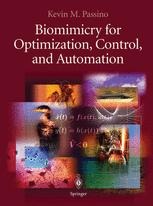
In this book, we focus onhowtousebiomimicryof the functionaloperationofthe “hardwareandso- ware” of biological systems for the development of optimization algorithms and feedbackcontrolsystemsthatextendourcapabilitiestoimplementsophisticated levels of automation. The primary focus is not on the modeling, emulation, or analysis of some biological system. The focus is on using “bio-inspiration” to inject new ideas, techniques, and perspective into the engineering of complex automation systems. There are many biological processes that, at some level of abstraction, can berepresentedasoptimizationprocesses,manyofwhichhaveasa basicpurpose automatic control, decision making, or automation.

The book presents objections to the most common response given by contemporary legal and political theorists to the moral complexity of decision-making in modern societies, namely: the attempt to release public agents from their argumentative burden by insulating a particular set of reasons from the general.

This book is concerned with hierarchical control of manufacturing systems under uncertainty. It focuses on system performance measured in long-run average cost criteria, exploring the relationship between control problems with a discounted cost and that with a long-run average cost in connection with hierarchical control. A new theory is articulated that shows that hierarchical decision making in the context of a goal-seeking manufacturing system can lead to a near optimization of its objective. The approach in the book considers manufacturing systems in which events occur at different time scales.
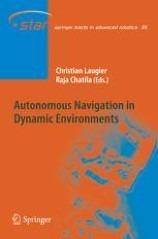
The purpose of this book is to address the challenging problem of Autonomous Navigation in Dynamic Environments, and to present new ideas and approaches in this newly emerging technical domain. The book surveys the state-of-the-art, discusses in detail various related challenging technical aspects, and addresses upcoming technologies in this field. The aim of the book is to establish a foundation for a broad class of mobile robot mapping and navigation methodologies for indoor, outdoor, and exploratory missions.Three main topics located on the cutting edge of the state of the art are addressed, from both the theoretical and technological point of views: Dynamic world understanding and modelling for safe navigation, Obstacle avoidance and motion planning in dynamic environments, and Human-robot physical interactions. Several models and approaches are proposed for solving problems such as Simultaneous Localization and Mapping (SLAM) in dynamic environments, Mobile obstacle detection and tracking, World state estimation and motion prediction, Safe navigation in dynamic environments, Motion planning in dynamic environments, Robust decision making under uncertainty, and Human-Robot physical interactions.
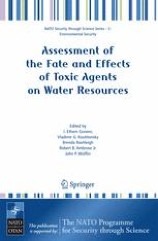
Like all limited and vulnerable resources, water has become one of the potential targets of terrorists. Coastal lagoons are especially vulnerable as they are densely populated centers of commerce and/or tourism. This volume addresses the basic scientific concepts that must be integrated by decisionmakers to minimize damages and optimize recovery operations in the aftermath of such an attack. Scientists from many disciplines including water resource management, hydrodynamics, aquatic ecology and social science combine their expertise in an effort to assess and model emergency scenarios for coastal lagoon systems. This case study uses existing numerical models such as-EFCD, WASP and AQUATOX are used to demonstrate how to optimize rapid response and decision-making
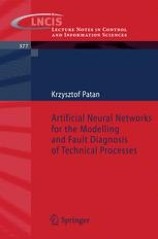
In this book, a wide spectrum of fault diagnosis techniques have been developed. A major category of fault diagnosis techniques is the model based one, where an analytical model of the plant to be monitored is assumed to be available.
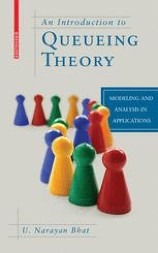
This introductory textbook is designed for a one-semester course on queueing theory that does not require a course in stochastic processes as a prerequisite. By integrating the necessary background on stochastic processes with the analysis of models, the work provides a sound foundational introduction to the modeling and analysis of queueing systems for a broad interdisciplinary audience of students in mathematics, statistics, and applied disciplines such as computer science, operations research, and engineering.
This study investigates the role of PowerPoint in organizational communication, particularly in terms of a functional dilemma between its application for documentation as opposed to presentation purposes. The theoretical part of the analysis combines insights from both organizational communication studies (J. R. Taylor et al.) and social systems theory (N. Luhmann et al.). The empirical analysis shows that PowerPoint documents created for cross-project learning purposes contribute to an invisibilization rather than a visibilization of decision processes and their contingency.

The editor of this volume invited a wide range of experts to provide an in-depth treatment of virtually all aspects of aircraft cabin air quality. The topics are covered at a level comprehensible to all who fly as well as being of sufficient depth to be informative to decision makers concerned with purchase, design, operation, and servicing of passenger aircraft. Topics are grouped under: Control of Aircraft Cabin Air Quality; Possible Effects of Low Humidity, Decreased Outside Air Flows; and Effects of Some Aircraft Malfunctions on Cabin Air Quality. The volume concludes with Air Quality Systems for Related Enclosed Spaces, in which chapters cover air quality in buildings, ships, submarines, and spacecraft, which provide novel approaches potentially applicable to aircraft.
Interactions between agriculture, climate and patterns of land use are complex. Major changes in agriculture, and land use patterns are foreseen in the next couple of decades in response to shifts in climate, greenhouse gas management initiatives, population growth and other forces. The book explores key interactions between changes in agriculture, patterns of land use and efforts to reduce greenhouse emissions from agriculture. The volume is based on inter-disciplinary science and policy interactions, exploring the way land use may aid in addressing or be affected by the onset of climate change and alterations in food demand. Future forces shaping land use decisions are examined, and its sensitivity to climate change is highlighted. Patterns of land use and the agricultural role in climate change mitigation are explored. Also, policy and social responses to the new perspectives on future land use patterns are identified. The perspective of the book is beyond the year 2015.

Acollection of world class paper articles addressing the following topics: Image and Pattern Recognition: Compression, Image processing, Signal Processing Architectures, Signal Processing for Communication, Signal Processing Implementation, Speech Compression, and Video Coding Architectures. Languages and Systems: Algorithms, Databases, Embedded Systems and Applications, File Systems and I/O, Geographical Information Systems, Kernel and OS Structures, Knowledge Based Systems, Modeling and Simulation, Object Based Software Engineering, Programming Languages, and Programming Models and tools. Parallel Processing: Distributed Scheduling, Multiprocessing, Real-time Systems, Simulation Modeling and Development, and Web Applications. New trends in computing: Computers for People of Special Needs, Fuzzy Inference, Human Computer Interaction, Incremental Learning, Internet-based Computing Models, Machine Intelligence, Natural Language Processing, Neural Networks, and Online Decision Support System.
This book presents some of the most recent research results on the applications of computational intelligence in healthcare. The contents include: Information model for management of clinical content State-based model for management of type II diabetes Case-based reasoning in medicine Assessing the quality of care in artificial intelligence environment Electronic medical record to examine physician decisions Multi-agent systems for the management of community healthcare Assistive wheelchair navigation Modelling treatment processes using information extraction Neonatal pain detection using face classification techniques Medical education interfaces using virtual patients The book is directed to the computer scientists, medical practitioners, scientists, professors and students of health science, computer science and related disciplines.

Integrates decision-making and environmental science. For ecologists it will bridge the gap to economics. For practitioners in environmental economics and management it will be a major reference book. It probably contains the largest collection available of expressions and basic equations that are used in environmental sciences. Applying these expressions as "rules-of-thumb" will give participants in a decision-making process a common platform for discussion and arbitration.

This book provides insight on how to interpret capability in ageing – one’s individual ability to perform actions in order to reach goals one has reason to value – from a multidisciplinary approach. the book describes this demographic trends as well as the large global challenges and important societal implications this will have such as a worldwide increase in the number of persons affected with dementia, and in the ratio of retired persons to those still in the labor market. Through contributions from many different research areas, it discussed how capability depends on interactions between the individual (e.g. health, genetics, personality, intellectual capacity), environment (e.g. family, friends, home, work place), and society (e.g. political decisions, ageism, historical period).

This book is unique in that it is more concise than most others; the material is treated in a streamlined fashion. This allows the lecturer to select the material for a one-semester course on a topic more easily. These initial chapters cover just the material for an introductory course on mathematical logic combined with the necessary material from set theory. Chapter 3 is partly of a descriptive nature, providing a view towards decision problems, automated theorem proving, non-standard models and related subjects. The other chapters contain material on logic programming for computer scientists, model theory, recursion theory, Gödel's Incompleteness Theorems, and applications of mathematical logic. Philosophical and foundational problems of mathematics are discussed where appropriate.

The Southeast European Cooperative Initiative (SECI) was the first international instrument for "peace keeping and peace making". Conceived by the United States with full partnership and participation of the European Union, SECI was a response to the Dayton Agreement. SECI was convinced that sending troops and diplomats did not suffice. It called for a new strategy and approach that would promote economic and social development through regional cooperation. SECI understood that despite their differences, the countries of South East Europe shared many mutual concerns. For the international community, SECI was a prelude to a broader instrument - the Stability Pact for South Eastern Europe, launched in 1999. The approach was a success! This compendium of documents, agreements, analyses and essays gives a glimpse into decision-making processes and results achieved.

سوريا - اتستراد درعا - غباغب
+963-15 2050 - 15 860 380 /1/2/3 - 11 662 3900