


تحسين النتائح
ترتيب حسب
من
الى

Offers a superb introduction to theoretical and practical soil mechanics. Special attention is given to the risks of failure in civil engineering, and themes covered include stresses in soils, groundwater flow, consolidation, testing of soils, and stability of slopes. The basic principles of applied mechanics, that are frequently used, are offered in the appendices. The author’s considerable experience of teaching soil mechanics is evident in the many features of the book: it is packed with supportive color illustrations, helpful examples and references.
This book presents a comprehensive introduction to computational micromechanics, including basic homogenization theory, microstructural optimization and multifield analysis of heterogeneous materials. "An Introduction to Computational Micromechanics".

Provides structural engineers with a concise introduction to the architectural, structural and technological aspects of cable roofs, and supplies sufficient information for engineers to carry out their own designs. The improved methods for generating wind and earthquake histories have been included as the trend in modern design codes seem increasingly to require that dynamic response of other forms of non-linear structures such as guyed masts is considered at the design stage.

In recent years an increasing emphasis has been placed on numerically based methods of structural analysis. This has been reflected in the production of structural mechanics texts that are orientated towards particular numerical methodologies, especially the finite element method. Whilst this approach serves the needs of potential research' engineers, a concentration on the numerical analysis aspects of structural mechanics is of less relevance to professional' engineers, who are likely to be concerned with the use and interpretation of numerical analyses, but not in the development of the methodologies.

This book is entirely devoted to discrete time and provides a detailed introduction to the construction of the rigorous mathematical tools required for the evaluation of options in financial markets. Both theoretical and practical aspects are explored through multiple examples and exercises, for which complete solutions are provided. Particular attention is paid to the Cox, Ross and Rubinstein model in discrete time.

This is the perfect book for any undergraduate course in experimental economics or behavioral game theory. New material on topics such as matching, belief elicitation, repeated games, prospect theory, probabilistic choice, macro experiments, and statistical analysis Participatory experiments that connect behavioral theory and laboratory research Largely self-contained chapters that can each be covered in a single class Guidance for instructors on setting up classroom experiments, with either hand-run procedures or free online software End-of-chapter problems, including some conceptual-design questions, with hints or partial solutions provided
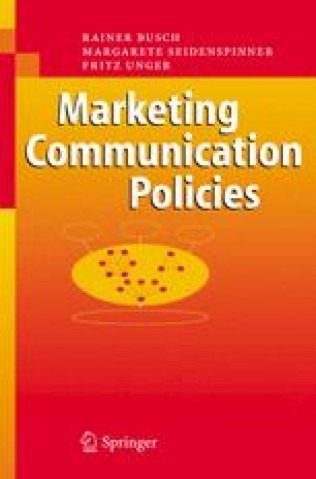
this work introduces its users to the fundamental knowledge that is indispensable in this complex and exciting field of Marketing. It has been compiled especially for first-degree students of Business Administration and Marketing who take an interest in the international aspects of these disciplines.The book gives an introduction to the generic issues of Marketing Communications as well as an overview of the information behaviour of targeted customer groups. The foundation laid in the initial chapters is followed up by more specific areas such as situational analysis and the development of communications strategies.
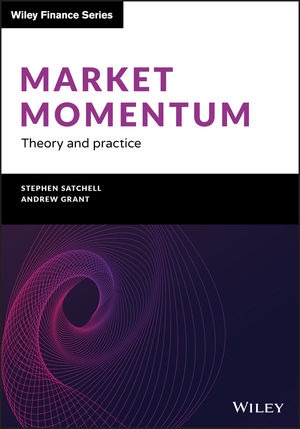
Market Momentum: It examines the behavioral and statistical causes of market momentum while also exploring the practical side of implementing related strategies. The phenomenon of momentum in finance occurs when past high returns are followed by subsequent high returns, and past low returns are followed by subsequent low returns. Market Momentum provides a detailed introduction to the financial topic, while examining existing literature.
Managing in the Information Economy: Current Research Issues presents the recent research directions that address the issue of management in this economy. The contributors include leading researchers with interests in a diverse set of topics. While the volume cannot give a complete and comprehensive picture, it can provide introductions to important areas, and point to some important topics for future research. Therefore the book begins with perspectives at the level of the economy as a whole and then progressively addresses industrial structure, sectors, functions (e-commerce) and business practices. Introductions to the main sections and the papers in each section are provided. The volume is organized around six sections: The Information Economy; Structure and the Organization of the Information Economy; Marketing and Ecommerce

Digital technology determines today’s world and will be one of the key technologies of the future. Successful technology development, introduction and management are not only a question of technical issues; due to their complexity a close cooperation between different scientific disciplines is required to discuss various consequences, chances and risks from manifold points of view as a starting point for the design of adequate solutions. The ability to integrate business and technology decisions will become a crucial core competence.
Introduction Closing supply chains refers to taking care of items once they are no longer desired or can no longer be used by their user. Smart management of closed-loop supply chains means profitable recovery of value from these items (products, functional components, materials or packaging). The company closing the supply chain may be the original equipment manuf- turer (OEM), a distribution partner or a third party not involved in the f- ward distribution. In recent years, the management of closed-loop supply chains has gained importance because of increased legislation on producer respon- bility, requiring companies to take back products from customers and to organize for proper recovery and disposal. This legislation is partially due to increased awareness of environmental issues. However, smart com- nies have also understood that returned products often contain lots of value to be recovered. They manage closed-loop supply chains simply because it is a profitable business proposition.
Fundamental Approximation Methods. Machine Learning -- Deep Neural Nets -- Chebyshev Tensors -- The toolkit - plugging in approximation methods. Introduction: why is a toolkit needed -- Composition techniques -- Tensors in TT format and Tensor Extension Algorithms -- Sliding Technique -- The Jacobian projection technique -- Hybrid solutions - approximation methods and the toolkit.

Florian Zainhofer uses the theory of life cycle investing, i.e. how we should optimally choose our savings rate and risky asset share throughout our lives, as a framework to study the implications of a potential BVG individualization. Following an introduction on the Swiss system of old-age provision, the author reviews recent life cycle models of portfolio choice and covers their numerical solution algorithms in depth. He presents an empirical analysis of Swiss workers’ earnings dynamics since these are important determinants of life cycle investment behavior. To further investigate the implications of a flexible contribution rate and risky asset share in the mandatory BVG, the author proposes a model adapted to Swiss conditions and parameterized with the estimated earnings dynamics.
The book begins with an extended introduction and theoretical framework. Contributing authors have written chapters that add to both the framework and the practical consequences of knowledge management. These chapters suggest many lessons learned that will find considerable use in practice. Some of these chapters include an investigation of the "do’s and don’ts" virtual learning based on real-life cases, the use of design teams for group learning, the role of language and the creation of common ground between company and client, culture as a dynamic and non-linear constructed concept, innovation and knowledge management and more. The book offers an exceptional range of contributions within a developing paradigm. Within this context, the book illustrates why and how of knowledge management is important for companies.
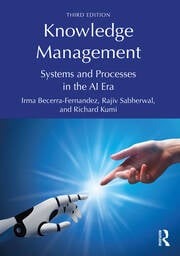
Aimed at students and managers who seek detailed insights into contemporary knowledge management (KM). It explains the concepts, theories, and technologies that provide the foundation for knowledge management; the systems and structures that constitute KM solutions; and the processes for developing, deploying, and evaluating these KM solutions. It serves as a complete introduction to the subject of knowledge management, incorporating technical and social aspects, as well as concepts, practical examples, traditional KM approaches, and emerging topics. This third edition has been revised and expanded to include more coverage of emergent trends such as cloud computing, online communities, crowdsourcing and artificial intelligence.
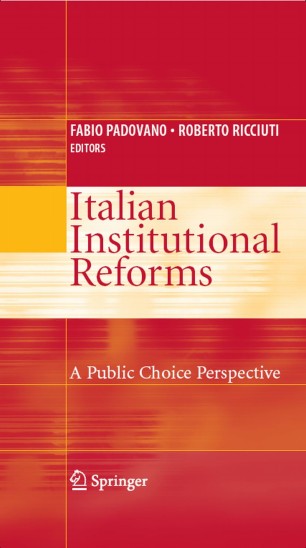
Using a public choice perspective, this book explains the evolution and political and economic impact of recent changes to the Italian institutional framework. Because these changes are so numerous and broad, their implementation serves as a case study for other Western governments. Particular attention is paid to the introduction of the EURO, the reform of voting from proportional to majoritarian rule, the impact of corporatism, constraints imposed by the Maastricht Treaty, and the switch from a highly centralized government to a federal organization.
This book deals with such complex scheduling problems and methods to solve them. It consists of three parts: The ?rst part (Chapters 1 and 2) contains a description of basic scheduling models with applications and an introduction into discrete optimization (covering complexity, shortest path algorithms, linear programming, network ?ow algorithms and general optimization methods). In the second part (Chapter 3) resource-constrained project scheduling problems are considered. Especially, methods like constraint propagation, branch-a- bound algorithms and heuristic procedures are described. Furthermore, lower bounds and general objective functions are discussed.
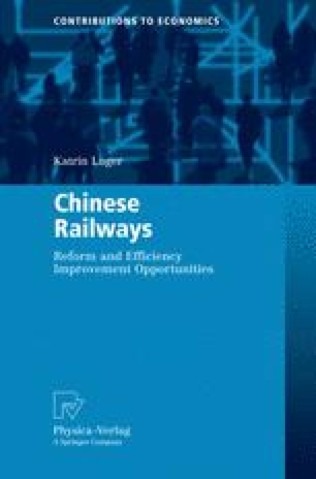
Although being huge by any measure, Chinese Railways are a bottleneck for economic growth in China. The state-owned enterprise returns a small profit but is severely capacity constrained and burdened with inefficiency. A comprehensive reform and efficiency improvement program needs to be developed in order to enable Chinese Railways to support further GDP growth in China. Application of industrial economics to the case of Chinese Railways suggests that moderate deregulation of e.g., the freight business could make Chinese Railways fit for future growth. Operational improvements need to complement this development, such as a redesign of the schedule or the introduction of value added services in the freight business. Based on interviews with Chinese experts, benchmarking with railways in the US, Germany, Russia, and Japan as well as broad coverage of Chinese-language sources, the book makes detailed recommendations on how to design a comprehensive turnaround program for Chinese Railways.

The introduction of the Mercedes-Benz Production System (MPS) is exemplary of a trend within the automotive industry: the creation and introduction of company-specific standardised production systems. This book contributes to the debate about production systems by examining the social and economic implications of the role of standardisation in production systems. In this context it addresses three core issues: First, the driving forces behind the changing forms and functions of standardisation and the role of institutions therein. Second, the impact of standardisation on the evolution of automotive production systems. Third, based on the author's own empirical research conducted over a three year period at the Mercedes-Benz plant Stuttgart-Untertürkheim/Germany, the book examines the influence of standardisation on the work of actors on the shop floor in terms of organisational learning processes and the regulation of work.
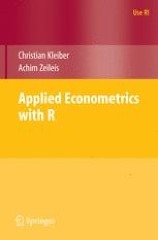
This is the first book on applied econometrics using the R system for statistical computing and graphics. It presents hands-on examples for a wide range of econometric models, from classical linear regression models for cross-section, time series or panel data and the common non-linear models of microeconometrics such as logit, probit and tobit models, to recent semiparametric extensions. In addition, it provides a chapter on programming, including simulations, optimization, and an introduction to R tools enabling reproducible econometric research.

سوريا - اتستراد درعا - غباغب
+963-15 2050 - 15 860 380 /1/2/3 - 11 662 3900