



الصفحة 67
الصفحة 67
Anxiety and Anxiolytic Drugs
The present volume gives a comprehensive overview on the current state of basic and clinical research on Anxiety and Anxiolytic Drugs. Using newly developed methods and techniques researchers are now beginning to understand the molecular mechanisms of anxiety, anxiety disorders and their treatment. In parallel, new drug targets have been generated and the first clinical studies with new compounds have been started. In 20 chapters written by numerous experts in the field comprehensive information on all relevant topics is provided.
Anti-vivisection and the profession of medicine in Britain : A social history
This book explores the social history of the anti-vivisection movement in Britain from its nineteenth-century beginnings until the 1960s. It discusses the ethical principles that inspired the movement and the socio-political background that explains its rise and fall. Opposition to vivisection began when medical practitioners complained it was contrary to the compassionate ethos of their profession. Christian anti-cruelty organizations took up the cause out of concern that callousness among the professional classes would have a demoralizing effect on the rest of society. As the nineteenth century drew to a close, the influence of transcendentalism, Eastern religions and the spiritual revival led new age social reformers to champion a more holistic approach to science, and dismiss reliance on vivisection as a materialistic oversimplification.

Antioxidants effects in health : The bright and the dark side ; 1st ed.
Examines the role that antioxidants play in a variety of health and disease situations. The book discusses antioxidants’ historical evolution, their oxidative stress, and contains a detailed approach of 1) endogenous antioxidants, including endogenous sources, mechanisms of action, beneficial and detrimental effects on health, in vitro evidence, animal studies and clinical studies; 2) synthetic antioxidants, including sources, chemistry, bioavailability, legal status, mechanisms of action, beneficial and detrimental effects on health, in vitro evidence, animal studies and clinical studies; and 3) natural antioxidants, including sources, chemistry, bioavailability, mechanisms of action, possible prooxidant activity; beneficial and detrimental effects on health, in vitro evidence, animal studies and clinical studies. Throughout the boo, the relationship of antioxidants with different beneficial and detrimental effects are examined, and the current controversies and future perspectives are addressed and explored. Antioxidants Effects in Health: The Bright and the Dark Side evaluates the current scientific evidence on antioxidant topics, focusing on endogenous antioxidants, naturally occurring antioxidants and synthetic antioxidants. It will be a helpful resource for pharmaceutical scientists, health professionals, those studying natural chemistry, phytochemistry, pharmacognosy, natural product synthesis, and experts in formulation of herbal and natural pharmaceuticals.
Antioxidants as nutraceuticals
Provides a comprehensive overview of antioxidants and nutraceuticals, including their sources, mechanisms of action, and health benefits, this new volume first covers the basics of the types of antioxidants as nutraceuticals, including the importance of phytochemical antioxidants and their nutritional and pharmacological intervention in the treatment of disease. It discusses the natural origins of antioxidants, classification, mechanisms of action, calculation of antioxidant potential of nutraceutical substances, safety, toxicity, and their significant involvement in the prevention of many degenerative and chronic diseases.

Anti-Obesity drugs
As a chronic and relapsing disease, obesity impairs metabolism and causes diabetes, cardiovascular diseases and cancer. Although behavioral modification is important for the treatment of obesity, it is difficult to achieve an ideal weight or sustain the process of long-term weight loss. Therefore, the obesity control guidelines strongly recommend lifestyle interventions along with medical treatment for patients who are overweight. There is sufficient evidence supporting that pharmacotherapy in combination with behavior-based interventions can result in significant weight loss and improvement of the health.
Antimicrobial Resistance and Implications for the Twenty-First Century
This new volume of the Emerging Infectious Diseases of the 21st Century series is a collection of chapters by leading world authorities on antimicrobial resistance of common, important bacterial, viral and fungal pathogens. This unique book should be in the possession of anyone interested in the field of infectious diseases, microbiology, infection control & public health. The chapters, which are written by reknown experts, provide a wealth of contemporary information on microbiology, molecular mechanisms, epidemiology, clinical relevance, treatment, and prevention
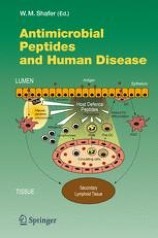
Antimicrobial peptides and human disease
Microbes are in our midst soon after birth. Thankfully, the number of harmless (and often beneficial) microbes far outnumber those that would do us harm. Our ability to ward-off pathogens in our environment, including those that can colonize our exterior and/or interior surfaces, depends on the integrative action of the innate and adaptive immunity systems. This volume of CTMI, entitled Antimicrobial Peptides and Human Disease, is dedicated to the role of antimicrobial peptides (AMPs) in the innate host defense system of homo sapiens.
Antimalarial natural products
Begins with a short history of malaria and follows with a summary of its biology. It then traces the fascinating history of the discovery of quinine for malaria treatment, and then describes quinine’s biosynthesis, its mechanism of action, and its clinical use, concluding with a discussion of synthetic antimalarial agents based on quinine’s structure. It also covers the discovery of artemisinin and its development as the source of the most effective current antimalarial drug, including summaries of its synthesis and biosynthesis, its mechanism of action, and its clinical use and resistance. A short discussion of other clinically used antimalarial natural products leads to a detailed treatment of additional natural products with significant antiplasmodial activity, classified by compound type.
Antimalarial medicinal plants
Malaria continues to affect a large population of the world, especially in third world countries. The spread of drug-resistant parasites demonstrates the need for antimalarial agents with various modes of action. The search for remedies derived from medicinal plants for the treatment of malaria is reliant on accurate ethnobotanical and ethnopharmacological information obtained from traditional medical practitioners. Antimalarial Medicinal Plants provides information on bioactive compounds and therapeutic potentials of several antimalarial plant species found around the globe. This book evaluates these plant species with respect to their biology, diversity, distribution, and pharmacological values.

Antifouling Compounds
Increasing awareness of the deleterious effects of toxic components in antifouling coatings has raised interest in the potential for nontoxic alternatives. This book examines how marine organisms from bacteria to invertebrates and plants use chemicals to communicate and defend themselves. Chemicals that prevent colonisation of living surfaces are particularly pertinent to antifouling technology and may inspire new solutions. The challenge is to identify such compounds, identify the means for sustainable production and incorporate them into coatings to give long-term antifouling efficacy.
Anticipatory Behavior in Adaptive Learning Systems : From Brains to Individual and Social Behavior
Anticipatory behavior in adaptive learning systems is steadily gaining the - terest of scientists, although many researchers still do not explicitly consider the actual anticipatory capabilities of their systems.The introductory chapter of this volume therefore does not only provide an overview of the contributions included in this volume but also proposes a taxonomy of how anticipatory mechanisms can improve adaptive behavior and learning in cognitive systems. During the workshop it became clear that ant- ipations are involved in various cognitive processes that range from individual anticipatory mechanisms to social anticipatory behavior.
Anticancer activity in heterocyclic organic structures : A pathway to novel drug development : Part 1
New Directions in Organic & Biological Chemistry, explores the development of cancer therapeutics, focusing on molecular chemistry and advanced drug design approaches. Written by experts in theoretical chemistry and molecular chemistry, they bridge the gap between theoretical chemistry, molecular biology, and drug development. In Part I, they focus on the fundamental properties of heterocyclic compounds and innovative methodologies being employed to enhance therapeutic potential. By exploring various classes of heterocyclic compounds and diverse anticancer mechanisms.

Antibody-drug conjugates and cellular metabolic dynamics
Summarizes the related research achievements in Antibody-drug conjugates (ADCs) and their cell metabolism kinetics. The book has three main parts. The first part describes the basic theory of ADCs, including the basic concept and structure of ADCs, and the relationship between the targets of ADCs and their specific functions. The second part mainly introduces the endocytosis and intracellular metabolism of ADCs, including the relationship between endocytosis and ADC activity, the endocytosis and intracellular transport of ADCs, the distribution and metabolism of ADC in vivo. Then it discusses the new formats and research technology of ADCs, including the application of miniaturized antibodies in ADC synthesis, novel carriers for ADC design, the technology and application of site-specific conjugation, and approaches for analyzing the drug: antibody ratio (DAR), the study of pharmacokinetics of ADCs.
Antibiotics : Methods and protocols
Provides state-of-the-art and novel methods on antibiotic isolation and purification, identification of antimicrobial killing mechanisms, as well as methods for the analysis and detection of microbial responses and adaptation strategies. Antibiotics: Methods and Protocols, Second Edition, guides readers through updated and entirely new chapters on production and design, mode of action, and response and resistance. Written in the highly successful Methods in Molecular Biology series format, chapters include introductions to their respective topics, lists of the necessary materials and reagents, step-by-step, readily reproducible laboratory protocols, and tips on troubleshooting and avoiding known pitfalls.
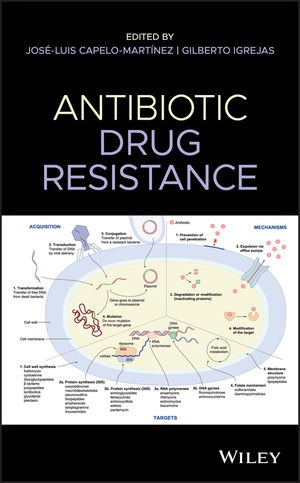
Antibiotic Drug Resistance
This book presents a thorough and authoritative overview of the multifaceted field of antibiotic science – offering guidance to translate research into tools for prevention, diagnosis, and treatment of infectious diseases.

Antibacterial effects of Algae
An alarm increase in the rate of emerging of resistance bacteria have been causing a great public concern worldwide. This problem of increasing resistance has necessitated the search for safe and effective factors that may be used to treat persistent bacterial infections or modify the currently available antibiotic. This study deals with the antimicrobial potential assessment of ulva flexuosa , ulva flexuosa was collected from at MAZAR ELKHODER. Crude organic extracts were prepared using methanolic and chloroformic extract and tested against 6 indicator microorganisms using the disk diffusion method and also applied against biofilm ( dental plaque).
Anthropologies of Global Maternal and Reproductive Health : From Policy Spaces to Sites of Practice
This open access edited book brings together new research on the mechanisms by which maternal and reproductive health policies are formed and implemented in diverse locales around the world, from global policy spaces to sites of practice. The authors – both internationally respected anthropologists and new voices – demonstrate the value of ethnography and the utility of reproduction as a lens through which to generate rich insights into professionals’ and lay people’s intimate encounters with policy.
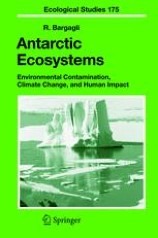
Antarctic ecosystems : Environmental contamination, climate change, and human impact
This volume provides an overview of climate change data, its effects on the structure and functioning of Antarctic ecosystems, and the occurrence and cycling of persistent contaminants. It discusses the unique physico-chemical characteristics of the Antarctic environment, ecophysiological adaptations of terrestrial and marine organisms, the transfer of contaminants in pelagic and neritic food chains and the possible consequences for animals at higher trophic levels.

Another side of drugs
Drug interactions remain an important consequence of pharmacologic intervention. It is clear that the pharmacologic response of a drug can be markedly influenced by concurrent administration of another therapeutic agent or food. These interactions may result in a decreased therapeutic effect or in an increase in the amount and extent of untoward reactions. Despite the well-described and real clinical consequences of certain drug interactions, this aspect of patient care often continues to be overlooked.
Animal cell technology meets genomics ; Proceedings of the 18th ESACT Meeting. Granada, Spain, May 11-14, 2003
Reflects the spirit and scientific excellence of the 18th ESACT meeting in different chapters. This book presents, in form of short papers, a high number of the contributions to the meeting, and has been prepared with the aim to provide a relevant reference of the research efforts in Animal Cell Technology
