


تحسين النتائح
ترتيب حسب
من
الى


Fuzzy logic systems have been a hot topic in the scientific and academic community for more than half a century. The idea of making machines behave and make decisions like humans do is astounding. The development and implementation of fuzzy logic systems can be seen in various real physical applications in daily human life. The methods employed using fuzzy logic have resulted in innovative technologies. This book provides insights into understanding the principles and concepts behind the advances of fuzzy logic systems. It presents ideas concerning fuzzy logic systems and their technological applications. The book is arranged into two sections on theories and foundations of fuzzy logic systems and implementations of fuzzy logic systems in service to the community.

On a newly emerging field of discrete differential geometry and an excellent way to access this exciting area. It surveys the fascinating connections between discrete models in differential geometry and complex analysis, integrable systems and applications in computer graphics. The authors take a closer look at discrete models in differential geometry and dynamical systems. Their curves are polygonal, surfaces are made from triangles and quadrilaterals, and time is discrete. Nevertheless, the difference between the corresponding smooth curves, surfaces and classical dynamical systems with continuous time can hardly be seen. This is the paradigm of structure-preserving discretizations. Current advances in this field are stimulated to a large extent by its relevance for computer graphics and mathematical physics.
Provides a comprehensive and cutting-edge study on big data analytics, based on the research findings and applications developed by the author and his colleagues in related areas. It addresses the concepts of big data analytics and/or data science, multi-criteria optimization for learning, expert and rule-based data analysis, support vector machines for classification, feature selection, data stream analysis, learning analysis, sentiment analysis, link analysis, and evaluation analysis. The book also explores lessons learned in applying big data to business, engineering and healthcare. Lastly, it addresses the advanced topic of intelligence-quotient (IQ) tests for artificial intelligence.

Contains all the articles accepted and published in the Special Issue “Advances in Artificial Intelligence: Models, Optimization, and Machine Learning” of the MDPI Mathematics journal, which covers a wide range of topics connected to the theory and applications of artificial intelligence and its subfields. These topics include, among others, deep learning and classic machine learning algorithms, neural modelling, architectures and learning algorithms, biologically inspired optimization algorithms, algorithms for autonomous driving, probabilistic models and Bayesian reasoning, intelligent agents and multiagent systems.
Perceiving the economy as a complex dynamic system, generates a need for new tools for its study. As a constructive simulation method, Agent-Based Computational Economics (ACE) has in recent years proven its strength and extensive applicability. Fields of study are widely spread within economics, with a cluster around financial markets. This book is based on communications given at AE’2006 (Aalborg, Denmark) – the second symposium on Artificial Economics, and covers both wellknown questions of economics, like the existence of market efficiency, as well as new questions raised by the new tools, for example questions related to networks of social interaction.
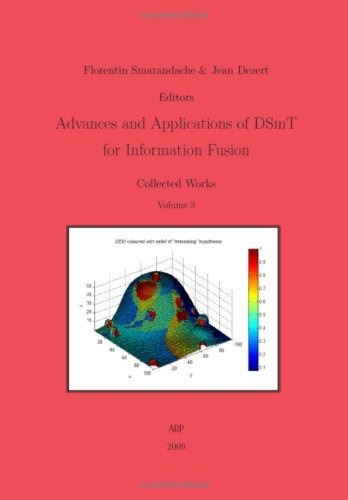
One of the most comprehensive and flexible fusion theory based on belief functions. It can work in all fusion spaces: power set, hyper-power set, and super-power set, and has various fusion and conditioning rules that can be applied depending on each application. Some new generalized rules are introduced in this volume with codes for implementing some of them. For the qualitative fusion, the DSm Field and Linear Algebra of Refined Labels (FLARL) is proposed which can convert any numerical fusion rule to a qualitative fusion rule. When one needs to work on a refined frame of discernment, the refinement is done using Smarandache s algebraic codification. New interpretations and implementations of the fusion rules based on sampling techniques and referee functions are proposed, including the probabilistic proportional conflict redistribution rule.
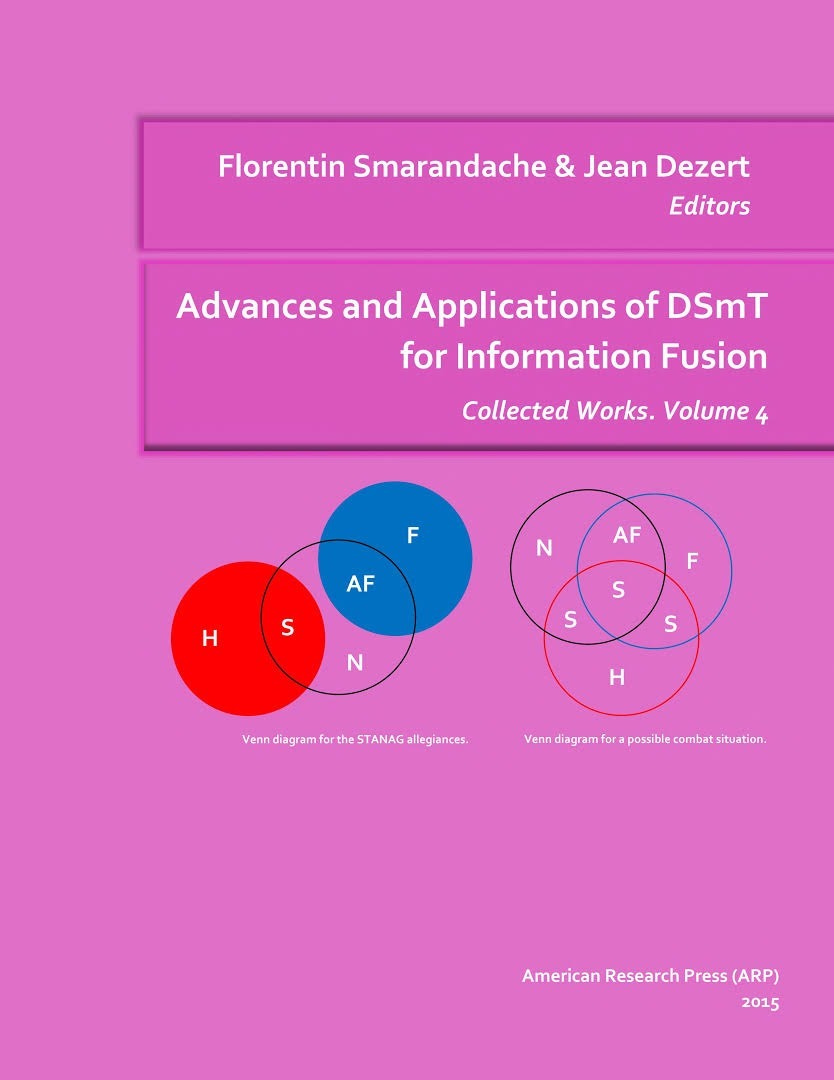
One of the most comprehensive and flexible fusion theory based on belief functions. It can work in all fusion spaces: power set, hyper-power set, and super-power set, and has various fusion and conditioning rules that can be applied depending on each application. Some new generalized rules are introduced in this volume with codes for implementing some of them. For the qualitative fusion, the DSm Field and Linear Algebra of Refined Labels (FLARL) is proposed which can convert any numerical fusion rule to a qualitative fusion rule. When one needs to work on a refined frame of discernment, the refinement is done using Smarandache s algebraic codification. New interpretations and implementations of the fusion rules based on sampling techniques and referee functions are proposed, including the probabilistic proportional conflict redistribution rule.
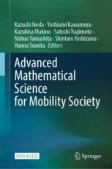
The automotive industry has made steady progress in technological innovations under the names of Connected Autonomous-Shared-Electric (CASE) and Mobility as a Service (MaaS). Needless to say, mathematics and informatics are important to support such innovations. As the concept of cars and movement itself is diversifying, they are indispensable for grasping the essence of the future mobility society and building the foundation for the next generation. This book contains three main contents. 1. Mathematical models of flow 2. Mathematical methodsfor huge data and network analysis 3. Algorithm for mobility society The first one discusses mathematical models of pedestrian and traffic flow, as they are important for preventing accidents and achieving efficient transportation.

Advanced manufacturing technology and systems cover a broad scope involving manufacturing processes, machine tool design, system optimization, smart and flexible manufacturing, theoretical study and metrology. This reprint comprises 19 original papers concerning recent advances in the research and development of AMTSs. Specifically, there are many research fields that are covered: machining processes (six papers), micro-/nano-precision fabrication (four papers), and system optimization (eight papers), in addition to one review.
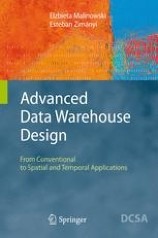
This book serves as an introduction to the state of the art on data warehouse design, with many references to more detailed sources. Providing a clear and a concise presentation of the major concepts and results of data warehouse design, it can also be used as the basis of a graduate or advanced undergraduate course.
Explains the important concepts and principles of image processing to implement the algorithms and techniques to discover new problems and applications. It contains numerous fundamental and advanced image processing algorithms and pattern recognition techniques to illustrate the framework. It presents essential background theory, shape methods, texture about new methods, and techniques for image processing and pattern recognition. It maintains a good balance between a mathematical background and practical implementation. This book also contains the comparison table and images that are used to show the results of enhanced techniques. This book consists of novel concepts and hybrid methods for providing effective solutions for society. It also includes a detailed explanation of algorithms in various programming languages like MATLAB, Python, etc.
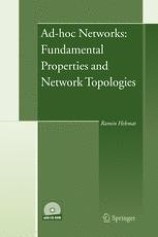
This book clearly demonstrates how the Medium Access Control protocols impose a limit on the level of interference in ad-hoc networks. It has been shown that interference is upper bounded, and a new accurate method for the estimation of interference power statistics in ad-hoc and sensor networks is introduced here. Furthermore, this volume shows how multi-hop traffic affects the capacity of the network. In multi-hop and ad-hoc networks there is a trade-off between the network size and the maximum input bit rate possible per node. Large ad-hoc or sensor networks, consisting of thousands of nodes, can only support low bit-rate applications.
investigates the role of artificial input delay in approximating unknown system dynamics, referred to as time-delayed control (TDC), and provides novel solutions to current design issues in TDC. Its central focus is on designing adaptive-switching gain-based robust control (ARC) for a class of Euler–Lagrange (EL) systems with minimal or no knowledge of the system dynamics parameters. The newly proposed TDC-based ARC tackles the commonly observed over- and under-estimation issues in switching gain. The consideration of EL systems lends a practical perspective on the proposed methods, and each chapter is supplemented by relevant experimental data

In the last years electronic markets, especially online auctions, have become very popular and received more and more attention in both, business (B2B) as well as in public practice (B2C and C2C). Science, however, is still far from having studied all phenomena and effects which can be observed on electronic markets. This book shows that and how software agents can be used to simulate bidding behaviour in electronic auctions. The main emphasis of this book is to apply computational economics to market theory. It summarizes the most common and up-to-date agent-based simulation methods and tools and develops the simulation software AMASE. On basis of the introduced methods a model is established to simulate bidding behaviour under uncertainty.
Establishes scientific foundations for adaptive autonomous cyber systems and ultimately brings about a more secure and reliable Internet. The recent advances in adaptive cyber defense (ACD) have developed a range of new ACD techniques and methodologies for reasoning in an adaptive environment.

This book nuds new things to do with an old idea. The proofs-as-programs paradigm constitutes a set of approaches to developing programs from proofs in constructive logic. there is increasingly active research in applying constructive techniques to industrial-scale, complex software engineering problems. Thismonographdetailsseveralimportantadvancesinthisdirectionofpr- tical proofs-as-programs. One of the central themes of the book is a general, abstract framework for developing new systems of program synthesis by adapting proofs-as-programs to new contexts. Framework-oriented approaches that facilitate analogous - proaches to building systems for solving particular problems have been popular and successful. Thesemethodsarehelpful asthey providea formal toolbox that enablesa“roll-your-own”approachtodevelopingsolutions.Itishopedthatour framework will have a similar impact. The framework is demonstrated by example. We will give two novel - plications of proofs-as-programs to large-scale, coarse-grain software engine- ing problems: contractual imperative program synthesis and structured p- gram synthesis.
This book addresses action research (AR), one of the main research methodologies used for academia-industry research collaborations. It elaborates on how to find the right research activities and how to distinguish them from non-significant ones. Further, it details how to glean lessons from the research results, no matter whether they are positive or negative. Lastly, it shows how companies can evolve and build talents while expanding their product portfolio.

Access Control Systems: Security, Identity Management and Trust Models provides a thorough introduction to the foundations of programming systems security, delving into identity management, trust models, and the theory behind access control models. The book details access control mechanisms that are emerging with the latest Internet programming technologies, and explores all models employed and how they work. The latest role-based access control (RBAC) standard is also highlighted.
Distributed and communicating objects are becoming ubiquitous. In global, Grid and Peer-to-Peer computing environments, extensive use is made of objects interacting through method calls. So far, no general formalism has been proposed for the foundation of such systems. Caromel and Henrio are the first to define a calculus for distributed objects interacting using asynchronous method calls with generalized futures, i.e., wait-by-necessity -- a must in large-scale systems, providing both high structuring and low coupling, and thus scalability. The authors provide very generic results on expressiveness and determinism, and the potential of their approach is further demonstrated by its capacity to cope with advanced issues such as mobility, groups, and components.

Presents a ""practical theory"" of reactive systems, with formal foundations in Temporal Logic of Actions. This book emphasises theoretical understanding of reactive behaviors and using ""horizontal"" modularity to manage their complexity. It illustrates the incremental specification by a number of examples of varying size and complexity

سوريا - اتستراد درعا - غباغب
+963-15 2050 - 15 860 380 /1/2/3 - 11 662 3900