


تحسين النتائح
ترتيب حسب
من
الى


Highlights various aspects of building construction industry based on data from field studies. It discusses the challenges, methodologies, technological applications in building construction, technology, and management. The book presents new approaches to effective building construction and an understanding of the impact of applications of latest technologies.
Recent studies highlight the application of artificial intelligence, machine learning, and simulation techniques in engineering. This book covers the successful implementation of different intelligent techniques in various areas of engineering focusing on common areas between mechatronics and civil engineering. The power of artificial intelligence and machine learning techniques in solving some examples of real-life problems in engineering is highlighted in this book. The implementation process to design the optimum intelligent models is discussed in this book.

Space frames provide a lightweight solution to the problem of creating large span enclosures free from obstructions. They are employed in many major constrcution projects across the world, as documented in this authoritatively written volume.This is the first in-depth book to present all instances and applications of space frames in various engineering schemes. It uses case studies and numerous illustrations to examine steel space frames from their design to their structural engineering performance.

Highlights Singapore’s development into a city in which water and greenery, along with associated environmental, technical, social and political aspects have been harnessed and cultivated into a liveable sustainable way of life. It is also a story about a unique and thoroughgoing approach to large-scale and potentially transferable water sustainability, within largely urbanized circumstances, which can be achieved, along with complementary roles of environmental conservation, ecology, public open-space management and the greening of buildings, together with infrastructural improvements.

Includes recording and analysis of maritime archaeology through emerging technologies, including both practical and theoretical contributions. Topics include photogrammetric recording, laser scanning, marine geophysical 3D survey techniques, virtual reality, 3D modelling and reconstruction, data integration and Geographic Information Systems. This convergence of digital technologies such as underwater photography and photogrammetry, 3D sonar, 3D virtual reality, and 3D printing has highlighted a pressing need for these new methodologies to be considered together, both in terms of defining the state-of-the-art and for consideration of future directions.

The interaction between mathematicians and statisticians reveals to be an effective approach to the analysis of insurance and financial problems, in particular in an operative perspective. The Maf2006 conference, held at the University of Salerno in 2006, had precisely this purpose and the collection here published gathers some of the papers presented at the conference and successively worked out to this aim. They cover a wide variety of subjects in insurance and financial fields, all treated in light of the successful cooperation between the two quantitative methods.
Sheds light on marketing effectiveness and accountability marketing in small and medium-sized enterprises (SMEs). Using a multi-method investigation, it includes a knowledge inquiry of marketing knowledge and customer knowledge, a qualitative inquiry utilizing semi structured interviews and thematic data analysis, a quantitative analysis utilizing survey and structural equations modelling, and a case study that employs both narrative (storytelling) data analysis and an accountability audit with a techno marketing SME.
Aims to share fascinating perspectives on marketing communications by discussing the shift in the power of public relations, and highlighting how the small and local use communication effectively to improve performance and shares useful lessons on how to communicate hope by responding to customer emotions during uncertainties. The book contains valuable lessons and insights on communicating corporate social responsibility, effective social media communication, enacting brand purpose through communication, and using aesthetics in point-of-purchase advertising to drive purchase intention.

India’s telephone network is the second largest in the world, next to China. Over the last decade, these emerging economies have been the drivers of growth in the world economy. Therefore foreign companies have been rushing to invest in these countries more or less successfully.Kiruba Jeyaseeli Benjamin Levi highlights why the Indian telecom market is so attractive to foreign investors. She describes the rules and regulations for telecoms in India, and examines the reasons for success and failure of the foreign telecom companies in India.
Throughout the past decade, the phenomenon of technological convergence has increasingly gained managerial attention. In this special form of technological change, the coming-together of previously distinct knowledge bases gives rise to the creation of new applications and business models. When such innovations emerge at the intersection of industries, the resulting creative destruction may exceed previously established industry boundaries. As a consequence, convergence does not only promise the creation of new value, but may imply significant disruptions to established industries. Based on investigating 26 firms within the ICT industry, this book highlights implications of the convergence phenomenon on firms’ innovation management practices, and derives strategic guidelines for building and sustaining business models beyond blurring industry boundaries.
In a context of global competition, the optimization of logistics systems is inescapable. LOGISTICS SYSTEMS: Design and Optimization falls within this perspective and presents twelve chapters that well illustrate the variety and the complexity of logistics activities. Each chapter is written by recognized researchers who have been commissioned to survey a specific topic or emerging area of logistics. The first chapter, by Riopel, Langevin, and Campbell, develops a framework for the entire book. It classifies logistics decisions and highlights the relevant linkages to logistics decisions. The intricacy of these linkages demonstrates how thoroughly the decisions are interrelated and underscores the complexity of managing logistics activities. Each of the following chapters focus on quantitative methods for the design and optimization of logistics systems.
In recent years, logistics outsourcing has gained increasing importance and today is used by a large number of firms across virtually all industries worldwide. Logistics service providers have developed a wide array of services that are utilized to improve logistics processes - and mainly to cut costs.This book uses state-of-the-art scientific methods to reveal that most firms currently do not realize the full potential of logistics outsourcing. It shows the complexity of outsourcing performance and that its true drivers lie in the relationship between service providers and their customers. Through the results of a large-scale empirical survey, the book also emphasizes the importance of a firm's approach towards outsourcing: solely striving for cost reductions may be a dead end, while the often overlooked increased logistics service levels are equally important for boosting logistics performance. In the light of current outsourcing practices, this indicates substantial room for improvement for most firms.

This book addresses four standard business school subjects: microeconomics, macroeconomics, finance and information systems as they relate to trading, liquidity, and market structure. It provides a detailed examination of the impact of trading costs and other impediments of trading that the authors call “frictions”. It also presents an interactive simulation model of equity market trading, TraderEx, that enables students to implement trading decisions in different market scenarios and structures. Addressing these topics shines a bright light on how a real-world financial market operates, and the simulation provides students with an experiential learning opportunity that is informative and fun.
Mobile communications and next generation wireless networks emerge as new distribution channels for the media. This development offers exciting new opportunities for media companies: the mobile communication system creates new usage contexts for media content and services; the social use of mobile communications suggests that identity representation in social networks, impulsive access to trusted media brands, and micro-coordination emerge as new sources of value creation in the media industries. In the light of this background, this book takes two different viewpoints on the development of mobile media: from a competitive strategy point of view it analyzes the extension of cross-media strategies and the emergence of cross-network strategies; from a public policy point of view it develops demands and requirements for an innovation policy that fosters innovation in mobile media markets.
Pharmaceutical giants have doubled their investments in drug development in the past decade only to see new drug approvals remain constant. This book investigates and highlights a set of proactive strategies aimed at generating sustainable competitive advantage based on value-generating business practices. We focus on three sources of pharmaceutical innovation: new management methods in the drug development pipeline, new technologies as enablers for cutting-edge R&D, and new forms of cooperation and internationalization, such as open innovation in the early phases of R&D. Our findings are illustrated by cases from Europe, the US, and Asia.
Analyses two key aspects of network management in the public sector: leadership and performance. It investigates what integrative leadership is, and how it differentiates from leadership in single-agency structures. It also examines the performance of public interest networks by proposing an analytical framework that highlights which factors lead to high performance networks.
Do small developing economies, or SDEs, need a specific competition policy to create competitive markets? Against the backdrop of globalization, protectionist policies that promote state ownership and heavy regulation of key industries are proving increasingly ineffective for driving growth. Countries around the world are instituting reforms to promote competition and business creation, yet the economic and political concentration of power, feeble judicial systems, and the scarcity of human and financial resources pose special challenges to SDEs. Competition Policies in Emerging Economies features an in-depth analysis of two strategic industries — telecommunications and banking — in several Central American nations which sheds light on the dynamics of the transition to deregulation and trade liberalization. Examining the lessons learned from these experiences and presenting discussion of political, legal, economic, financial, cultural, and organizational issues, the book provides unique perspectives on competition policy and economic development.
Combines elements of economic and business history to study business ethics from the nineteenth century to today. It concentrates on American and British business history, delving into issues such as slavery, industrialization, firm behavior and monopolies, and Ponzi schemes. This book draws on the work of economists and historians to highlight the importance of changing technologies, religious beliefs, and cultural attitudes, showing that what is considered ethical differs across time and place.
This book defines the new field of "Bioeconomy" as the sustainable and innovative use of biomass and biological knowledge to provide food, feed, industrial products, bioenergy and ecological services. The chapters highlight the importance of bioeconomy-related concepts in public, scientific, and political discourse. Using an interdisciplinary approach, the authors outline the dimensions of the bioeconomy as a means of achieving sustainability.
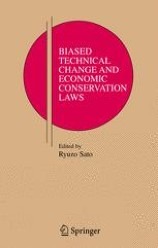
Makes use of Lie groups to shed new light on the analysis of economic conservation laws. Economic conservation laws are not simply abstract concepts; this book shows that they are tools of empirical analysis that can be applied to such topics as analyses of macro performance and corporate efficiency.

سوريا - اتستراد درعا - غباغب
+963-15 2050 - 15 860 380 /1/2/3 - 11 662 3900