


تحسين النتائح
ترتيب حسب
من
الى

This book describes a number of applications of Artificial Intelligence in the field of Customer Relationship Management with the focus of solving customer problems. We design a system that tries to understand the customer complaint, his mood, and what can be done to resolve an issue with the product or service. To solve a customer problem efficiently, we maintain a dialogue with the customer so that the problem can be clarified and multiple ways to fix it can be sought. We introduce dialogue management based on discourse analysis: a systematic linguistic way to handle the thought process of the author of the content to be delivered. We analyze user sentiments and personal traits to tailor dialogue management to individual customers. We also design a number of dialogue scenarios for CRM with replies following certain patterns and propose virtual and social dialogues for various modalities of communication with a customer.

Providing a forum for the exchange of ideas in AI, this book provides a concise yet comprehensive coverage of methodologies, tools, issues, applications, and future trends for professionals, managers, and researchers in the CRM field together with AI and IT professionals.
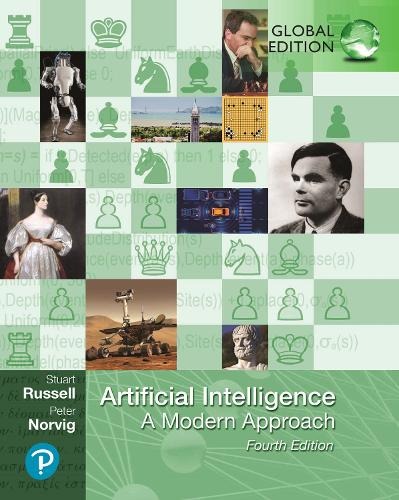
Explores the full breadth and depth of the field of artificial intelligence (AI). The 4th edition brings readers up to date on the latest technologies, presents concepts in a more unified manner, and offers new or expanded coverage of machine learning, deep learning, transfer learning, multi agent systems, robotics, natural language processing, causality, probabilistic programming, privacy, fairness, and safe AI
Applies the functional OCaml programming language to numerical or computational weighted data science, engineering, and scientific applications. This book is based on the authors' first-hand experience building and maintaining Owl, an OCaml-based numerical computing library. You'll first learn the various components in a modern numerical computation library. Then, you will learn how these components are designed and built up and how to optimize their performance. After reading and using this book, you'll have the knowledge required to design and build real-world complex systems that effectively leverage the advantages of the OCaml functional programming language.
As software systems become ubiquitous, the issues of dependability become more and more crucial. Given that solutions to these issues must be considered from the very beginning of the design process, it is reasonable that dependability is addressed at the architectural level. It also contains sections on architectural description languages, architectural components and patterns, architecting distributed systems, and architectural assurances for dependability.

Cheriet provides an overview of the problems of Arabic recognition and how systems can use natural language processing techniques to correct errors in lexicon-based systems.
Focuses on the fundamental concepts and at the same time on practical aspects of implementing neural networks and deep learning for your research projects. This book is designed so that you can focus on the parts you are interested in. You will explore topics as regularization, optimizers, optimization, metric analysis, and hyper-parameter tuning. In addition, you will learn the fundamentals ideas behind autoencoders and generative adversarial networks. All the code presented in the book will be available in the form of Jupyter notebooks which would allow you to try out all examples and extend them in interesting ways. A companion online book is available with the complete code for all examples discussed in the book and additional material more related to TensorFlow and Keras. All the code will be available in Jupyter notebook format and can be opened directly in Google Colab (no need to install anything locally) or downloaded on your own machine and tested locally. You will: Understand the fundamental concepts of how neural networks work / Learn the fundamental ideas behind autoencoders and generative adversarial networks / Be able to try all the examples with complete code examples that you can expand for your own projects / Have available a complete online companion book with examples and tutorials.
This book constitutes the thoroughly refereed post-conference proceedings of the Third International Symposium on Applications of Graph Transformations, AGTIVE 2007, held in Kassel, Germany, in October 2007.
Android Essentials is a no–frills, no–nonsense, code–centric run through the guts of application development on Google's Mobile OS. This book uses the development of a sample application to work through topics, focusing on giving developers the essential tools and examples required to make viable commercial applications work. Covering the entirety of the Android catalog in less than 150 pages is simply impossible. Instead, this book focuses on just four main topics: the application life cycle and OS integration, user interface, location–based services, and networking.
This book develops a conceptual understanding of Artificial Intelligence (AI), Deep Learning and Machine Learning in the truest sense of the word. It is an earnest endeavor to unravel what is happening at the algorithmic level, to grasp how applications are being built and to show the long adventurous road in the future.
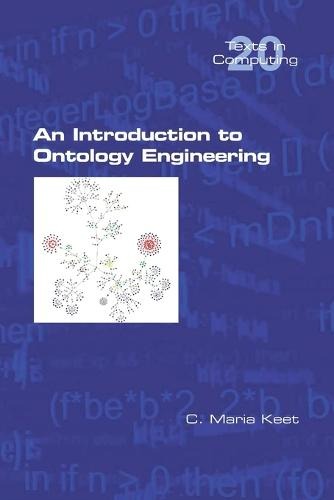
Provides the reader with a comprehensive introductory overview of ontology engineering. A secondary aim is to provide hands-on experience in ontology development that illustrate the theory. The book is divided into three blocks: Block I: logic foundations for ontologies both regarding the languages (mainly First Order predicate Logic, Description Logics, and OWL) and automated reasoning. Block II: developing good ontologies with methods and methodologies, the top-down approach with foundational ontologies, and the bottom-up approach to extract as much useful content as possible from legacy material. Block III: advanced topics with a selection of areas of specialisation, including Ontology-Based Data Access, the interaction between ontologies and natural languages (multilingual ontologies, controlled natural language), and advanced modelling with additional language features (fuzzy and temporal ontologies)
This book teaches the principles of natural language processing, first covering linguistics issues such as encoding, entropy, and annotation schemes; defining words, tokens and parts of speech; and morphology. It then details the language-processing functions involved, including part-of-speech tagging using rules and stochastic techniques; using Prolog to write phase-structure grammars; parsing techniques and syntactic formalisms; semantics, predicate logic and lexical semantics; and analysis of discourse, and applications in dialog systems. The key feature of the book is the author's hands-on approach throughout, with extensive exercises, sample code in Prolog and Perl, and a detailed introduction to Prolog. The reader is supported with a companion website that contains teaching slides, programs, and additional material.
Designed for an introductory course on formal languages, automata, compatibility, and related matters forming what is known as the theory of computation
Designed so that domain knowledge can be described and so that computers can reason about this knowledge. DLs have recently gained increased importance since they form the logical basis of widely used ontology languages, in particular the web ontology language OWL. Written by four renowned experts, this is the first textbook on description logics. It is suitable for self-study by graduates and as the basis for a university course. Starting from a basic DL, the book introduces the reader to their syntax, semantics, reasoning problems and model theory and discusses the computational complexity of these reasoning problems and algorithms to solve them.
Many difficult scientific discovery tasks can only be solved in interactive ways, by combining intelligent computing techniques with intuitive and adaptive user interfaces. It is inevitable to use human intelligence in scientific discovery systems: human eyes can capture complex patterns and relationships, along with detecting the exceptional cases in a data set; the human brain can easily manipulate perceptions to make decisions. Ambient intelligence is about this kind of ubiquitous and autonomous human interaction with information. Scientific discovery is a process of creative perception and communication, dealing with questions like: how do we significantly reduce information while maintaining meaning, or how do we extract patterns from massive data and growing data resources. Originating from the SIGCHI Workshop on Ambient Intelligence for Scientific Discovery, this state-of-the-art survey is organized in three parts: new paradigms in scientific discovery, ambient cognition, and ambient intelligence systems. Many chapters share common features such as interaction, vision, language, and biomedicine.
This book is a concise introduction addressed to students and professionals familiar with programming and basic mathematical language.
This book constitutes the refereed proceedings of the 12th International Conference on Algebraic Methodology and Software Technology, AMAST 2008, held in Urbana, IL, USA, in July 2008.
This Festschrift volume - published to honor Joseph Goguen on his 65th Birthday on June 28, 2006 - includes 32 refereed papers by leading researchers in the different areas spanned by Joseph Goguen's work. The papers address a broad variety of topics from meaning, meta-logic, specification and composition, behavior and formal languages, as well as models, deduction, and computation.The papers were presented at a Symposium in San Diego, California, USA in June 2006.
This volume is the first ever collection devoted to the field of proof-theoretic semantics. Contributions address topics including the systematics of introduction and elimination rules and proofs of normalization, the categorial characterization of deductions, the relation between Heyting's and Gentzen's approaches to meaning, knowability paradoxes, proof-theoretic foundations of set theory, Dummett's justification of logical laws, Kreisel's theory of constructions, paradoxical reasoning, and the defence of model theory.
In just the past five years, deep learning has taken the world by surprise, driving rapid progress in fields as diverse as computer vision, natural language processing, automatic speech recognition, etc. This book presents an introduction to deep learning and various applications of deep learning such as recommendation systems, text recognition, diabetic retinopathy prediction of breast cancer, prediction of epilepsy, sentiment, fake news detection, software defect prediction and protein function prediction.

سوريا - اتستراد درعا - غباغب
+963-15 2050 - 15 860 380 /1/2/3 - 11 662 3900