



الصفحة 47
الصفحة 47
Marketing analytics : A machine learning approach
Gives a comprehensive overview of marketing analytics, incorporating machine learning methods of data analysis that automates analytical model building. The volume covers the important aspects of marketing analytics, including segmentation and targeting analysis, statistics for marketing, marketing metrics, consumer buying behavior, neuromarketing techniques for consumer analytics, new product development, forecasting sales and price, web and social media analytics, and much more.

Marketing ; 16th ed.
Expanded coverage on social responsibility and sustainability topics such as privacy, social entrepreneurship, diversity, equity, inclusion, and environmental impact. The 16e continues its real-world focus with “Marketing Matters,” “Making Responsible Decisions,” “Insights about me,” “Applying Marketing Metrics,” “Integration of the Customer Journey” and “Building your Marketing Plan” features throughout. Key marketplace changes related to the pandemic such as curbside pick-up, touchless payment, and delivery have been incorporated.

Maritime Work Law Fundamentals : Responsible Shipowners, Reliable Seafarers
As the title suggests, a fundamental challenge of this branch of international maritime law is to achieve a balance between the interests of the two main stakeholders. Institutionally, the effort to achieve this balance dates back a number of decades with its genesis mainly found in the work of the International Labour Organization. It has to be said that whilst this effort achieved great progress, it has led to a haphazard, plethora of legal instruments.

Maritime Spatial Planning : past, present, future
This book is the first comprehensive overview of maritime spatial planning. Situated at the intersection between theory and practice, the volume draws together several strands of interdisciplinary research, reflecting on the history of MSP as well as examining current practice and looking towards the future. The authors and contributors examine MSP from disciplines as diverse as geography, urban planning, political science, natural science, sociology and education; reflecting the growing critical engagement with MSP in many academic fields. This innovative and pioneering volume will be of interest and value to students and scholars of maritime spatial planning, as well as planners and practitioners.
Maritime Archaeology and Social Relations : British Action in the Southern Hemisphere
This book goes beyond a descriptive analysis of wrecks by exploring them and their cargoes as embodiments of 18th century social relations. Maritime Archaeology and Social Relations challenges traditional maritime approaches providing a different perspective that emphasises the richness, diversity and complexity of British action.By applying the concept of praxis, British action is integrated in both land and maritime spaces. A closer look into the associated experienced landscapes enhances our understanding of how social identities were projected at local and global levels.
Maritime Archaeology : Australian Approaches
Subject areas discussed in this book include shipwrecks and abandoned vessels, The application of National and State legislation and management regimes to these underwater cultural heritage sites is also highlighted, together with the important role of avocational divers and training programs in raising the profile of underwater and maritime heritage sites.The book includes a comprehensive bibliography of work conducted both in Australia and by Australian maritime archaeologists in the Asia-Pacific region. This book will be of interest to students and practitioners of maritime and historical archaeology and cultural heritage managers throughout the world .
Marine resource damage assessment : Liability and compensation for environmental damage
MARE-DASM research focused on: (i) the estimation and distribution of marine contaminants in order to assess their long term effects (ecotoxicology); (ii) the integration of these result into a Biological Effects SubModel and a mathematical model assessing the risks associated with accidental spillage of oil at sea and the damage this can cause (modelling); (iii) the assessment of the willingness to pay for ecological damage, based on the Contingent Valuation Method (economics); (iv) the development and evaluation of measures to be taken in order to guarantee a sustainable use of the Belgian part of the North Sea, taking into account the economic and social interests and values (social economics); (v) the potential to develop technical and legal procedures that allow ecological damage to the marine environment to be evaluated and compensated, taking into account constraints in national and international liability legislation (legal).
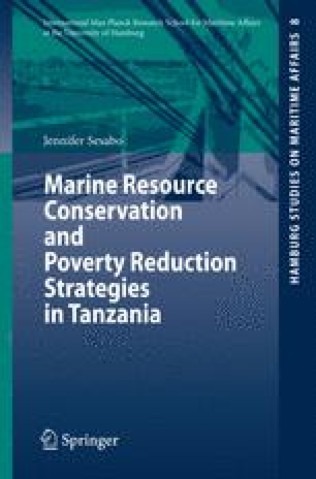
Marine Resource Conservation and Poverty Reduction Strategies in Tanzania
Despite the social, nutritional, economical and environmental importance of Tanzanian coastal areas, yet they are vulnerable to both over-exploitation and degradation of their habitats. Using the data from two coastal villages and econometric methods as well as Stochastic Production Frontier techniques, the book demonstrates the extent which various socio-economic dimensions of rural coastal households influence livelihood pathways, production efficiency and attitudes towards conservation initiatives. Thus, attention to differential patterns of rural coastal households presents more viable possibilities for coastal villages to have conservation-development policies/programs that lead to poverty reduction.
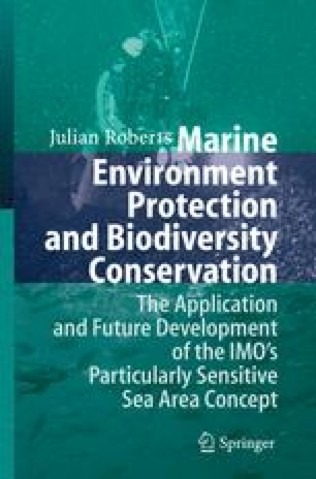
Marine environment protection and biodiversity conservation : The application and future development of the IMOs particularly sensitive sea area concept
Despite the potential benefits that PSSA designation can deliver, recent practice both within the IMO and by individual member States, has considerably undermined confidence in this emerging concept. The focus of this book is on the events within the IMO that have led to this lack of confidence arising. In doing so, this book presents an examination of coastal State practice with the PSSA concept.

Marginality : Addressing the Nexus of poverty, exclusion and ecology
In this volume economists, ecology experts, geographers, agronomists, sociologist, and business experts come together to address marginality. The inter-disciplinary research offers conceptual innovations and presents the dimensions of marginality in developing countries. Economic, political, and environmental drivers are assessed and mapped globally and in detail for countries in Africa and Asia, especially Ethiopia, India, Bangladesh, China, Indonesia. Economic growth especially in rural areas remains and farming communities is central to poverty reduction but needs to be complemented with specific actions to reach those at the margins.
Mapping selfies and memes as Touch
This book offers a rich and nuanced analysis of digitally networked socialities as culturally meaningful relationships of Touch. Focusing on the ways Touch is practised in everyday social interactions serves as a basis for understanding how Touch is multiply significant – physically, emotionally, intellectually and politically. Fiona Andreallo initiates a map of the fundamentals of Touch and how they can be considered for future research in considering digitally networked cultures. This map also serves as a basis for closely examining selfies and memes.

Manual of Digital Earth
This book offers a summary of the development of Digital Earth over the past twenty years. By reviewing the initial vision of Digital Earth, the evolution of that vision, the relevant key technologies, and the role of Digital Earth in helping people respond to global challenges, this publication reveals how and why Digital Earth is becoming vital for acquiring, processing, analysing and mining the rapidly growing volume of global data sets about the Earth.
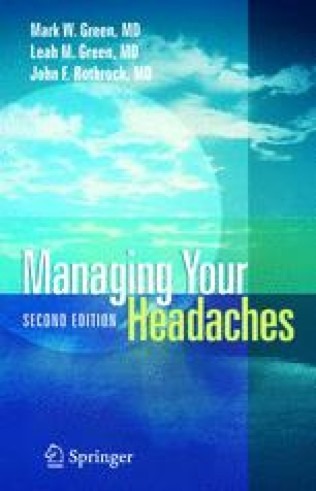
Managing Your Headaches
Frequent headaches seriously affect the lives of millions of sufferers. The result can be lost productivity and income, restrict activity, lower self-esteem, and even social isolation. For many, it takes years to find the appropriate medication to manage your headaches effectively. In Managing Your Headaches, Mark and Leah Green and John Rothrock explain what information you should record for your physician, what a physician is looking for in a neurological examination, and what you should (and should not) do to reduce the frequency and severity of your headaches. They discuss the effects of stress, psychological factors, possible food triggers, and environmental risk factors. The authors explain the symptoms of migraine, cluster, and tension-type headaches as well as less common types. They address common concerns and misconceptions and explain current knowledge about headache causes in understandable terms. The newest, most effective medications and their possible side effects are evaluated. The authors also explain how to prevent rebound headaches from over-medications and how non-medical treatments can be of value. Managing Your Headaches will tell you what you need to know to better control your headaches. Armed with the information in this book, you can be aware of the latest treatment options and can have more productive, informed discussions with your physician.
Managing Sustainability : Perspectives From Retailing and Services
Companies and policy makers are prioritizing environmental, social, and governance goals as part of their strategies. Academic research has started to focus on these issues, but many important matters require deeper investigation and reflection, especially in specific sectors. This book focuses on the sustainability issues within the retailing and services sectors.
Managing Socio-ecological Production Landscapes and Seascapes for Sustainable Communities in Asia : Mapping and Navigating Stakeholders, Policy and Action
This book presents up-to-date analyses of community-based approaches to sustainable resource management of SEPLS (socio-ecological production landscapes and seascapes) in areas where a harmonious relationship between the natural environment and the people who inhabit it is essential to ensure community and environmental well-being as well as to build resilience in the ecosystems that support this well-being.
Managing Risk and Information Security : Protect to Enable
Examine the evolving enterprise security landscape and discover how to manage and survive risk. While based primarily on the author’s experience and insights at major companies where he has served as CISO and CSPO, the book also includes many examples from other well-known companies and provides guidance for a management-level audience. Managing Risk and Information Security provides thought leadership in the increasingly important area of enterprise information risk and security. It describes the changing risk environment and why a fresh approach to information security is needed. Because almost every aspect of an enterprise is now dependent on technology not only for internal operations but increasing as a part of product or service creation, the focus of IT security must shift from locking down assets to enabling the business while managing and surviving risk. This edition discusses business risk from a broader perspective, including privacy and regulatory considerations. It describes the increasing number of threats and vulnerabilities and offers strategies for developing solutions. These include discussions of how enterprises can take advantage of new and emerging technologies—such as social media and the huge proliferation of Internet-enabled devices—while minimizing risk.
Managing public services : Making informed choices
Chapters provide a valuable frame of reference for the 21st-century manager of public services by assessing the renewal of existing practices such as strategic costing, performance management, digitization and procurement and innovations in management practices, including branding, Lean Management, resilience and risk management. The book suggests that, as the management of public services is imbued with financial, social, economic and political uncertainties, management needs to be flexible and responsive to new ideas and practices to fulfil its purpose. This book ultimately supports the reflective manager, those who think about their job and are open to new ideas on how their job can be done better, by revisiting existing practices and examining innovations in public management.
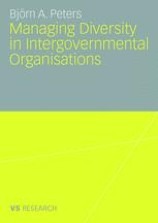
Managing Diversity in Intergovernmental Organisations
Intensifying worldwide environmental changes as well as political, cultural, religious, and economic crises have made intergovernmental organisations (IGOs) important instruments in international and global cooperation. In order to cope with their diverse stakeholders, it is more imperative than ever for intergovernmental organisations to engage in personnel policy on an international scale. Successful diversity management is an essential prerequisite for organisational performance, conflict management, and dynamics of IGOs. Björn A. Peters examines the challenges of diversity and managing diversity in IGOs on the basis of the Mekong River Commission case study.
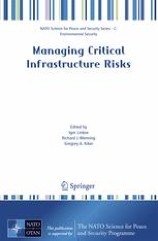
Managing Critical Infrastructure Risks
At the beginning of each year, there is a deluge of top-10 lists on just about every subject you can imagine. A top-10 list of biggest news stories, best-selling books, most popular music and movies, richest companies, and best places to visit or live. It seems everyone has his or her own top-10 list, reflecting, perhaps, differences in regional, national, and cultural values. Companies and governments most often tend to focus their top-10 lists on economic priorities, or priorities related to national defense, security, public health, and new infrastructure. This year, 2007, was no exception. Yet, increasingly, we see governments, private organizations, and companies advocating a new type of prioritization. This framework needs to reach beyond the realms of economics, world trade, and corporate management to include the environment, stakeholders, public preferences, and social goals. Moreover, corporations and individuals are not only interested in generic 10-best lists; they want lists tailored to their values, goals, and current economic and social state. For example, the U. S.
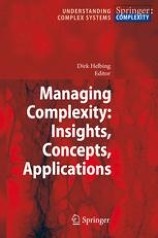
Managing Complexity : Insights, Concepts, Applications
Each chapter in Managing Complexity focuses on analyzing real-world complex systems and transferring knowledge from the complex-systems sciences to applications in business, industry and society. The interdisciplinary contributions range from markets and production through logistics, traffic control, and critical infrastructures, up to network design, information systems, social conflicts and building consensus. They serve to raise readers' awareness concerning the often counter-intuitive behavior of complex systems and to help them integrate insights gained in complexity research into everyday planning, decision making, strategic optimization, and policy.
