


تحسين النتائح
ترتيب حسب
من
الى


The preparations for market entry in a foreign country include various aspects and are influenced by factors inside and outside the firm. Based on face to face interviews with decision makers of 16 German firms Michael Klug analyses the applied strategy and the motivation for market entry and investigates different strategy theories like Porter's market based view for their suitability to explain the firms' strategy abroad. The author discusses the operational design including forms of market presence and marketing mix to realise a chosen strategy and shows the influence of the European Union as an institutional arrangement for firms preparing a venture abroad.

This book provides a broad range of insights on market engineering and information management. It covers topics like auctions, stock markets, electricity markets, the sharing economy, information and emotions in markets, smart decision-making in cities and other systems, and methodological approaches to conceptual modeling and taxonomy development.
Provides the key technologies involved in an organization’s digital transformation. It offers a deep understanding of the key technologies (Blockchain, AI, Big Data, IoT, etc.) involved and details the impact, the decision-making process, and the interplay between technologies, business models, and operations.

Chapters provide a valuable frame of reference for the 21st-century manager of public services by assessing the renewal of existing practices such as strategic costing, performance management, digitization and procurement and innovations in management practices, including branding, Lean Management, resilience and risk management. The book suggests that, as the management of public services is imbued with financial, social, economic and political uncertainties, management needs to be flexible and responsive to new ideas and practices to fulfil its purpose. This book ultimately supports the reflective manager, those who think about their job and are open to new ideas on how their job can be done better, by revisiting existing practices and examining innovations in public management.

The aim of this book is to provide a better understanding with as to how to coordinate and improve decisions about product life cycle, process and supply chain design to improve new product development.
It still holds true: information is not always the answer. Information is often part of the problem. While the main goal of information in the business place is to - able adequate decisions and actions, it can also lead to numerous negative effects: it can confuse, block creativity, or it can lead to hectic activism, stress and fatigue. Information can distract and divert attention, and it may even delay important - cisions – the paralysis by analysis. Strategies to avoid these dysfunctional effects of information can be divided into sender-based strategies and receiver-based strategies.

Digital technology determines today’s world and will be one of the key technologies of the future. Successful technology development, introduction and management are not only a question of technical issues; due to their complexity a close cooperation between different scientific disciplines is required to discuss various consequences, chances and risks from manifold points of view as a starting point for the design of adequate solutions. The ability to integrate business and technology decisions will become a crucial core competence.

Marcos Ormeño introduces both behavioural science theory and decision analysis into corporate brand management using corporate communication. He develops a managerial decision-making model that outdoes existing approaches for selecting communication tools due to its high degree of formalisation and its strong behavioural basis. An illustrative study supports the author's model and shows the importance of communication in building a corporate brand.

“Joel Demski’s book is an excellent book in accounting that provides an insightful and comprehensive study on managerial accounting using issues through a new approach based on economic theory and quantitative methods. … this book is very insightful and worth reading. The book is recommended as teaching and research material since it motivates readers to study thoughtfully the philosophy and principles of managerial accounting, in addition addressing how to solve managerial problems based on accounting information.”

The selection of good performance indicators is not an easy process. This monograph focuses on the designing of a Performance Measurement System (PMS), knowing that "magic rules" to identify them do not exist. Some indicators seem right and easy to measure, but have subtle, counter-productive consequences. Other indicators are more difficult to measure, but focus the enterprise on those decisions and actions that are critical to success. This book suggests how to identify indicators that achieve a balance in these effects and enhance long-term profitability.

At a time when managers often provide fodder for unseemly headlines, and some are even compared unflatteringly with locusts, today’s business leaders are called upon as never before to demonstrate the moral justification for their activities, and to ensure that it is understood by all the key stakeholders of a company. What is required is nothing less than a management renaissance, based on a thoroughgoing concept of corporate leadership; there is no less a need for decision makers who hold themselves to the highest standards, with a positive perception of their fu- tion as agents of dissemination, and who are committed to the good not only of “their” firm, but also of society in general.

This book, unlike other books, provides readers with a practical yet sophisticated grasp of the macroeconomic principles necessary to understand a monetary union. By definition, a monetary union is a group of countries that share a common currency. The most important case in point is the Euro area. Policy makers are the central bank, national governments, and national labour unions. Policy targets are price stability and full employment. Policy makers follow cold-turkey or gradualist strategies. Policy decisions are taken sequentially or simultaneously. The countries can differ in size or behaviour. Policy expectations are adaptive or rational. To illustrate all of this there are numerical simulations of monetary policy, fiscal policy, and wage policy.

In a context of global competition, the optimization of logistics systems is inescapable. LOGISTICS SYSTEMS: Design and Optimization falls within this perspective and presents twelve chapters that well illustrate the variety and the complexity of logistics activities. Each chapter is written by recognized researchers who have been commissioned to survey a specific topic or emerging area of logistics. The first chapter, by Riopel, Langevin, and Campbell, develops a framework for the entire book. It classifies logistics decisions and highlights the relevant linkages to logistics decisions. The intricacy of these linkages demonstrates how thoroughly the decisions are interrelated and underscores the complexity of managing logistics activities. Each of the following chapters focus on quantitative methods for the design and optimization of logistics systems.

This book addresses four standard business school subjects: microeconomics, macroeconomics, finance and information systems as they relate to trading, liquidity, and market structure. It provides a detailed examination of the impact of trading costs and other impediments of trading that the authors call “frictions”. It also presents an interactive simulation model of equity market trading, TraderEx, that enables students to implement trading decisions in different market scenarios and structures. Addressing these topics shines a bright light on how a real-world financial market operates, and the simulation provides students with an experiential learning opportunity that is informative and fun.

Life-Centered Financial Planning: How to Deliver Value That Will Never Be Undervalued shows financial planners and advisors how to radically improve the service they provide to their clients by tying their decisions and strategies to their clients’ life events, stages, and goals.
In Launching & Building a Brand For Dummies, Amy Will—who launched her first business at just 24-years-old and has been the brains behind four strong and buzzworthy brands—covers everything from crafting a powerful brand identity and planning that all-important launch to being prepared to scale up as you begin to take off. She reveals crucial lessons from her personal experience in launching five companies, as well as detailing case studies from some of the strongest brands out there, accompanied by insights and advice from successful founders and branding experts.

The proposed consensus models focus on the treatment of non-cooperative behaviors in the consensus-reaching process and explores the influence of trust loss on the consensus-reaching process.The logic behind is as follows: firstly, a clustering algorithm is adopted to reduce the dimension of decision-makers, and then, based on the clusters’ opinions obtained, a consensus-reaching process is carried out to obtain a decision result acceptable to the majority of decision-makers.
In times of fierce competition in business-to-business markets strong and economically sound business relationships with a company's customers rank among the main success factors. As a well established marketing management conception, key account management is of particular significance in this context. Interestingly enough, empirical research studies have recently proved that relationship marketing, and particularly key account management, does not achieve the economic value originally expected.
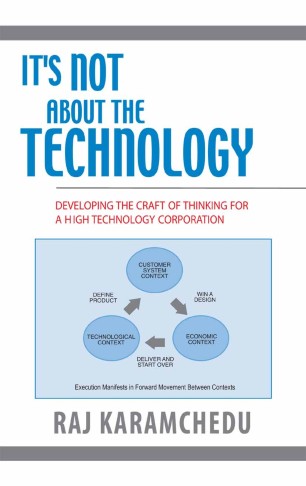
This book is not about a new concept, or a new technique. It tackles the big questions of how to develop the craft of the thinking that is required of us in high technology companies. It is predicated on a radical notion that, even though the problematic is the execution in a high technology corporation, neither a high level market strategy nor the kind of technology itself matters, insofar as learning the craft of execution goes. How marketers and engineers comprehend a context uniquely shapes the ways they interact, engage in decision-making phenomenon, and eventually their execution performance in a company. The breakdown of their interaction occurs when the individual contexts of a marketer and an engineer are permanently secluded from one another.this book methodically demystifies the key to successful execution in the high technology space

In recent years, agent-based simulation has become a widely accepted tool when dealing with complexity in economics and other social sciences. The contributions presented in this book apply agent-based methods to derive results from complex models related to market mechanisms, evolution, decision making, and information economics. In addition, the applicability of agent-based methods to complex problems in economics is discussed from a methodological perspective. The papers presented in this collection combine approaches from economics, finance, computer science, natural sciences, philosophy, and cognitive sciences.

سوريا - اتستراد درعا - غباغب
+963-15 2050 - 15 860 380 /1/2/3 - 11 662 3900