



الصفحة 37
الصفحة 37

Complex Scheduling
This book deals with such complex scheduling problems and methods to solve them. It consists of three parts: The ?rst part (Chapters 1 and 2) contains a description of basic scheduling models with applications and an introduction into discrete optimization (covering complexity, shortest path algorithms, linear programming, network ?ow algorithms and general optimization methods). In the second part (Chapter 3) resource-constrained project scheduling problems are considered. Especially, methods like constraint propagation, branch-a- bound algorithms and heuristic procedures are described. Furthermore, lower bounds and general objective functions are discussed.

Complement and Kidney Disease
It is evident that a defective or deregulated complement system results in kidney diseases. An important role of complement effector and regulatory proteins in pathological settings of the kidney has been demonstrated. A large panel of distinct human kidney diseases is caused by defective complement control. Genetic analyses have identified mutations in complement regulators that are associated with these diseases. Mutations have been identified in the fluid phase alternative pathway regulator Factor H and the membrane regulator Membrane Cofactor Protein MCP (CD46). The functional characterization of the mutant proteins allows to define the pathophysiological events on a molecular level. These new concepts and data on disease mechanisms allowed establishing new diagnostic and promising therapeutic approaches for several human kidney diseases. Molecular biology, clinics and therapy are discussed in this volume.
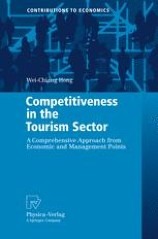
Competitiveness in the Tourism Sector : A Comprehensive Approach from Economic and Management Points
International tourism is expected to be a major vehicle of economic development in industrializing countries in the 21st century, especially for Asia. To generate long-term growth, countries with tourism-based economies must develop strategies for employing their comparative advantages to achieve competitive advantages. However, competitiveness in the tourist industry is multi-dimensional and complex. This study evaluates the competitiveness of the Taiwanese tourism sector by a multi-dimensional framework. The theoretical model proposes that the competitiveness of tourist destinations should be composed of Ricardian comparative advantages (like the conditions of natural endowments and the degree of technological change); Porterian competitive advantages; tourism management, i.e., providing high quality education and job training, public goods, support services and reduced transaction costs to enhance comparative and competitive advantages; and environmental conditions.

Competitive Programming in Python : 128 Algorithms to Develop your Coding Skills
Learn all the algorithmic techniques and programming skills you need from two experienced coaches, problem setters, and jurors for coding competitions. The authors highlight the versatility of each algorithm by considering a variety of problems and show how to implement algorithms in simple and efficient code. What to expect: * Master 128 algorithms in Python. * Discover the right way to tackle a problem and quickly implement a solution of low complexity.

Competition, innovation, and antitrust : A theory of market leaders and Its policy implications
Competition, Innovation, and Antitrust develops a theory of market leadership in the presence of endogenous entry of firms and applies it to models of competition in the market and for the market.
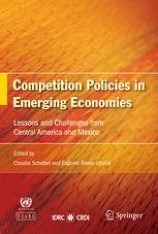
Competition Policies in Emerging Economies : Lessons and Challenges from Central America and Mexico
Do small developing economies, or SDEs, need a specific competition policy to create competitive markets? Against the backdrop of globalization, protectionist policies that promote state ownership and heavy regulation of key industries are proving increasingly ineffective for driving growth. Countries around the world are instituting reforms to promote competition and business creation, yet the economic and political concentration of power, feeble judicial systems, and the scarcity of human and financial resources pose special challenges to SDEs. Competition Policies in Emerging Economies features an in-depth analysis of two strategic industries — telecommunications and banking — in several Central American nations which sheds light on the dynamics of the transition to deregulation and trade liberalization. Examining the lessons learned from these experiences and presenting discussion of political, legal, economic, financial, cultural, and organizational issues, the book provides unique perspectives on competition policy and economic development.

Competition in Marketing : Two Essays on the Impact of Information on Managerial Decisions and on Spatial Product Differentiation
In her first essay Vera Magin uses primary experimental data to explore the effects of information on marketing decisions, performance, and competition. In her second essay the author discusses several approaches to measure product differentiation in spatial contexts. In doing so, she refers to the measurement of diversity and also applies methods from disciplines like spatial statistics, forestry, and geography.
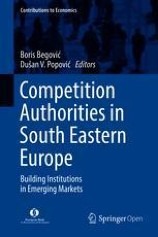
Competition Authorities in South Eastern Europe : Building Institutions in Emerging Markets
Provides answers to key open questions concerning competition policy in emerging economies, with a focus on South Eastern Europe. The contributions address two major issues. One is the design of competition policy and the national competition authorities that enforce it, including the topics of competition advocacy and state aid control; the other is the use of economic methods in competition law enforcement, especially in the cases of relevant market definition and merger control. Many lessons learned in the countries of South Eastern Europe can be applied to the emerging markets of other regions. As such, the findings presented here will be highly relevant for officials and staff at national competition authorities, advisers to legislators shaping national competition policy, competition law professionals, and university students alike.

Competencies, Higher Education and Career in Japan and the Netherlands
This book investigates how social and cultural factors affect the education, training and career development of graduates of higher education in Japan and the Netherlands. Despite their different historical paths, both countries are now subject to the common pressure of globalization. As a result, the higher education sector in both countries is becoming more universal and available to a larger population, and the economy and society are becoming increasingly knowledge-intensive. The aim of this book is to explore how Dutch and Japanese graduates choose and develop their careers in reference to the above-mentioned challenges. It is based on a unique data set consisting of surveys held among graduates 3 and 8 years after leaving higher education.
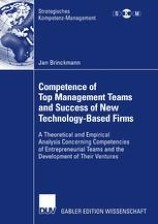
Competence of Top Management Teams and Success of New Technology-Based Firms : A Theoretical and Empirical Analysis Concerning Competencies of Entrepreneurial Teams and the Development of Their Ventures
In his book, Jan Brinckmann develops a comprehensive competence concept for new technology-based firms. It is grounded in competence-related literature combining insights from entrepreneurship and management research. The competence concept comprises three domains: general entrepreneurial competencies, social competencies, and functional competencies in technology, marketing, and financial management. A measurement model is developed to specify the contents of each sub-domain and to facilitate self-assessment of these competencies. In an empirical study, 212 executives of German NTBFs assessed their team’s competencies. This data is analyzed using structural equation modelling to identify the most relevant competencies for new venture success.

Competence Assessment in Dementia
The increasing proportion of demented elderly in populations, debates over patient's rights and autonomy, and the growing body of knowledge on dementia has inspired the European Dementia Consensus Network to regard competence assessment in dementia as an important topic of debate.

Competence and Vulnerability in Biomedical Research
In this book, the author develops a novel justificatory framework for making judgments of decisional competence to consent to biomedical research with reference to five groups of cognitively vulnerable individuals - older children and adolescents, adults with intellectual disabilities, adults with depression, adults with schizophrenia and adults with dementia, including Alzheimer’s disease.
Comparative risk assessment and environmental decision making
Decision making in environmental projects is typically a complex and confusing process characterized by trade-offs between socio-political, environmental, and economic impacts. Comparative Risk Assessment (CRA) is a methodology applied to facilitate decision making when various activities compete for limited resources. CRA has become an increasingly accepted research tool and has helped to characterize environmental profiles and priorities on the regional and national level. CRA may be considered as part of the more general but as yet quite academic field of multi-criteria decision analysis (MCDA). Considerable research in the area of MCDA has made available methods for applying scientific decision theoretical approaches to multi-criteria problems, but its applications, especially in environmental areas, are still limited. The papers show that the use of comparative risk assessment can provide the scientific basis for environmentally sound and cost-efficient policies, strategies, and solutions to our environmental challenges.

Comparative Placentation : Structures, Functions and Evolution
Science produces fascinating puzzles: why is there such a range of placental structures when other mammalian organs are so structurally uniform ? Why and how did the different placental structures evolve ? Comparative placental studies can facilitate the identification of the common factors in placental growth, differentiation and function and their relevance to possible evolutionary pathways. Comparative Placentation is the only book presenting up-to-date data illustrating the great variety of structure but uniform function of vertebrate placentas from fish to man. This information is essential for selection of suitable models to investigate particular practical problems of impaired or anomalous growth in human and animal placentation. The unique collection of the best light and electron micrographs from the last thirtyfive years which precisely illustrate the structural range in each taxon, make the book the most authoritative publication in this field and a vital source of information for anyone interested on reproductive physiology, anatomy and medicine.

Comparative genomics : Methods and protocols
Provides new and updated chapters covering computational and mathematical techniques and concepts related to the field of comparative genomics. The topics covered in the chapters range from those that address general techniques and concepts that apply to all organisms to others that are specialized and apply to specific biological systems such as viruses, bacteria, nematodes, and insects.

Comparative Corporate Governance : Shareholders as a Rule-maker
It is fairly easy for a Finnish Jurist to understand German Company law. On the other hand, UK Company law seems very confusing. What is even more confusing is that the UK corporate govemance model is often regarded as one of the best in the World. Clearly German law cannot be as bad as it is often said to be. This books results from these kinds of thoughts and an interest in comparative law, Company law and securities markets law. I wanted to find out whether the functional method would give anything new to say about the regulation of corpo rate govemance in Germany and the UK. As I have been lecturing on Company law and corporate govemance myself, I also wanted to write a book that I could use as a textbook in my courses. For this reason, I focused on one of the key questions in corporate govemance: the regula tion of shareholder activism.

Company Tax Reform in the European Union : Guidance from the United States and Canada on Implementing Formulary Apportionment in the EU
This book is important reading for both tax policymakers and business leaders. It breaks the mold of conventional thinking by demonstrating that formulary apportionment is a practical way to solve the income-allocation problems confronting the European Union. Equally important, the book gives the advocates of arm’s-length allocation methods some challenging food for thought.
Community Quality-of-Life Indicators : Best Cases VIII
Offers critical insights into the thriving international field of community indicators, incorporating the experiences of government leaders, philanthropic professionals, community planners and a wide range of academic disciplines. It illuminates the important role of community indicators in diverse settings and the rationale for the development and implementation of these innovative projects. details many of the practical “how to” aspects of the field as well as lessons learned from implementing indicators in practice. The case studies included here also demonstrate how, using a variety of data applications, leaders of today are monitoring and measuring progress and communities are empowered to make sustainable improvements in their wellbeing.

Community Oral Health Practice for the Dental Hygienist
Describes the role of the public health professional in improving the oral health care of people throughout the community. It discusses key topics such as access to care, the assessment needed for program planning, social responsibility and government policy, cultural diversity, and career options in public health. Written by respected dental educator Christine French Beatty, this book helps you prepare for the National Board Dental Hygiene Examination (NBDHE) and to develop the core competencies needed in the practice setting.

Communities and Technologies 2005 ; Proceedings of the Second Communities and Technologies Conference, Milano 2005
This book includes 23 papers dealing with the impact of modern information and communication technologies that support a wide variety of communities: local communities, virtual communities, and communities of practice, such as knowledge communities and scientific communities. The volume is the result of the second multidisciplinary "Communities and Technologies Conference", a major event in this emerging research field. The various chapters discuss how communities are affected by technologies, and how understanding of the way that communities function can be used in improving information systems design. This state of the art overview will be of interest to computer and information scientists, social scientists and practitioners alike.
