



الصفحة 35
الصفحة 35

Managing European Coasts : Past, Present and Future
Many coastal areas and human activities are subject to increasing risks from natural and man-induced hazards such as flooding resulting from major changes in hydrology of river systems that has reached a global scale. Changes in the hydrological cycle coupled with changes in land and water management alter fluxes of materials transmitted from river catchments to the coastal zone, which have a major effect on coastal ecosystems. The increasing complexity of underlying processes and forcing functions that drive changes on coastal systems are witnessed at a multiplicity of temporal and spatial scales.

Managing Critical Infrastructure Risks
At the beginning of each year, there is a deluge of top-10 lists on just about every subject you can imagine. A top-10 list of biggest news stories, best-selling books, most popular music and movies, richest companies, and best places to visit or live. It seems everyone has his or her own top-10 list, reflecting, perhaps, differences in regional, national, and cultural values. Companies and governments most often tend to focus their top-10 lists on economic priorities, or priorities related to national defense, security, public health, and new infrastructure. This year, 2007, was no exception. Yet, increasingly, we see governments, private organizations, and companies advocating a new type of prioritization. This framework needs to reach beyond the realms of economics, world trade, and corporate management to include the environment, stakeholders, public preferences, and social goals. Moreover, corporations and individuals are not only interested in generic 10-best lists; they want lists tailored to their values, goals, and current economic and social state. For example, the U. S.

Management of the Addicted Patient in Primary Care
لThe text is logically organized and key information is easily accessible. The introductory section offers the reader important background and rationale for evaluating and treating addiction in primary care. Following a useful presentation of addiction "basics" (i.e., definitions, neurobiology, genetics, and the disease model), the majority of the book focuses on helping the physician gain insight and develop practical skills that can be readily implemented. A wealth of clinical assessment tools is provided, and the underlying psychosocial processes common to all forms of addiction are discussed. Both pharmacologic interventions and nonpharmalogic modalities are clearly outlined. Of particular note are specific cognitive-behavioral and motivational strategies that can be administered in an office-based setting. The role of community-based recovery support systems is considered as well. Since a complete understanding of why and when to refer is critical to the management of this often life-threatening condition, criteria for referral are detailed. Bulleted clinical "pearls" further aid the reader in gaining insight into treating this difficult patient population.

Management of Technology and Innovation in Japan
Despite the innumerable number of p- lications and recommendations on innovation, competitive innovativeness is still a rare competency. The latest publication of UNICE – the European Industry - ganization representing 20 million large, midsize and small companies – speaks a clear language: Europe qualifies to roughly 60% (70%) of the innovation strength of the US (Japan).

Management of Innovation in Network Industries : The Mobile Internet in Japan and Europe
This book focuses on the following questions: Which are the implications of different approaches towards management of systemic innovations? Do differences matter and why do they matter? The author shows that Europeans can learn from the Japanese and gives advice for future approaches to developments in the European telecommunications industry.

Management of Complications in Refractive Surgery
This guide offers the reader practical pearls to the solution and prevention of the different complications of corneal and refractive surgery. All complications are described and lavishly illustrated from its pathogenesis to its treatment modalities.

Mammalian and Avian Transgenesis : New Approaches
Mammalian and Avian Transgenesis presents a collection of novel methods for the production of a wide range of transgenic animals. The manual focuses largely on mice, but also contains protocols for successful transgenesis in rats, cows, pigs and birds. The manual provides detailed, step-by-step protocols covering all aspects of the production of transgenic animals, including the use of lentiviral vectors in gene transfer, intracytoplasmic sperm injection, nuclear transfer, large insert transgenesis, conditional gene expression systems, the use of reporter genes in transgenesis and transgenesis in large animals and birds. The text is supplemented by superb color photos. While the focus is on newly established techniques, the fundamental methods of transgenesis are also covered for those new to the field. Thus this manual is perfectly suited for those wishing to adopt new technologies in transgenesis.

Making Fisheries Management Work : Implementation of Policies for Sustainable Fishing
This book seeks to widen the perspective taken on implementation in fisheries management. The cases presented in this volume addresses legal, administrative, and political challenges regarding implementation of resource conservation policies. The book addresses problems relating to goal achievement, but also causes of deliberate change of political goals during implementation. Fisheries management systems are embedded in inert social structures and natural conditions that vary among different states. Consequently, the book takes a historical and comparative approach, describing the historical developments of national implementation systems and the conditions that shaped their development. It thus seeks to explain why national fisheries management systems have evolved differently, focusing on Norwegian, Faeroese, and EU/Danish management systems. The descriptive and explanatory outlines are accompanied by qualitative assessments of the systems effectiveness as tools for collective action.

Making European Merger Policy More Predictable
Making European Merger Policy More Predictable analyses European Merger Control with regard to its capacity to generate predictability among the concerned parties. Starting from the premise that predictability is of overwhelming importance for the functioning of market economies, Voigt and Schmidt ask to what degree European Merger Control has been predictable over the last couple of years. The authors show both theoretically and empirically that there have been serious shortcomings with regard to the predictability of competition policy. They identify the insufficient recognition of the consequences of globalization on the competitive processes as well as an often inconsistent application of economic theory as the root causes for the lack of predictability. The inconsistent application of economic theory is particularly relevant with regard to potential competition and the evaluation of collective dominance. The authors generate a substantial number of proposals that could help to improve predictability. On this basis, Voigt and Schmidt critically assess the recent reforms of European Merger Control.

Magnetohydrodynamics : Historical Evolution and Trends
Magnetohydrodynamics (MHD) studies the interaction between the flow of an electrically conducting fluid and magnetic fields. It involves such diverse topics as the evolution and dynamics of astrophysical objects, thermonuclear fusion, metallurgy and semiconductor crystal growth, etc. Although the first ideas in magnetohydrodynamics appeared at the beginning of the last century, the "explosion" in theoretical and experimental studies occurred in the 1950s-60s. This state-of-the-art book aims at revising the evolution of ideas in various branches of magnetohydrodynamics (astrophysics, earth and solar dynamos, plasmas, MHD turbulence and liquid metals) and reviews current trends and challenges.

Magnetism and Structure in Functional Materials
Magnetism and Structure in Functional Materials addresses three distinct but related topics: (i) magnetoelastic materials such as magnetic martensites and magnetic shape memory alloys, (ii) the magnetocaloric effect related to magnetostructural transitions, and (iii) colossal magnetoresistance (CMR) and related magnanites. The goal is to identify common underlying principles in these classes of materials that are relevant for optimizing various functionalities. The emergence of apparently different magnetic/structural phenomena in disparate classes of materials clearly points to a need for common concepts in order to achieve a broader understanding of the interplay between magnetism and structure in this general class of new functional materials exhibiting ever more complex microstructure and function. The topic is interdisciplinary in nature and the contributors correspondingly include physicists, materials scientists and engineers. Likewise the book will appeal to scientists from all these areas.
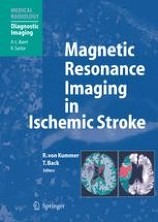
Magnetic Resonance Imaging in Ischemic Stroke
The imaging of stroke has undergone significant changes owing to the rapid progress in imaging technology. This volume, comprising three parts, is designed to provide a comprehensive summary of the current role of MR imaging in patients with ischemic stroke. The first part outlines the clinical presentations of stroke and discusses the diagnostic efficacy and therapeutic impact of MR imaging. The second and third parts form the core of the volume, and are based on a novel approach in that the topic is presented from two very different viewpoints. Part 2 provides a detailed presentation of the distinguishing features of stroke from the radiologist's perspective. By contrast, part 3 addresses the needs of the clinician, documenting specific stroke syndromes and their correlates on MR imaging. The overall aim has been to create a well-illustrated volume with broad appeal that links pathology, radiology and stroke medicine in an informative manner.

Macrophytes in Aquatic Ecosystems : from Biology to Management ; Proceedings of the 11th International Symposium on Aquatic Weeds, European Weed Research Society
Macrophytes and macrophytes ecology have gained an added importance with the introduction of, and legal requirement to implement, the European Water Framework Directive. This reflects the valuable role that aquatic plant communities play in assessing the ecological status of water bodies. Significant changes in the status and general abundance of these communities has been recorded in the last three decades, consequent on such factors as global warming and, increasingly, on the spread of aggressive alien species. These changes have been most felt in those waters that are exploited for amenity and recreational pursuits. The increased biomass of aquatic vegetation in water bodies has adversely impacted on leisure use of these systems but has also impacted on their use for agricultural, flood relief, municipal and domestic purposes. The loss to national economies resulting from this excessive plant biomass has been appreciable and has put pressure on water managers to develop weed control procedures that are efficient, environmentally sensitive and cost-effective.

Macroeconomics of Monetary Union
This book, unlike other books, provides readers with a practical yet sophisticated grasp of the macroeconomic principles necessary to understand a monetary union. By definition, a monetary union is a group of countries that share a common currency. The most important case in point is the Euro area. Policy makers are the central bank, national governments, and national labour unions. Policy targets are price stability and full employment. Policy makers follow cold-turkey or gradualist strategies. Policy decisions are taken sequentially or simultaneously. The countries can differ in size or behaviour. Policy expectations are adaptive or rational. To illustrate all of this there are numerical simulations of monetary policy, fiscal policy, and wage policy.

Machine Learning: ECML 2007 ; 18th European Conference on Machine Learning, Warsaw, Poland, September 17-21, 2007, Proceedings
The two premier annual European conferences in the areas of machine learning and data mining have been collocated ever since the ?rst joint conference in Freiburg, 2001. The European Conference on Machine Learning (ECML) traces its origins to 1986, when the ?rst European Working Session on Learning was held in Orsay, France. The European Conference on Principles and Practice of KnowledgeDiscoveryinDatabases(PKDD) was?rstheldin1997inTrondheim, Norway.

Machine Learning: ECML 2006 ; 17th European Conference on Machine Learning, Berlin, Germany, September 18-22, 2006, Proceedings
This book constitutes the refereed proceedings of the 17th European Conference on Machine Learning, ECML 2006, held in Berlin, Germany in September 2006, jointly with PKDD 2006. The 46 revised full papers and 36 revised short papers presented together with abstracts of 5 invited talks were carefully reviewed and selected from 564 papers submitted to both, ECML and PKDD. The papers present a wealth of new results in the area and address all current issues in machine learning.

Machine Learning in Computer Vision
The goal of this book is to address the use of several important machine learning techniques into computer vision applications. An innovative combination of computer vision and machine learning techniques has the promise of advancing the field of computer vision, which contributes to better understanding of complex real-world applications. The effective usage of machine learning technology in real-world computer vision problems requires understanding the domain of application, abstraction of a learning problem from a given computer vision task, and the selection of appropriate representations for the learnable (input) and learned (internal) entities of the system. In this book, we address all these important aspects from a new perspective: that the key element in the current computer revolution is the use of machine learning to capture the variations in visual appearance, rather than having the designer of the model accomplish this. As a bonus, models learned from large datasets are likely to be more robust and more realistic than the brittle all-design models.

Machine Learning for Multimodal Interaction ; Vol.3361 : 1st International Workshop, MLMI 2004, Martigny, Switzerland, June 21-23, 2004, Revised Selected Papers
his book contains a selection of refereed papers presented at the 1st Wo- shop on Machine Learning for Multimodal Interaction (MLMI 2004), held at the “Centre du Parc,” Martigny, Switzerland, during June 21–23, 2004. The workshop was organized and sponsored jointly by three European projects, – AMI, Augmented Multiparty Interaction, http://www.amiproject.org – PASCAL, Pattern Analysis, Statistical Modeling and Computational Learning, http://www.pascal-network.org – M4, Multi-modal Meeting Manager, http://www.m4project.org as well as the Swiss National Centre of Competence in Research (NCCR): – IM2: Interactive Multimodal Information Management, http://www.im2.ch MLMI 2004 was thus sponsored by the European Commission and the Swiss National Science Foundation.
Machine Learning and Robot Perception
Presents some of the most recent research results in the area of machine learning and robot perception. The chapters represent new ways of solving real-world problems. This book will appeal to researchers, senior undergraduate/postgraduate students, application engineers and scientists.

Machine Learning and Knowledge Discovery in Databases ; European Conference, ECML PKDD 2008, Antwerp, Belgium, September 15-19, 2008, Proceedings, Part II
Constitutes the refereed proceedings of the joint conference on Machine Learning and Knowledge Discovery in Databases: ECML PKDD 2008, held in Antwerp, Belgium, in September 2008.The 100 papers presented in two volumes, together with 5 invited talks, were carefully reviewed and selected from 521 submissions. In addition to the regular papers the volume contains 14 abstracts of papers appearing in full version in the Machine Learning Journal and the Knowledge Discovery and Databases Journal of Springer.
