



الصفحة 35
الصفحة 35

Coastal dunes : Ecology and conservation
Brings together coastal dune specialists from tropical and temperate latitudes, which together cover a wide set of topics, including: geomorphology, community dynamics, ecophysiology, biotic interactions and environmental problems and conservation. A major product of this book is a set of recommendations for future research, identifying relevant topics where detailed knowledge is still lacking. It also identifies management tools that will promote and maintain the rich diversity of the dune environments in the context of continuing coastal development.

Clusia : A woody neotropical genus of remarkable plasticity and diversity
Clusia is the only dicotyledonous tree genus with crassulacean acid metabolism (CAM), and in some cases all variants of CAM can be expressed in one given species. These unique features as well as Clusia's extreme flexibility have put it in the limelight of international research. The studies presented in this volume embrace anatomy, morphology and plant architecture, phytogeographical distribution and community ecology, phylogeny and genetic diversity, physiology and metabolism, physiological ecology and functional diversity, circadian rhythmicity and biological timing. Covering all aspects of tree biology, this richly illustrated volume is an invaluable source of information for any plant scientist.

Clinical trial registries : A practical guide for sponsors and researchers of medicinal products
A necessary addition to the library of all researchers who plan to publish their results in top-tier, peer-reviewed journals. ICMJE editors and other journal editors require registration of clinical trial information on publicly available Web sites before enrollment of study subjects and some countries and regions also require this information, as well as timely publication of study results. Not only does this book discuss the genesis of these requirements, it also provides practical information for researchers and sponsors on how to establish a workflow for a clinical registry project, how to file to a registry, and how to post results. More than 25 current Web addresses for registries are provided as well as a comprehensive annotated bibliography of papers on the topic of clinical trial registries. This book is a valuable source of information for all sponsors of medicinal products.

Clinical Pharmacology of Sleep
This volume covers the clinical and pharmacological treatment of several important sleep disorders such as insomnia, sleep apnea, narcolepsy, restless legs syndrome, and periodic limb movement syndrome. It further addresses the use of sleep medications in children, adolescents, and in the elderly. It offers a comprehensive overview of the currently available hypnotic medications and covers aspects of chronopharmacology and its implications for the pharmacology of sleep. It also reviews the basic science of sleep and sleep disorders, and thus the potential development of new pharmacological approaches. The book will be useful for physicians, psychopharmacologists, psychiatrists, sleep disorder specialists and other healthcare professionals such as nurses, social workers and graduate medical students.

Mathematical Modeling of Biological Systems ; Vol. I : Cellular Biophysics, Regulatory Networks, Development, Biomedicine, and Data Analysis
This two-volume, interdisciplinary work is a unified presentation of a broad range of state-of-the-art topics in the rapidly growing field of mathematical modeling in the biological sciences. Highlighted throughout both works are mathematical and computational approaches to examine central problems in the life sciences, ranging from the organizational principles of individual cells to the dynamics of large populations.

Math Everywhere : Deterministic and Stochastic Modelling in Biomedicine, Economics and Industry
These proceedings are reporting on the conference ''Math Everywhere", a successful event celebrating a leading scientist, promoting ideas he pursued and sharing the open atmosphere he is known for. The areas of the contributions are the following , Deterministic and Stochastic Systems. Mathematical Problems in Biology, Medicine and Ecology, Mathematical Problems in Industry and Economics.

Materials science for dentistry
A standard resource for undergraduate and postgraduate courses in dentistry. It provides fundamental coverage of the materials on which dentistry depends, covering the structure and chemistry that govern the behavior and performance of materials. Particular classes of materials include gypsum, polymers, acrylic, cements, waxes, ceramics and metals. Other chapters review surfaces, corrosion, mixing, casting, cutting and bonding, and mechanical testing. This updated edition, which includes substantial chapters on chemistry, has been extensively revised with new material on temporary restoration resins, hydraulic silicate cements and the practical aspects of wetting surfaces. Mindfully written to provide explanations for behavior, formulation, clinical and laboratory instructions and procedures, there is no comparable resource for researchers, students, teachers and practitioners in the field of dentistry.

Materials for medical applications : Principles and practices
Discusses advanced knowledge about the synthesis and application of materials in the medical field for diagnostic and therapeutic conditions. These materials have been extensively used in various biological and medical applications, especially in drug delivery, tumor screening, bioimaging, diagnosis, and therapies. Materials for Medical Applications provides comprehensive but concise information about materials and their medical applications. The readers will get information about the trends in materials and their medical applications, as well as current material-based products that are used in the medical field. The book also discusses how materials are tested in research laboratories, preclinical (animal) trials, and clinical (human) trials, and how material-based products go through various regulatory and safety phases before reaching patients. It also discusses topics such as materials delivery, imaging, and treatments for various diseases. It includes a chapter dedicated to regulatory guidelines and policies in the application of nanomaterials and will include current clinical trial information on the materials. Finally, the book has topics such as health safety, toxicity, dosages, and long-term implications of materials.

Material Modeling in Finite Element Analysis
Presents some specific problems including the metal-forming process, combustion room, Mullins effect of rubber tires, viscoelasticity of liver soft tissues, small punch test, tunnel excavation, slope stability, concrete slump test, orthodontic wire, and piezoelectric microaccelerometer.

Mass Vaccination : Global Aspects - Progress and Obstacles
Mass immunization is the blitzkrieg of vaccination practice. It serves to rapidly protect populations, both because of the high coverage achieved and because of the herd immunity thereby induced. However, as in war, mass immunization campaigns must be conducted intelligently, with careful strategy and strong attention to logistics of supply and deployment. If conducted badly, mass immunization may fail or even be counter-productive. In this volume, some of the most successful practitioners of mass im- nization tell us about its art and science. David Heymann and Bruce Aylward of WHO begin the book with a theoretical and practical overview of mass immunization. Michael Lane, who participated in the successful effort to eradicate smallpox relates how this was done using mass vaccination and other strategies. Application of mass immunization by the US military is c- ered by John Grabenstein and Remington Nevin, who have a large experience in these matters. Karen Noakes and David Salisbury recount the striking s- cesses of mass immunization in the United Kingdom. The global control of the clostridia that produce diphtheria toxin is described by Charles Vitek. Hepa- tis A is decreasing dramatically under the impact of large-scale vaccination, as Francis André illustrates. The French experience with Hepatitis B vac- nation has been mixed, and François Denis and Daniel Levy-Bruhl explain the circumstances. In?uenza vaccination is an annual example of large-scale campaigns, the complexity of which is recounted by Benjamin Schwartz and Pascale Wortley.

Martens and Fishers (Martes) in human-altered environments : An international perspective
Examines the conditions where humans and martens are compatible and incompatible, and promotes land use practices that allow Martes to be representatively distributed and viable. All Martes have been documented to use forested habitats and 6 species (excluding the stone marten) are generally considered to require complex mid- to late-successional forests throughout much of their geographic ranges. All species in the genus require complex horizontal and vertical structure to provide escape cover protection from predators, habitat for their prey, access to food resources, and protection from the elements. Martens and the fisher have high metabolic rates, have large spatial requirements, have high surface area to volume ratios for animals that often inhabit high latitudes, and often require among the largest home range areas per unit body weight of any group of mammals. Resulting from these unique life history characteristics, this genus is particularly sensitive to human influences on their habitats, including habitat loss, stand-scale simplification of forest structure via some forms of logging, and landscape-scale effects of habitat fragmentation. Given their strong associations with structural complexity in forests, martens and the fisher are often considered as useful barometers of forest health and have been used as ecological indicators, flagship, and umbrella species in different parts of the world. Thus, efforts to successfully conserve and manage martens and fishers are associated with the ecological fates of other forest dependent species and can greatly influence ecosystem integrity within forests that are increasingly shared among wildlife and humans.We have made great strides in our fundamental understanding of how animals with these unique life history traits perceive and utilize habitats, respond to habitat change, and how their populations function and perform under different forms of human management and mismanagement.
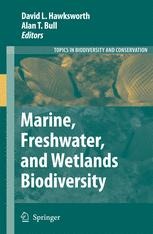
Marine, Freshwater, and Wetlands Biodiversity
Marine, coastal and wetland habitats are threatened, not only through exploitation, but also by the prospect of climate change – as ocean currents change course, sea levels rise, and rainfall patterns change. Even the once-common cod is now under threat from the combined effects of over-fishing and a dramatic change-induced decrease in the plankton that cod larvae feed on. Meanwhile, coral reefs remain especially vulnerable to rapid sea-level changes exacerbated by the effects of tourism and disease. This book gathers together a wide range of papers reporting on key research into the biodiversity conservation of these critical and increasingly threatened habitats. Collectively these papers provide a snap-shot of the types of problems they are experiencing, and offer a wealth of topical examples which render this volume especially valuable to teachers of courses in marine, freshwater and wetlands ecology, biological conservation and ecological restoration.
Marine Biodiversity : Patterns and Processes, Assessment, Threats, Management and Conservation
Understanding the functioning of Marine Ecosystems is the first step to measure and predict the influence of Man, and to find solutions for the enormous array of problems we face today. This volume is organised according to the four subthemes of the symposium and to issues commonly perceived as relevant by scientists concerned with the study, protection and management of Marine Biodiversity: patterns and processes, assessment, threats and management and conservation.
Marine bioactive molecules for biomedical and pharmacotherapeutic application
Explores cutting-edge research on the discovery and application of marine bioactive molecules for biomedical and pharmacotherapeutic purposes. The book begins by delving into the bioprospection of marine sponge microbiomes for bioactive metabolites using advanced metagenomics tools. It then explores metagenome mining approaches for the discovery of marine microbial natural products. The use of marine-derived fungi as a source of anticancer secondary metabolites is also discussed. The book then turns to the biomedical applications of marine-derived biomaterials, including marine biopolymers in tissue engineering and regenerative medicine. Marine-derived pharmaceuticals and polymeric nanostructures for cancer treatment are also examined.

Marine Anthropogenic Litter
This book describes how man-made litter, primarily plastic, has spread into the remotest parts of the oceans and covers all aspects of this pollution problem from the impacts on wildlife and human health to socio-economic and political issues. Marine litter is a prime threat to marine wildlife, habitats and food webs worldwide. The book illustrates how advanced technologies from deep-sea research, microbiology and mathematic modelling as well as classic beach litter counts by volunteers contributed to the broad awareness of marine litter as a problem of global significance. The authors summarise more than five decades of marine litter research, which receives growing attention after the recent discovery of great oceanic garbage patches and the ubiquity of microscopic plastic particles in marine organisms and habitats.

Mangroves and Halophytes : Restoration and Utilisation
Focusing on Venezuela and Mexico, this edited volume from the International Society of Halophyte Utilisation (ISHU) explores the environmental issues facing South and Central America's coastal ecosystems, and discusses the uses of mangrove species and other halophytes in addressing issues of both coastal pollution and upland soil salinisation. The book draws on expertise from Europe and South America to present a series of case studies that detail Venezuela’s saline ecosystems and examine the economic potential of mangrove restoration and halophyte production. It includes cutting-edge research into the establishment of new mangrove stands which could serve as prototypes for the sustainable use of halophytes, including Chenopodium quinoa and Tamarix aphylla. Moreover, the detailed examples from Venezuela and other Caribbean countries provide useful models for comparison with halophyte utilisation in other parts of the world – especially the Mediterranean region, where much of the earlier research of the ISHU had been conducted.

Managed Ecosystems and CO2 : Case Studies, Processes, and Perspectives
Managed ecosystems cover a large part of the Earth's land surface, provide almost all of our food and most of our wood and fibre, and are increasingly a source of renewable energy. Forecasting the ability of managed ecosystems to continue these vital roles in a globally changing environment is an inter-disciplinary challenge. To elucidate the complex responses of managed systems to elevated [CO2], several free air carbon dioxide enrichment (FACE) facilities were established. These FACE systems allow large areas to be exposed to the elevated [CO2] we expect by the middle of the century. This volume summarizes the main findings from 13 experiments with annual crops, permanent pastures and plantation forests at 11 sites throughout the world during the past ten years. The results significantly alter our perception of how rising [CO2] will directly affect these managed ecosystems, with implications for policy, plant-breeding objectives and adaptation.
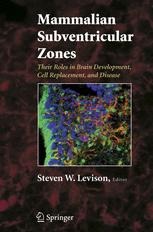
Mammalian Subventricular Zones : Their Roles in Brain Development, Cell Replacement, and Disease
This text provides a comprehensive summary of research and findings that have lead to the current understanding of the subventricular zones. It provides an overview of the roles of subventricular zones in normal development and in disease and a foundation from which current and future studies can be evaluated.

Mammalian Evolutionary Morphology : A Tribute to Frederick S. Szalay
This volume acknowledges and celebrates the contributions of Dr. Frederick S. Szalay to the field of Mammalian Evolutionary Morphology. Professor Szalay has published about 200 articles, four monographs, and six books on this subject. Throughout his career Professor Szalay has been a strong advocate for biologically and evolutionarily meaningful character analysis. In his view, this can be accomplished only through an integrated strategy of functional, adaptational, and historical analysis. Dr. Szalay worked on several different mammalian groups during his career, and the contributions to this volume reflect his broad perspective. Chapters focus on Primates, a group to which Professor Szalay dedicated much of his career. However, other mammalian groups on which he conducted a significant amount of research, such as marsupials and xenarthrans, are also covered in the volume.
Mammalian and Avian Transgenesis : New Approaches
Mammalian and Avian Transgenesis presents a collection of novel methods for the production of a wide range of transgenic animals. The manual focuses largely on mice, but also contains protocols for successful transgenesis in rats, cows, pigs and birds. The manual provides detailed, step-by-step protocols covering all aspects of the production of transgenic animals, including the use of lentiviral vectors in gene transfer, intracytoplasmic sperm injection, nuclear transfer, large insert transgenesis, conditional gene expression systems, the use of reporter genes in transgenesis and transgenesis in large animals and birds. The text is supplemented by superb color photos. While the focus is on newly established techniques, the fundamental methods of transgenesis are also covered for those new to the field. Thus this manual is perfectly suited for those wishing to adopt new technologies in transgenesis.
