


تحسين النتائح
ترتيب حسب
من
الى

Discusses advances in smart and sustainable development of smart environments. The authors discuss the challenges faced in developing sustainable smart applications and provide potential solutions. The solutions are aimed at improving reliability and security with the goal of affordability, safety, and durability. Topics include health care applications, sustainable smart transportation systems, intelligent sustainable wearable electronics, and sustainable smart building and alert systems. Authors are from both industry and academia and present research from around the world. Addresses problems and solutions for sustainable development of smart cities; Includes applications such as healthcare, transportation, wearables, security, and more ; Relevant for scientist and researchers working on real time smart city development.
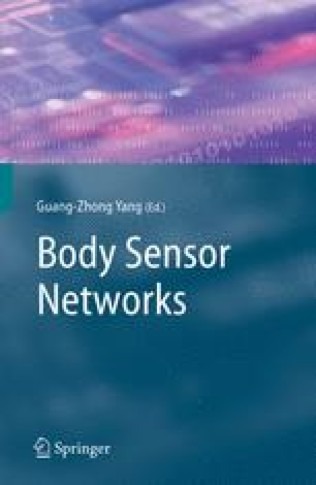
While the problems of long-term stability and biocompatibility are being addressed, several promising prototypes are starting to emerge for managing patients with acute diabetes, for treatment of epilepsy and other debilitating neurological disorders and for monitoring of patients with chronic cardiac diseases. Despite the technological developments in sensing and monitoring devices, issues related to system integration, sensor miniaturization, low-power sensor interface circuitry design, wireless telemetric links and signal processing still have to be investigated.
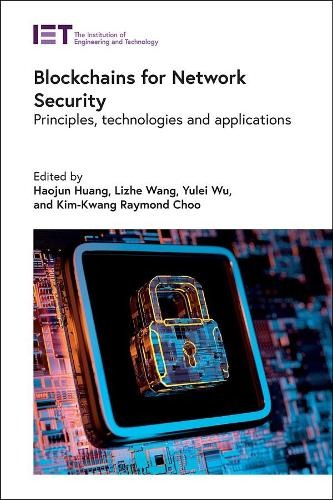
Blockchain technology is a powerful, cost-effective method for network security. Essentially, it is a decentralized ledger for storing all committed transactions in trustless environments by integrating several core technologies such as cryptographic hash, digital signature and distributed consensus mechanisms. Over the past few years, blockchain technology has been used in a variety of network interaction systems such as smart contracts, public services, Internet of Things (IoT), social networks, reputation systems and security and financial services. With its widespread adoption, there has been increased focus on utilizing blockchain technologies to address network security concerns and vulnerabilities as well as understanding real-world security implications.
The book reports the proceedings of the 15th Italian workshop on neural networks issued by the Italian Society on Neural Networks SIREN. The longevity recipe of this conference stands in three main points that normally renders the reading of these proceedings so interesting as appealing. 1. The topics of the neural networks is considered an attraction pole for a set of researches centered on the inherent paradigm of the neural networks, rather than on a specific tool exclusively. Thus, the subsymbolic management of the data information content constitutes the key feature of papers in various fields such as Pattern Recognition, Stochastic Optimization, Learning, Granular Computing, and so on, with a special bias toward bioinformatics operational applications. An excerpt of all these matters may be found in the book. 2. Though managed at domestic level, the conference attracts contributions from foreign researchers as well, so that in the book the reader may capture the flavor of the state of the art in the international community. 3. The conference is a meeting of friends as well. Thus the papers generally reflect a relaxed atmosphere where researchers meet to generously exchange their thought and explain their actual results in view of a common cultural growing of the community.
Solving modern biological problems requires advanced computational methods. Bioinformatics evolved from the active interaction of two fast-developing disciplines, biology and information technology. The central issue of this emerging field is the transformation of often distributed and unstructured biological data into meaningful information. This book describes the application of well-established concepts and techniques from areas like data mining, machine learning, database technologies, and visualization techniques to problems like protein data analysis, genome analysis and sequence databases. Chen has collected contributions from leading researchers in each area. The chapters can be read independently, as each offers a complete overview of its specific area, or, combined, this monograph is a comprehensive treatment that will appeal to students, researchers, and R&D professionals in industry who need a state-of-the-art introduction into this challenging and exciting young field.
This book constitutes the refereed proceedings of the Second International Bioinformatics Research and Development Conference, BIRD 2008, held in Vienna, Austria in July 2008.
This book presents how cutting-edge digital technologies like Machine Learning, Artificial Intelligence (AI), and Blockchain are set to disrupt the financial sector. The book illustrates how recent advances in these technologies facilitate banks, FinTechs, and financial institutions to collect, process, analyze, and fully leverage the very large amounts of data that are nowadays produced and exchanged in the sector. To this end, the book also introduces some of the most popular Big Data, AI and Blockchain applications in the sector, including novel applications in the areas of Know Your Customer (KYC), Personalized Wealth Management and Asset Management, Portfolio Risk Assessment, as well as variety of novel Usage-based Insurance applications based on Internet-of-Things data.
There are no silver bullets in algorithm design, and no single algorithmic idea is powerful and flexible enough to solve every computational problem. Nor are there silver bullets in algorithm analysis, as the most enlightening method for analyzing an algorithm often depends on the problem and the application. However, typical algorithms courses rely almost entirely on a single analysis framework, that of worst-case analysis, wherein an algorithm is assessed by its worst performance on any input of a given size. The purpose of this book is to popularize several alternatives to worst-case analysis and their most notable algorithmic applications, from clustering to linear programming to neural network training. Forty leading researchers have contributed introductions to different facets of this field, emphasizing the most important models and results, many of which can be taught in lectures to beginning graduate students in theoretical computer science and machine learning.
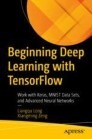
Stats with an introduction to AI, where you’ll learn the history of neural networks and what sets deep learning apart from other varieties of machine learning. Discovery the variety of deep learning frameworks and set-up a deep learning development environment. Next, you’ll jump into simple classification programs for hand-writing analysis. Once you’ve tackled the basics of deep learning, you move on to TensorFlow 2 specifically. Find out what exactly a Tensor is and how to work with MNIST datasets. Finally, you’ll get into the heavy lifting of programming neural networks and working with a wide variety of neural network types such as GANs and RNNs. Deep Learning is a new area of Machine Learning research widely used in popular applications, such as voice assistant and self-driving cars. Work through the hands-on material in this book and become a TensorFlow programmer! You will: Develop using deep learning algorithms Build deep learning models using TensorFlow 2 Create classification systems and other, practical deep learning applications
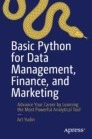
Learn how to gather, manipulate, and analyze data with Python. This book is a practical guide to help you get started with Python from ground zero and to the point where you can use coding for everyday tasks. Python is used in all aspects of financial industry, from algo trading, reporting and risk management to building valuations models and predictive machine learning programs. You will: Get started with Python from square one / Extend what's possible on excel with Python / Automate tasks with Python / Analyze data more precisely
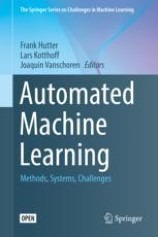
This book presents the first comprehensive overview of general methods in Automated Machine Learning (AutoML), collects descriptions of existing systems based on these methods, and discusses the first series of international challenges of AutoML systems. The recent success of commercial ML applications and the rapid growth of the field has created a high demand for off-the-shelf ML methods that can be used easily and without expert knowledge. However, many of the recent machine learning successes crucially rely on human experts, who manually select appropriate ML architectures (deep learning architectures or more traditional ML workflows) and their hyperparameters. To overcome this problem, the field of AutoML targets a progressive automation of machine learning, based on principles from optimization and machine learning itself.
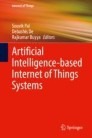
Discusses the evolution of future generation technologies through Internet of Things (IoT) in the scope of Artificial Intelligence (AI). The main focus of this volume is to bring all the related technologies in a single platform, so that undergraduate and postgraduate students, researchers, academicians, and industry people can easily understand the AI algorithms, machine learning algorithms, and learning analytics in IoT-enabled technologies. This book uses data and network engineering and intelligent decision support system-by-design principles to design a reliable AI-enabled IoT ecosystem and to implement cyber-physical pervasive infrastructure solutions. This book brings together some of the top IoT-enabled AI experts throughout the world who contribute their knowledge regarding different IoT-based technology aspects. Addresses the complete functional framework workflow in AI-enabled IoT ecosystem; Presents intelligent object identification and object discovery through the IoT ecosystem and its implications to the real world ;Explores security and privacy issues and trustworthy machine learning related to data-intensive technologies in AI-based IoT ecosystems.
Introduces readers to various topics and examples of programming in Python, as well as key concepts in artificial intelligence. Python programming skills will be imparted as we go along. Concepts and code snippets will be covered in a step-by-step manner, to guide and instill confidence in beginners. Complex subjects in deep learning and machine learning will be broken down into easy-to-digest content and examples. Artificial intelligence implementations will also be shared, allowing beginners to generate their own artificial intelligence algorithms for reinforcement learning, style transfer, chatbots, speech, and natural language processing.

The sustainable management of water cycles is crucial in the context of climate change and global warming. It involves managing global, regional, and local water cycles, as well as urban, agricultural, and industrial water cycles, to conserve water resources and their relationships with energy, food, microclimates, biodiversity, ecosystem functioning, and anthropogenic activities. Hydrological modeling is indispensable for achieving this goal, as it is essential for water resources management and the mitigation of natural disasters. In recent decades, the application of artificial intelligence (AI) techniques in hydrology and water resources management has led to notable advances. In the face of hydro-geo-meteorological uncertainty, AI approaches have proven to be powerful tools for accurately modeling complex, nonlinear hydrological processes and effectively utilizing various digital and imaging data sources, such as ground gauges, remote sensing tools, and in situ Internet of Things (IoT) devices.
Provides a structured and analytical guide to the use of artificial intelligence in medicine. Covering all areas within medicine, the chapters give a systemic review of the history, scientific foundations, present advances, potential trends, and future challenges of artificial intelligence within a healthcare setting.
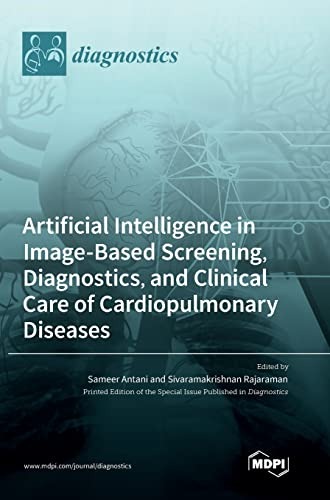
In this Special Issue, “Artificial Intelligence in Image-Based Screening, Diagnostics, and Clinical Care of Cardiopulmonary Diseases”, we have highlighted exemplary primary research studies and literature reviews focusing on novel AI/ML methods and their application in image-based screening, diagnosis, and clinical management of cardiopulmonary diseases.
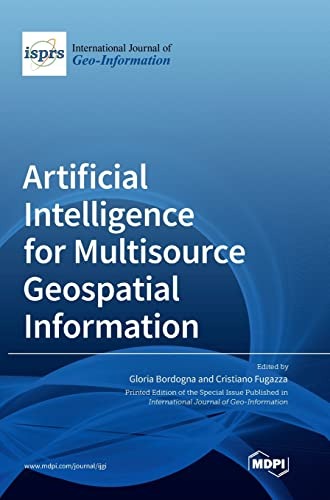
Collects 10 original research contributions published in the Special Issue entitled “Artificial Intelligence for Multisource Geospatial Information” of the ISPRS International Journal of Geo-Information. The focus is on different methods of Geospatial Artificial Intelligence (GeoAI) based on deep learning using different network architectures, clustering, soft computing, and semantic approaches. They are proposed to deal with a variety of Geospatial Big Data (GBD), such as georeferenced texts and photos in social networks, remote sensing images, cartographic maps, multidimensional geo databases, metadata in spatial data infrastructures, and for different tasks, such as for multisource georeferenced text integration and geodata flexible querying, for social sensing by applying sentiment analysis, clustering and geo analysis, for segmentation of roads, clouds and snow, and for detection of small targets and people on the streets.
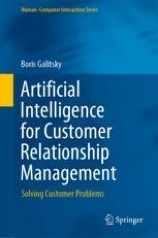
This book describes a number of applications of Artificial Intelligence in the field of Customer Relationship Management with the focus of solving customer problems. We design a system that tries to understand the customer complaint, his mood, and what can be done to resolve an issue with the product or service. To solve a customer problem efficiently, we maintain a dialogue with the customer so that the problem can be clarified and multiple ways to fix it can be sought. We introduce dialogue management based on discourse analysis: a systematic linguistic way to handle the thought process of the author of the content to be delivered. We analyze user sentiments and personal traits to tailor dialogue management to individual customers. We also design a number of dialogue scenarios for CRM with replies following certain patterns and propose virtual and social dialogues for various modalities of communication with a customer.

Providing a forum for the exchange of ideas in AI, this book provides a concise yet comprehensive coverage of methodologies, tools, issues, applications, and future trends for professionals, managers, and researchers in the CRM field together with AI and IT professionals.
Discusses the future possibilities of AI with cloud computing and edge computing. Aims to conduct analyses, implementation and discussion of many tools (of artificial intelligence, machine learning and deep learning and cloud computing, fog computing, and edge computing including concepts of cyber security) for understanding integration of these technologies. Readers can quickly get an overview of these emerging topics and get many ideas of the future of AI with cloud, edge, and in many other areas. Topics include machine and deep learning techniques for Internet of Things based cloud systems; security, privacy and trust issues in AI based cloud and IoT based cloud systems; AI for smart data storage in cloud-based IoT; blockchain based solutions for AI based cloud and IoT based cloud systems.This book is relevent to researchers, academics, students, and professionals. Presents fusion of cloud computing services and AI technology for bringing a significant change in the technology industry; Includes self-assessment problems for increasing knowledge of real world problems, i.e., how AI and cloud/edge computing can change business for the better; Provides innovative results of integrations of AI in other applications such as healthcare, finance, manufacturing, transportation, agriculture, etc.

سوريا - اتستراد درعا - غباغب
+963-15 2050 - 15 860 380 /1/2/3 - 11 662 3900