


تحسين النتائح
ترتيب حسب
من
الى

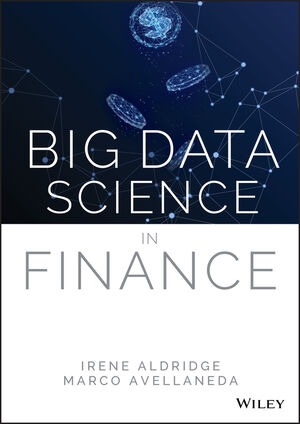
Explains the mathematics, theory, and methods of Big Data as applied to finance and investing Examines the mathematics, theory, and practical use of the revolutionary techniques that are transforming the industry. Designed for mathematically-advanced students and discerning financial practitioners alike, this energizing book presents new, cutting-edge content based on world-class research taught in the leading Financial Mathematics and Engineering programs in the world. Marco Avellaneda, a leader in quantitative finance, and quantitative methodology author Irene Aldridge help readers harness the power of Big Data. Provides a complete account of Big Data that includes proofs, step-by-step applications, and code samples Explains the difference between Principal Component Analysis (PCA) and Singular Value Decomposition (SVD) Covers vital topics in the field in a clear, straightforward manner Compares, contrasts, and discusses Big Data and Small Data Includes Cornell University-tested educational materials such as lesson plans, end-of-chapter questions, and downloadable lecture slides
Combines energy economics and big data modeling analysis in energy conversion and management and comprehensively introduces the relevant theories, key technologies, and application examples of the smart energy economy. With the help of time series big data modeling results, energy economy managers develop reasonable and feasible pricing mechanisms of electricity price and improve the absorption capacity of the power grid. In addition, they also carry out scientific power equipment scheduling and cost–benefit analysis according to the results of data mining, so as to avoid the loss caused by accidental damage of equipment. Energy users adjust their power consumption behavior through the modeling results provided and achieve the effect of energy saving and emission reduction while reasonably reducing the electricity expenditure.
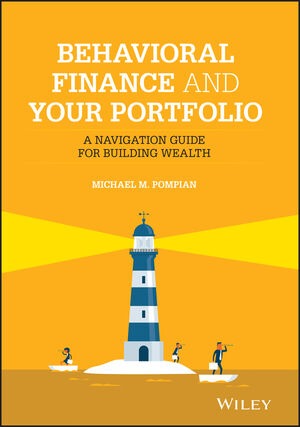
Designed for investors who are serious about maximizing their gains, in this book you’ll discover how to: ● Take control of your decision-making—even when challenging markets push greed and fear to intolerable levels ● Reflect on how to make investment decisions using data-backed and substantiated information instead of emotion and bias ● Counter deep-seated biases like loss aversion, hindsight and overconfidence with self-awareness and hard facts ● Identify your personal investment psychology profile, which you can use to inform your future financial decision making
The aim of this dissertation is to examine bargaining power effects in financial contracting. In particular power effects on firms' choices of contract type (debt vs. equity) and placement mode (public offering vs. private placement)
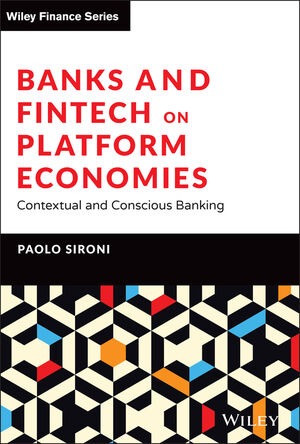
In Banks and Fintech on Platform Economies: Contextual and Conscious Banking, accomplished fintech professional and author Paolo Sironi delivers an insightful examination of how platform theory, born outside of financial services, will make its way inside banking and financial markets to radically transform the way firms do business.
Hints of globalization have actually been around for several decades, even though they made only a modest impact; however, the availability of global capital and advances in communication technology have emp- sized the process of internationalization and the tools available to connect and integrate business activities to answer to more complex needs of c- ents. Moreover, the financial scandals and the review of mutual fund trade activity in the US by the Attorney General Elliot Spitzer have highlighted the importance to focus all efforts on renewing the confidence of prof- sional investors and their clients who have entrusted their capital to asset managers. Therefore, there is a growing need in the market to reinforce the concept of “Shared Positive Values” among the entire industry and among its stakeholders.

Examines the corporate asset market and the mechanisms of asset sale transactions. The book then focuses on the theory of finance in asset sales (the efficiency and financing theory) and the extensive empirical literature now available. In light of recent and rapid technological and digital advances, the last section presents new perspectives on analyzing asset sales transactions. Chiefly intended as a primer for PhD students and academics, the book offers a road map of the empirical research landscape and suggests future research directions.
This book investigates the origins and evolution of Asia’s new institutional architecture in trade, finance, and security from both a theoretical and empirical perspective. The traditional institutional equilibrium in Asia has come under heavy strain in the "post triple shocks period" - the post-Cold War, the post-financial crisis of 1997-98, and the post-9-11 attacks. The new dynamics of rivalry and cooperation among states at both the intraregional and transregional levels is now shaping a new institutional architecture. Political and business leaders from Northeast and Southeast Asia interact with each other more frequently. South Asia’s participation in the rest of Asia in recent years is truly impressive. As we show, the future institutional trajectory of Asia is still open, but we believe that the book provides a timely examination of key shifts in the region. In doing so, our hope is to provide policymakers and analysts with an institutional road map for the future.
The book has three parts. Part I describes the characteristics and historical origins of these markets. Part II examines the contemporary bond markets and shows how they contribute to general welfare, describes the relationship between the banking sector and capital markets, and assesses prospects for reform in Asia's governmental and corporate debt markets. Part III explains the micro-level impediments and obstacles that must be the first targets of any reform efforts, provides an appraisal of attempts at regional cooperation to stimulate structural reform, and lastly contributes proposals to accelerate the growth and reach of bond markets throughout Asia.
Topicality of Asian economy has refused to fade for almost four decades; if anything it has been levitating. The Asian economy has changed markedly since the economic and financial crisis of 1997-1998 and is continuing to evolve. As a scholarly subject matter, Asian economy has not stopped attracting academicians, policy mandarins, decision makers in the arena of business and students of Asian economy. The Asian crisis was a cataclysmic event for the region and brought to the surface several systemic limitations, like those in the financial sector, corporate governance, regulatory oversight, legal framework, and exchange rate management. Managers of Asian economy need to get to the bottom of these acutely problematical systemic issues. Additionally, Asian economies need to change with the demands of time and devise their post-crisis development strategy. Asia’s growth model, that served it so well for four decades, is overdue for renewal so that it can re-strengthen its bonds with the ever-evolving regional and global economic reality. The old growth model is likely to be less relevant and effective in the post-crisis future of the Asian economies. It is sure to run into the wall of diminishing returns.
Agent-based computational modeling with its intrinsic multidisciplinary approach is gaining increasing recognition in the social sciences, particularly in economics, business and finance. This volume is devoted to recent contributions to the field from both the social sciences and computer sciences.
Artificial intelligence (AI) has driven businesses to adopt new business practices rapidly, enhance product development and services, has helped to power AI-based market intelligence and customer insights, and improve customer relationship management. This timely book addresses the use of AI in marketing.
The rise of artificial intelligence is nothing short of a technological revolution. AI is poised to completely transform asset management and investment banking, yet its current application within the financial sector is limited and fragmented. Existing AI implementations tend to solve very narrow business issues, rather than serving as a powerful tech framework for next-generation finance. Artificial Intelligence for Asset Management and Investment provides a strategic viewpoint on how AI can be comprehensively integrated within investment finance, leading to evolved performance in compliance, management, customer service, and beyond.
This book considers the effects of COVID-19 on accounting, particularly with regard to the role of artificial intelligence in accounting in the post-pandemic business environment. The contributions in the book consider a variety of sectors that have been affected by the pandemic, such as the stock market, forensic accounting, Bitcoin, as well as the economic and educational responses to the pandemic and the aftermath felt by both developing and developed countries.
The purpose of this book is to give an up-to date view of the scientific production in the fields of Agent-based Computational Economics (mainly in Market Finance and Game Theory). Based on communications given at AE'2005 (Lille, USTL, France), this book offers a wide panorama of recent advances in ACE (both theoretical and methodological) that will interest academics as well as practitioners.
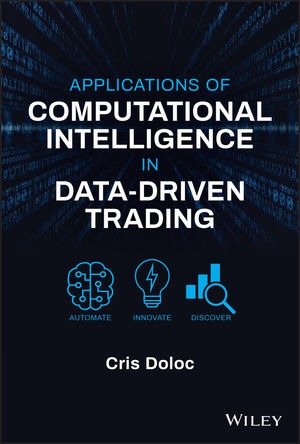
The main purpose of this book is pedagogical in nature, and it is specifically aimed at defining an adequate level of engineering and scientific clarity when it comes to the usage of the term “Artificial Intelligence,” especially as it relates to the financial industry.
Alternative Investments is the definitive guide to understanding non-traditional asset classes. Alternatives are a disparate group of investments that are distinguished from long-only, publicly traded investments in stocks, bonds, and cash (often referred to as traditional investments). Alternative investments include real estate, commodities, infrastructure, and other non-traditional investments such as private equity or debt and hedge funds.
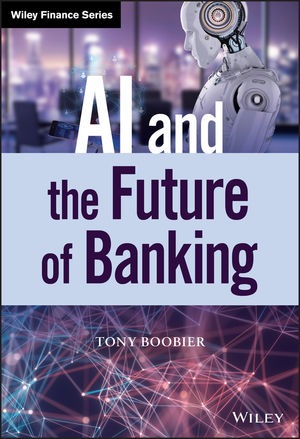
Across its entire breadth and depth, the banking industry is at the forefront of investigating Advanced Analytics and AI technology for use in a broad range of applications, such as customer analytics and providing wealth advice for clients. AI and the Future of Banking provides new and established banking industry professionals with the essential information on the implications of data and analytics on their roles, responsibilities and personal career development.
This book explores the role of agriculture in long-term economic growth. With a particular focus on Ethiopia, the role of the state in igniting agricultural growth and in sustaining economic growth is highlighted as essential for low-income countries. Taking ideas from both economic history and development economics, the ability of Ethiopia and the rest of Africa to sustain recent rapid growth into something that can tackle the development agenda is discussed, alongside policy suggestions.
This book provides a clear holistic conceptual framework of CISS-F (competitiveness, inclusiveness, sustainability, scalability and access to finance) to analyse the efficiency of value chains of high value agricultural commodities in India. It is based on the understanding that agriculture is an integrated system that connects farming with logistics, processing and marketing. Farmer’s welfare being central to any agricultural policy makes it very pertinent to study how a value chain works and can be strengthened further to realize this policy goal.

سوريا - اتستراد درعا - غباغب
+963-15 2050 - 15 860 380 /1/2/3 - 11 662 3900