



الصفحة 23
الصفحة 23
Liapunov Functions and Stability in Control Theory
Presents a modern and self-contained treatment of the Liapunov method for stability analysis, in the framework of mathematical nonlinear control theory. A Particular focus is on the problem of the existence of Liapunov functions (converse Liapunov theorems) and their regularity, whose interest is especially motivated by applications to automatic control.

Let's talk : How English conversation works
Banter, chit-chat, gossip, natter, tete-a-tete: these are just a few of the terms for the varied ways in which we interact with one another through conversation. David Crystal explores the factors that motivate so many different kinds of talk and reveals the rules we use unconsciously, even in the most routine exchanges of everyday conversation. We tend to think of conversation as something spontaneous, instinctive, habitual.

Lectures on Probability Theory and Statistics : Ecole d'Eté de Probabilités de Saint-Flour XXXIII - 2003
Contains two of the three lectures that were given at the 33rd Probability Summer School in Saint-Flour (July 6-23, 2003). Amir Dembo’s course is devoted to recent studies of the fractal nature of random sets, focusing on some fine properties of the sample path of random walk and Brownian motion. In particular, the cover time for Markov chains, the dimension of discrete limsup random fractals, the multi-scale truncated second moment and the Ciesielski-Taylor identities are explored. Tadahisa Funaki’s course reviews recent developments of the mathematical theory on stochastic interface models, mostly on the so-called nabla varphi interface model. The results are formulated as classical limit theorems in probability theory, and the text serves with good applications of basic probability techniques.

Leadership today : Practices for personal and professional performance
Provides a clear understanding of leadership needs in today’s business world, explained within the scope of hard and soft leadership skills. It captures qualities and skills such as spirituality, empathy, moral behavior, mindfulness, empathy, problem solving, self-confidence, ambition, knowledge, global understanding, and information technology. This text explains and provides guidelines for the implementation of each skill and includes examples from contemporary and historical leaders inviting the reader to consider each quality and engage in self-reflection. This book deviates from excessive theoretical descriptions presenting a timely, hands-on approach to leadership.

Lasers, Clocks and Drag-Free Control : Exploration of Relativistic Gravity in Space
Over the next decade the gravitational physics community will benefit from dramatic improvements in many technologies critical to testing gravity. Highly accurate deep space navigation, interplanetary laser communication, interferometry and metrology, high precision frequency standards, precise pointing and attitude control, together with drag-free technologies, will revolutionize the field of experimental gravitational physics. The centennial of the general theory of relativity in 2015 will motivate a significant number of experiments designed to test this theory with unprecedented accuracy.
Laplacian Eigenvectors of Graphs : Perron-Frobenius and Faber-Krahn Type Theorems
Eigenvectors of graph Laplacians have not, to date, been the subject of expository articles and thus they may seem a surprising topic for a book. The authors propose two motivations for this new LNM volume: (1) There are fascinating subtle differences between the properties of solutions of Schrödinger equations on manifolds on the one hand, and their discrete analogs on graphs. (2) "Geometric" properties of (cost) functions defined on the vertex sets of graphs are of practical interest for heuristic optimization algorithms. The observation that the cost functions of quite a few of the well-studied combinatorial optimization problems are eigenvectors of associated graph Laplacians has prompted the investigation of such eigenvectors.
Language Learning Motivation and L2 Pragmatic Competence
It presents an original study that not only enriches our knowledge of the feasibility of modern technology in collecting large-scale data related to pragmatic competence but also eminently connects L2 pragmatics more closely with mainstream second language acquisition research by focusing on the role of motivation in pragmatic learning.
Lagrangian Transport in Geophysical Jets and Waves : The Dynamical Systems Approach
This book provides an accessible introduction to a new set of methods for the analysis of Lagrangian motion in geophysical flows. These methods were originally developed in the abstract mathematical setting of dynamical systems theory, through a geometric approach to differential equations. Despite the recent developments in this field and the existence of a substantial body of work on geophysical fluid problems in the dynamical systems and geophysical literature, this is the first introductory text that presents these methods in the context of geophysical fluid flow. The book is organized into seven chapters; the first introduces the geophysical context and the mathematical models of geophysical fluid flow that are explored in subsequent chapters. The second and third cover the simplest case of steady flow, develop basic mathematical concepts and definitions, and touch on some important topics from the classical theory of Hamiltonian systems. The fundamental elements and methods of Lagrangian transport analysis in time-dependent flows that are the main subject of the book are described in the fourth, fifth, and sixth chapters. The seventh chapter gives a brief survey of some of the rapidly evolving research in geophysical fluid dynamics that makes use of this new approach. Related supplementary material, including a glossary and an introduction to numerical methods, is given in the appendices.
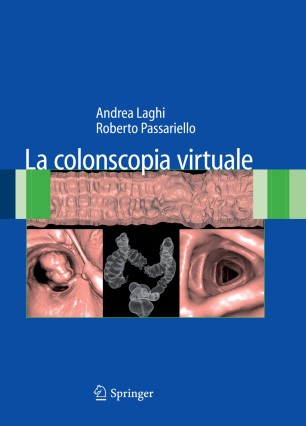
La colonscopia virtuale = The virtual colonoscopy
The text intends to provide the radiologist, specialized in the study of the colon, with a complete update on this innovative technique which, as confirmed by the very recent Guidelines published by the American Cancer Society and the American Gastroenterological Association.

KI 2007: Advances in Artificial Intelligence ; 30th Annual German Conference on AI, KI 2007, Osnabrück, Germany, September 10-13, 2007, Proceedings
The 30th Annual German Conference on Artifcial Intelligence (KI-2007) took place in the University of Osnabru ¨ck, September 10–13, 2007. Some topic clusters are apparent in the overall conference program, which re?ect recent trends in AI research, convolved with foci of work in Germany and Europe.

KI 2006 ; 29th Annual German Conference on AI, KI 2006, Bremen, Germany, June 14-17, 2006, Proceedings
Constitutes the thoroughly refereed post-proceedings of the 29th Annual German Conference on Artificial Intelligence, KI 2006, held in Bremen, Germany, in June 2006. This was co-located with RoboCup 2006, the innovative robot soccer world championship, and with ACTUATOR 2006, the 10th International Conference on New Actuators.

Junge Perspektiven der Türkeiforschung in Deutschland = Young perspectives of Turkey research in Germany
This volume creates an interdisciplinary forum for contemporary Turkey research in Germany. It presents research results from young scientists who are characterized by a fresh view of Turkey, methodological diversity and interdisciplinary approaches. The volume thus contributes to a better understanding of the society, politics, economy, history and culture of the country, which is playing an increasingly important role both regionally and in the European context.

IUTAM Symposium on Hamiltonian Dynamics, Vortex Structures, Turbulence ; Proceedings of the IUTAM Symposium held in Moscow, 25–30 August, 2006
This work brings together previously unpublished notes contributed by participants of the IUTAM Symposium on Hamiltonian Dynamics, Vortex Structures, Turbulence (Moscow, 25-30 August 2006). The study of vortex motion is of great interest to fluid and gas dynamics: since all real flows are vortical in nature, applications of the vortex theory are extremely diverse, many of them (e.g. aircraft dynamics, atmospheric and ocean phenomena) being especially important. The last few decades have shown that serious possibilities for progress in the research of real turbulent vortex motions are essentially related to the combined use of mathematical methods, computer simulation and laboratory experiments. These approaches have led to a series of interesting results which allow us to study these processes from new perspectives.

Composition of embedded systems : Scientific and industrial issues ; 13th Monterey Workshop 2006 Paris, France, October 16-18, 2006 Revised Selected Papers
This book discussed a range of challenges in embedded systems design that require further major advances in software and systems composition technology. The papers are organized in topical sections on model driven develo.

Complicities : A theory for subjectivity in the psychological humanities
The book examines how we might develop a more socially just psychological theory and practice, which is both systems work and intra-psychological work. In bringing together ways of thinking developed in the humanities with clinical psychotherapeutic practice, this book offers one interdisciplinary take on key questions of social and emotional efficacy in action-oriented psychotherapy work.

Complexity Theory and Cryptology : An Introduction to Cryptocomplexity
Modern cryptology employs mathematically rigorous concepts and methods from complexity theory. Conversely, current research in complexity theory often is motivated by questions and problems arising in cryptology. This book takes account of this trend, and therefore its subject is what may be dubbed "cryptocomplexity,'' some sort of symbiosis of these two areas. This textbook is suitable for undergraduate and graduate students of computer science, mathematics, and engineering, and can be used for courses on complexity theory and cryptology, preferably by stressing their interrelation. Starting from scratch, it is an accessible introduction to cryptocomplexity and works its way to the frontiers of current research. It provides the necessary mathematical background, has numerous figures, exercises, and examples, and presents some central, up-to-date research topics and challenges. Due to its comprehensive bibliography and subject index, it is also a valuable source for researchers, teachers, and practitioners working in these fields.

Complex Variables with Applications
Complex numbers can be viewed in several ways: as an element in a field, as a point in the plane, and as a two-dimensional vector. Examined properly, each perspective provides crucial insight into the interrelations between the complex number system and its parent, the real number system. It explore these relationships by adopting both generalization and specialization methods to move from real variables to complex variables, and vice versa, while simultaneously examining their analytic and geometric characteristics, using geometry to illustrate analytic concepts and employing analysis to unravel geometric notions. The engaging exposition is replete with discussions, remarks, questions, and exercises, motivating not only understanding on the part of the reader, but also developing the tools needed to think critically about mathematical problems. This focus involves a careful examination of the methods and assumptions underlying various alternative routes that lead to the same destination.

Complex Motion ; 1st International Workshop, IWCM 2004, Günzburg, Germany, October 12-14, 2004, Revised Papers
The world we live in is a dynamic one: we explore it by moving through it, and many of the objects which we are interested in are also moving. Trafic, for instance, is an example of a domain where detecting and processing visual motion is of vital interest, both in a metaphoric as well as in a purely literal sense. Visual communication is another important example of an area of science which is dominated by the need to measure, understand, and represent visual motion in an eficient way. Visual motion is a subject of research which forces the investigator to deal with complexity; complexity in the sense of facing efiects of motion in a very large diversity of forms, starting from analyzing simple motion in a changing envir- ment (illumination, shadows, . . . ), under adverse observation conditions, such as bad signal-to-noiseratio (low illumination, small-scaleprocesses, low-dosex-ray, etc. ), covering also multiple motions of independent objects, occlusions, and - ing as far as dealing with objects which are complex in themselves (articulated objects such as bodies of living beings). The spectrum of problems includes, but does not end at, objects which are not ‘bodies’ at all, e. g. , when anal- ing fiuid motion, cloud motion, and so on. Analyzing the motion of a crowd in a shopping mall or in an airport is a further example that implies the need to struggle against the problems induced by complexity.

Compiler construction ; Vol. 3923 : 15th International Conference, CC 2006, Held as Part of the Joint European Conferences on Theory and Practice of Software, ETAPS 2006, Vienna, Austria, March 30-31, 2006, Proceedings
ETAPS 2006 was the ninth instance of the European Joint Conferences on Theory and Practice of Software. ETAPS is an annual federated conference that was established in 1998 by combining a number of existing and new conferences. The events that comprise ETAPS address various aspects of the system devel- ment process, including speci?cation, design, implementation, analysis and impro- ment. The languages, methodologies and tools which support these activities are all well within its scope. Di?erent blends of theory and practice are represented, with an inclination towards theory with a practical motivation on the one hand and soundly based practice on the other.

Comparative evaluation of conservative versus conventional fixed dental bridges in prosthodontics
Dental bridges are essential in restorative dentistry, evolving from conventional full-coverage designs to modern conservative approaches that preserve natural tooth structure. This study theoretically compares conventional and conservative bridges in terms of materials, preparation, biomechanics, biological impact, and patient-centered outcomes. Findings highlight the trade-offs between durability and tooth preservation, emphasizing the importance of tailored clinical decision-making. Conservative principles increasingly guide restorative practice, promoting minimally invasive solutions without compromising clinical effectiveness.
