



الصفحة 2
الصفحة 2

Consumer perception of food attributes
Objectives of this book is to summarize recent empirical findings from scholarly works on how consumers value food credence attributes. Such knowledge would benefit producers, processors, retailers, and policy makers. Another objective of this book is to discuss the effectiveness of the programs that have been introduced to strengthen the relationship between producers and consumers. Many programs have been developed to more effectively inform consumers regarding food production processes.

Consumer Packaging Strategy : Localisation in Asian Markets
Illustrates how packaging as a marketing tool is more than simply changing the label or translating the brand into vernacular language. It examines how different packaging elements (e.g. information, imagery, packaging type) can help to communicate product values to Asian consumers.

Consumer driven electronic transformation : Applying new technologies to enthuse consumers and transform the supply chain
The Symposia have become important, unique - casions in the international calendar of business research. The papers c- lected here, first presented in Athens, represent an important contribution to the research literature of modern business. The wide-scale institutional development of collaborative practices in the European consumer goods business began in 1994 with the creation of ECR (“Efficient Consumer Response”) Europe, a joint initiative of ma- facturers and retailers working together to improve the quality and p- formance of the value chain. At the heart of ECR was a business envir- ment characterised by dramatic advances in information technology, shifts in consumer demand, and the increasing movements of goods across int- national borders. This new reality required a fundamental reconsideration of the most effective way of delivering the right products to consumers at the right price.

Managing Sustainability : Perspectives From Retailing and Services
Companies and policy makers are prioritizing environmental, social, and governance goals as part of their strategies. Academic research has started to focus on these issues, but many important matters require deeper investigation and reflection, especially in specific sectors. This book focuses on the sustainability issues within the retailing and services sectors.
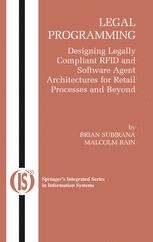
Legal Programming : Designing Legally Compliant RFID and Software Agent Architectures for Retail Processes and Beyond
LEGAL PROGRAMMING: Designing Legally Compliant RFID and Software Agent Architectures for Retail Processes and Beyond provides a process-oriented discussion of the legal concerns presented by agent-based technologies, processes and programming. It offers a general outline of the potential legal difficulties that could arise in relation to them, focusing on the programming of negotiation and contracting processes in a privacy, consumer and commercial context. The authors will elucidate how it is possible to create form of legal framework and design methodology for transaction agents, applicable in any environment and not just in a specific proprietary framework, that provides the right level of compliance and trust. Key elements considered include the design and programming of legally compliant methods, the determination of rights in respect of objects and variables, and ontologies and programming frameworks for agent interactions. Examples are used to illustrate the points made and provide a practical perspective.
Channel strategies and marketing mix in a connected world
Aims to revisit the “traditional” interaction between channel strategies and the marketing mix in a connected world. In particular, it focuses on the following four dimensions in this context: Consumers, Products, Value Proposition and Sustainability. Keeping in mind the growing digitalization of business processes in the retail world and the move towards omni-channel retailing.
Business ethics from the 19th century to today : An economist's view
Combines elements of economic and business history to study business ethics from the nineteenth century to today. It concentrates on American and British business history, delving into issues such as slavery, industrialization, firm behavior and monopolies, and Ponzi schemes. This book draws on the work of economists and historians to highlight the importance of changing technologies, religious beliefs, and cultural attitudes, showing that what is considered ethical differs across time and place.
Brand hate : Navigating consumer negativity in the digital world, 2nd
Focuses on the concept of “brand hate” and consumer negativity in today’s digital markets. It explores the emotional detachment consumers generate against valued brands and how negative experiences affect their and other consumers' loyalty. The book defines consumer brand hate and discusses its dimensions, antecedents, and consequences as well as the semiotics and legality of such brand hate activities based on current brand dilution arguments. It describes the situations which lead to anti-branding and how consumers choose to express their dissatisfaction with a company on individual and social levels. This newly updated edition discusses recent research findings from brand hate literature with new cases and extended managerial analysis.
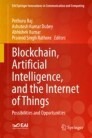
Blockchain, artificial intelligence, and the internet of things : Possibilities and opportunities
Provides basic concepts and deep knowledge about various security mechanisms that can be implemented in IoT through Blockchain technology. This book aids readers in gaining insight and knowledge about providing security and solutions to different challenges in IoT using Blockchain technology. This book primarily focuses on challenges to addressing the integration of the IoT with Blockchain with respect to potential benefits for IoT. This book gives descriptive analysis of Blockchain integrated with IoT applications and platforms for the development of IoT solutions along with possible topologies to that integration. Several application examples are included in a variety of industries / Provides the latest on secure IIoT communication using Blockchain technology for Industry 4.0 / Includes updates on using Blockchain technology in secure vehicular communication (VANET), healthcare, retail, and gaming / Provides the latest on secure IIoT communication using Blockchain technology for Industry 4.0
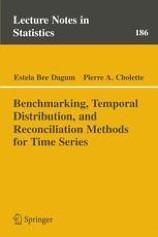
Benchmarking, Temporal Distribution, and Reconciliation Methods for Time Series
This book discusses the statistical methods most often applied for such adjustments, ranging from ad hoc procedures to regression-based models. The latter are emphasized, because of their clarity, ease of application, and superior results. Each topic is illustrated with many real case examples. In order to facilitate understanding of their properties and limitations of the methods discussed, a real data example, the Canada Total Retail Trade Series, is followed throughout the book.This book brings together the scattered literature on these topics and presents them using a consistent notation and a unifying view.
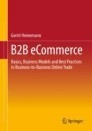
B2B eCommerce : Basics, Business Models and Best Practices in Business-to-Business Online Trade
Covers the basics of business-to-business (B2B) eCommerce, where similar principles of customer targeting can be observed as in B2C eCommerce. Gerrit Heinemann highlights the specifics and business models of B2B eCommerce, analyzes the digital challenges and shows the consequences and opportunities for online sales in B2B. Recognised best-practice examples illustrate how successful B2B eCommerce can work and which risks have to be considered.

Ambient Intelligence ; European Conference, AmI 2008, Nuremberg, Germany, November 19-22, 2008. Proceedings
This book constitutes the refereed proceedings of the Second European Conference on Ambient Intelligence, AmI 2008, held in Nuremberg, Germany, in November 2008.

Ambient Intelligence ; European Conference, AmI 2007, Darmstadt, Germany, November 7-10, 2007, Proceedings
This book presented sections on mobility and sensing, applications of AmI, activity and location sensing, AmI and artificial intelligence, AmI middleware and infrastructure, and interaction with the environment. The book is rounded off by a section on case studies and lessons learned, presenting a high level selection of current research reports and papers that reflect the most important activities of current ambient intelligence research.
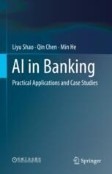
AI in banking : Practical applications and case studies
Delves into the application of AI from theory to practice, offering detailed insights into AI project design and code implementation across eleven business scenarios in four major sectors: retail banking, e-banking, bank credit, and tech operations. it provides hands-on examples of various technologies, including automatic machine learning, integrated learning, graph computation, recommendation systems, causal inference, generative adversarial networks, supervised learning, unsupervised learning, computer vision, reinforcement learning, fuzzy control, automatic control, speech recognition, semantic understanding, bayesian networks, edge computing, and more. this book stands as a rare and practical guide to AI projects in the banking industry.
Advanced Techniques in Knowledge Discovery and Data Mining
This explosion is a result of the growing use of electronic media. But what is data mining (DM)? A Web search using the Google search engine retrieves many (really many) definitions of data mining. We include here a few interesting ones. One of the simpler definitions is: “As the term suggests, data mining is the analysis of data to establish relationships and identify patterns” [1]. It focuses on identifying relations in data. Our next example is more elaborate: An information extraction activity whose goal is to discover hidden facts contained in databases. Using a combination of machine learning, statistical analysis, modeling techniques and database technology, data mining finds patterns and subtle relationships in data and infers rules that allow the prediction of future results. Typical applications include market segmentation, customer profiling, fraud detection, evaluation of retail promotions, and credit risk analysis .
