


تحسين النتائح
ترتيب حسب
من
الى


India’s telephone network is the second largest in the world, next to China. Over the last decade, these emerging economies have been the drivers of growth in the world economy. Therefore foreign companies have been rushing to invest in these countries more or less successfully.Kiruba Jeyaseeli Benjamin Levi highlights why the Indian telecom market is so attractive to foreign investors. She describes the rules and regulations for telecoms in India, and examines the reasons for success and failure of the foreign telecom companies in India.

The preparations for market entry in a foreign country include various aspects and are influenced by factors inside and outside the firm. Based on face to face interviews with decision makers of 16 German firms Michael Klug analyses the applied strategy and the motivation for market entry and investigates different strategy theories like Porter's market based view for their suitability to explain the firms' strategy abroad. The author discusses the operational design including forms of market presence and marketing mix to realise a chosen strategy and shows the influence of the European Union as an institutional arrangement for firms preparing a venture abroad.
Explores how organisations need to manage their innovation processes in order to compete in the global marketplace. Innovation is essential to the ongoing competitiveness of organisations but can be difficult to capture and disseminate. This book states that there needs to be guidelines about how to manage innovation in an organisational context. This includes focusing on different types of innovation from incremental to radical. This book will focus on ways to manage innovation from incorporating it into organisational practices to implementing it into beneficial partnerships.

Collaboration of organizations reshapes traditional managerial practices and creates new inter-organizational contexts for strategy, coordination and control, information and knowledge management. Heralded as organizational forms of the future, networks are at the same time fragile and precarious organizational arrangements, which regularly fail. In order to investigate the new realities created by technology-enabled forms of network organizations and to address the emerging managerial challenges, this book introduces an integrative view on inter-firm network management. Centred on a network life cycle perspective, strategic, economic and relational facets of business networking are explored.
This book showcases examples of excellent manufacturing companies who have succeeded in creating value and job growth in Western Europe. The examples show managers of industrial firms how a clearly articulated strategic position can be combined with excellent execution to achieve competitiveness in Europe, in spite of the usually cited disadvantage of high labor costs and rigidity. Not every company is alike — strategic positions differ, and the means of execution differ, but what is common is a clear plan together with mobilization of all employees to apply their abilities in supporting this common plan. The book is indispensable reading for all managers that are interested in improving competitiveness.

Despite the innumerable number of p- lications and recommendations on innovation, competitive innovativeness is still a rare competency. The latest publication of UNICE – the European Industry - ganization representing 20 million large, midsize and small companies – speaks a clear language: Europe qualifies to roughly 60% (70%) of the innovation strength of the US (Japan).

In many industries, e.g. telecommunications, transportation, energy, chemicals, food and beverages, firm performance is heavily influenced by regulation. Despite this fact, strategic management research has traditionally focused on market strategies and related issues. Questions of how to manage regulatory involvement have been left to separate research streams on corporate political activity and a broader understanding of the complex inter-dependencies and mutual influences between corporate and external actors remains lacking.
Throughout the past decade, the phenomenon of technological convergence has increasingly gained managerial attention. In this special form of technological change, the coming-together of previously distinct knowledge bases gives rise to the creation of new applications and business models. When such innovations emerge at the intersection of industries, the resulting creative destruction may exceed previously established industry boundaries. As a consequence, convergence does not only promise the creation of new value, but may imply significant disruptions to established industries. Based on investigating 26 firms within the ICT industry, this book highlights implications of the convergence phenomenon on firms’ innovation management practices, and derives strategic guidelines for building and sustaining business models beyond blurring industry boundaries.

In recent years the field of Corporate Social Responsibility (CSR) has impressively progressed. This has resulted in a number of tried and tested management models - models that have demonstrated added value in everyday organisational practice.

Offers practical tools and models underscored by years of rigorous research Evolves the traditional concept of 'mission' to a broader concept of purpose including larger societal needs Identifies the relationship between corporate culture and profit

Explains key aspects of management, including: business strategy and how to use it to meet goals; how successful marketing works; how organizations are structured and function; fundamentals of corporate finance; human resource management’s role in the management and development of people; the importance of knowledge and culture to management.management.

This book focuses on the development of collaborative practices at work, and in organisations, through stories: from sharing stories to exchanging experiences and building a common narrative collectively.
Growth is the key goal of management. It's not just an indicator of a company's performance, but also the basis for its future success. But growth doesn't just mean getting bigger – it also means getting better. In other words, growth must be profitable, otherwise it destroys the company's value long term. And this is not the only challenge. Growth must also be made continuous. The traditional V-curve paradigm (first downsize, then grow) no longer applies. Today, companies must follow a parallel strategy of growth coupled with reorganization, in the sense of permanently increasing efficiency.

This book shows you how to repurpose those methods for yourself, even if you're not in the corporate world. Packed with strategic tools and practical exercises, this book will help you: -Assess and define your career goals -Make a plan -Implement your plan to find the work that fits your needs, your skills, and your direction.

Natural disasters cause considerable economic damage. While developed countries usually are able to cope with the impacts of natural hazards, developing countries are faced with severe consequences for their resources. In order to prevent long-term macroeconomic repercussions, governments need a comprehensive disaster risk management strategy.Budgetary resources are allocated to pre-disaster risk management strategies to reduce the probability of financing gaps. The framework and model approach allows cross country comparisons as well as the assessment of financial vulnerability, macroeconomic risk, and risk management strategies.

The book contributes to the debate what role public policies play in stimulating national and regional economic growth. With a better understanding of the complexity and variety of existent entrepreneurship policies in the U.S. and Germany the reader of this volume will be able to formulate best practice, hands-on strategies which aim to promote nations as well as regions in an "entrepreneurial economy".This volume brings together conference contributions of leading academics and policy advisors from the United States and Europe,The volume has the virtue of both providing solid empirical analysis and theoretical underpinning from leading economists,social scientists as well as a fresh perspective on the myths and realities concerning the operation of the U.S

Mobile communications and next generation wireless networks emerge as new distribution channels for the media. This development offers exciting new opportunities for media companies: the mobile communication system creates new usage contexts for media content and services; the social use of mobile communications suggests that identity representation in social networks, impulsive access to trusted media brands, and micro-coordination emerge as new sources of value creation in the media industries. In the light of this background, this book takes two different viewpoints on the development of mobile media: from a competitive strategy point of view it analyzes the extension of cross-media strategies and the emergence of cross-network strategies; from a public policy point of view it develops demands and requirements for an innovation policy that fosters innovation in mobile media markets.
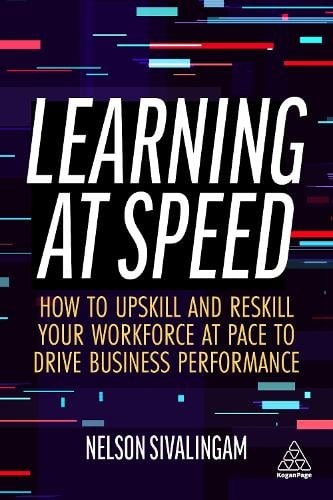
Learning at Speed is a practical book which brings together the best from lean and agile methodologies to show how they can be applied to learning and development (L&D) to improve individual and organizational performance. This provides a people development framework which can be used to deconstruct a learning strategy and optimise each element for improved results. It shows how to identify learning barriers and possible solutions, leverage company data to understand learning needs and how to assess the most effective learning resources and delivery channels.

Provides a step-by-step guide to implementing lean at SMEs using an approach that has been tested and fine-tuned at over a hundred organizations across India, South East Asia and the Middle East. The book approaches Lean through an implementation project cycle flow and enables the reader to understand the imperative for Lean, how to diagnose current operations, how to plan and deploy Lean and shows a path for long-term sustenance.
Pharmaceutical giants have doubled their investments in drug development in the past decade only to see new drug approvals remain constant. This book investigates and highlights a set of proactive strategies aimed at generating sustainable competitive advantage based on value-generating business practices. We focus on three sources of pharmaceutical innovation: new management methods in the drug development pipeline, new technologies as enablers for cutting-edge R&D, and new forms of cooperation and internationalization, such as open innovation in the early phases of R&D. Our findings are illustrated by cases from Europe, the US, and Asia.

سوريا - اتستراد درعا - غباغب
+963-15 2050 - 15 860 380 /1/2/3 - 11 662 3900