


تحسين النتائح
ترتيب حسب
من
الى

This book offers a framework for understanding how the Holocaust has shaped and continues to shape medical ethics, health policy, and questions related to human rights around the world. The field of bioethics continues to face questions of social and medical controversy that have their roots in the lessons of the Holocaust, such as debates over beginning-of-life and medical genetics, end-of-life matters such as medical aid in dying, the development of ethical codes and regulations to guide human subject research, and human rights abuses in vulnerable populations. As the only example of medically sanctioned genocide in history, and one that used medicine and science to fundamentally undermine human dignity and the moral foundation of society, the Holocaust provides an invaluable framework for exploring current issues in bioethics and society today. This book, therefore, is of great value to all current and future ethicists, medical practitioners and policymakers – as well as laypeople.
This book addresses a variety of issues relating to bioethics, in order to initiate cross-cultural dialogue. Beginning with the history, it introduces various views on bioethics, based on specific experiences from Japan. It describes how Japan has been confronted with Western bioethics and the ethical issues new to this modern age, and how it has found its foothold as it decides where it stands on these issues. In the last chapter, the author proposes discarding the overarching term ‘Global Bioethics’ in favor of the new term, ‘Bioethics Across the Globe (BAG)’, which carries a more universal connotation.
This open access book looks at the dramatic history of ovariotomy, an operation to remove ovarian tumours first practiced in the early nineteenth century. Bold and daring, surgeons who performed it claimed to be initiating a new era of surgery by opening the abdomen. Ovariotomy soon occupied a complex position within medicine and society, as an operation which symbolised surgical progress, while also remaining at the boundaries of ethical acceptability. This book traces the operation’s innovation, from its roots in eighteenth-century pathology, through the denouncement of those who performed it as ‘belly-rippers’, to its rapid uptake in the 1880s, when ovariotomists were accused of over-operating. Throughout the century, the operation was never a hair’s breadth from controversy.
Sand dune dynamics plays a key role in many arid deserts. This volume provides a synthesis of a specific sand dune ecosystem, the Nizzana site in the Negev Desert. Describing its climate and geophysical/geochemical properties of soils, geological history, flora and fauna, and past/present land-use patterns, it elucidates ecological and geomorphological processes and their interrelations, based on long-term monitoring, in situ experiments and satellite imagery. Particular attention is drawn to the impact of the topsoil biological crust in controlling water availability at local/regional scales. The interdisciplinary approach adopted in this case study offers a good example of a highly complex and dynamic system, which could easily be applied to other sandy ecosystems.
Begins with a short history of malaria and follows with a summary of its biology. It then traces the fascinating history of the discovery of quinine for malaria treatment, and then describes quinine’s biosynthesis, its mechanism of action, and its clinical use, concluding with a discussion of synthetic antimalarial agents based on quinine’s structure. It also covers the discovery of artemisinin and its development as the source of the most effective current antimalarial drug, including summaries of its synthesis and biosynthesis, its mechanism of action, and its clinical use and resistance. A short discussion of other clinically used antimalarial natural products leads to a detailed treatment of additional natural products with significant antiplasmodial activity, classified by compound type.
This book breaks new ground by situating animals and their diseases at the very heart of modern medicine. In demonstrating their historical significance as subjects and shapers of medicine, it offers important insights into past animal lives, and reveals that what we think of as ‘human’ medicine was in fact deeply zoological.Each chapter analyses an important episode in which animals changed and were changed by medicine. Ranging across the animal inhabitants of Britain’s zoos, sick sheep on Scottish farms, unproductive livestock in developing countries, and the tapeworms of California and Beirut, they illuminate the multi-species dimensions of modern medicine and its rich historical connections with biology, zoology, agriculture and veterinary medicine. The modern movement for One Health – whose history is also analyzed – is therefore revealed as just the latest attempt to improve health by working across species and disciplines.
Few medical or scientific addresses have so unmistakeably made history as the presentation delivered by Alois Alzheimer on November 4th, 1906 in Tübingen. The celebratory event, "Alzheimer 100 Years and Beyond" organized on the initiative of the Alzheimer community in Germany and worldwide, in collaboration with the Fondation Ipsen, at the very site of the original lecture, namely the Institute of Psychiatry at the University of Tübingen in Germany from November 2nd to 5th, 2006, was the highlight of the Alzheimer Year. Over the last century of Alzheimer research (1906-2006), remarkable progress has been achieved. Most of the authors of the major discoveries and the people involved in research in this field will present, during the meeting and in this volume, the pioneering research explaining the conditions under which they were conducted. The goal of this book is to honor the work accomplished, to summarize the most important knowledge and to provide material for the history of science.
This book reports on the latest advances in allelopathy through the contributions of leading scientists in the field. The book addresses the history of allelopathy, the science of allelochemicals, and the application of allelopathy in agriculture and forestry. An emphasis on both methodology and application makes Allelopathy a truly practical reference for scientists, researchers and students of plant science, agriculture, forestry, terrestrial ecology and environmental science.
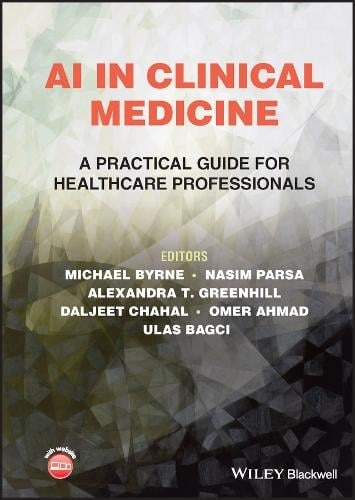
A Practical Guide for Healthcare Professionals is the definitive reference book for the emerging and exciting use of AI throughout clinical medicine. AI in Clinical Medicine: A Practical Guide for Healthcare Professionals is divided into four sections. Section 1 provides readers with the basic vocabulary that they require, a framework for AI, and highlights the importance of robust AI training for physicians. Section 2 reviews foundational ideas and concepts, including the history of AI. Section 3 explores how AI is applied to specific disciplines. Section 4 describes emerging trends, and applications of AI in medicine in the future.
Agrobacterium’ is a comprehensive book on Agrobacterium research, including its history, application, basic biology discoveries, and effects on human society. Although the book largely focuses on providing a detailed review of virtually all molecular events of the genetic transformation process, it also provides coverage of ethical and legal issues relevant to the use of Agrobacterium as a "genetic transformation machine". The result is an all-inclusive text which readers—including scientists and students involved in plant genetic engineering—will find useful as a reference source for all major aspects of the Agrobacterium-mediated genetic transformation of plant and non-plant organisms.
Proceedings of the 7th International Conference on Alzheimer’s Disease and Parkinson’s Disease (ADPD), held March 9-13, 2005 in Sorrento, Italy.The subject matter of the ADPD conferences is unique in that it deals not only with issues related individually to Alzheimer’s disease and Parkinson’s disease, but also with the integration of these and other related diseases. The most up-to-date techniques and research findings are illustrated in this volume, covering topics such as immunology, neuroscience, pharmacology, genetics, molecular biology, biochemistry and the history, epidemiology, clinical phenomenology, diagnosis, imaging, treatment ,and future perspectives of Alzheimer’s and Parkinson’s Diseases.
The general practitioner and the specialists are brought to examine a growing number of elderly or very old patients. Until now, they have hardly been prepared for this very special clinical approach where each symptom can relate to several causes, where the diseases are almost always multiple, symptomatic, or ready to reveal themselves by a complication, where a diagnosis can be. hide another, where a history - key to the diagnosis - may have been forgotten or concealed.
In A Personal History of Nuclear Medicine, Dr. Henry N. Wagner, Jr. outlines his significant contribution to the field of nuclear medicine over the past half-century, while also discussing the hurdles that the field faced in becoming a major component of modern medical practice. Further, the author explores challenges within the academic and medical establishments, which have often been known for resisting change
The British Nuclear Medicine Society celebrates its 50th Anniversary with this booklet, which reflects the research of many of the pioneers in the use of radionuclides for the diagnosis and therapy of human disease. Since 1949 there have been remarkable advances in radionuclide techniques and imaging equipment: from the first devices “home-made” in the many physics departments throughout the UK, to the sophisticated multimodality imagers now in everyday use in Nuclear Medicine. The BNMS has been instrumental in promoting the use of radionuclide techniques in the investigation of pathology by supporting and providing education, research and guidelines on the optimum use of radiation to help patients.
Te frst section deals with anatomy and the healing of wounds, discusses You have in your hands a work that should become a old and new plastic surgical procedures, and outlines the milestone of our understanding of medical history. In it history of anaesthesia. Te second covers the methods Professor Paolo Santoni-Rugiu and Mr Philip Sykes trace used from ancient times to reconstruct various areas of the development of plastic surgery and much of medi- the body and is the most extensive. Te last section d- cine in general, over three millennia. With his extensive cusses the history of cosmetic surgery and the origin of knowledge of clinical plastic surgery, no one could be present day procedures. better placed than the senior author to gather this valu- Te pages ring with the names of giants of the medical able material from historical documents.
This book traces humanity’s long experience of natural amputations due to congenital absence, disease, frostbite, toxins, domestic and wild animal trauma, and for non-medical reasons related to punitive, ritual, and legal actions, ultimately leading to the development of elective surgical amputation. While the evolution of surgical techniques forms a major chapter in the book, many ancillary problems are addressed including the control of hemorrhage and infection, the approach to pain relief, the development of suitable instruments and equipment, and the invention of prostheses, all suitably illuminated with case histories and relevant illustrations. In addition, alternative procedures designed to avoid amputation, increasingly important in the last two centuries, are debated, and factors associated with self-amputation in extremis, not rare according to press reports, are also examined. A separate chapter considers the philosophy and interpretations of society, patients, and surgeons faced with amputation, particularly before anesthesia.
The authors address the future role of atmospheric CO2 and its likely effects on ecosystems. This book incorporates the advances of various earth science, environmental, and ecological fields into an overall account of global change and the changing dynamics of life on Earth.
Written primarily for researchers and advanced students in environmental and social sciences, this latest book in Springer’s Landscape Series looks at some of the emerging fields and new challenges in landscape research. These include: the role of value systems in perceiving, appreciating, and managing landscapes the ‘space’ and ‘place’ concept in landscape research GIS and remote sensing techniques for gathering and processing spatially and temporally explicit land cover, vegetation, and land use data methods of landscape history landscape genetics and genetic methods to test landscape connectivity and dispersal of plant and animal species
Offers contributions to a philosophical and realistic approach to the place of adjudication in contemporary constitutional democracies. Bringing together scholars from different legal and philosophical backgrounds, purports to cast light on the role(s) of judges and the function of judicial interpretation inside of constitutional states, from the standpoint of legal realism as a revisited and sophisticated jurisprudential outlook. In so doing, also copes with a few major jurisprudential issues, like, e.g., determining the ideas that make up the core of legal realism, exploring the relation between legal realism and legal positivism, identifying the boundaries of judicial interpretation as they appear from a realist standpoint, as well as considering some skeptical outlooks on the very claims of contemporary legal realism.

This volume is a selection of essays taken from the excellent range of papers presented at the British Legal History Conference hosted by the Institute for Legal and Constitutional Research at the University of St Andrews, 10-13 July 2019. The theme of the conference gives this book its title: 'comparative legal history'. The topic came easily to the organisers because of their association with the St Andrews-based European Research Council Advanced grant project 'Civil law, common law, customary law: consonance, divergence and transformation in Western Europe from the late eleventh to the thirteenth centuries'.

سوريا - اتستراد درعا - غباغب
+963-15 2050 - 15 860 380 /1/2/3 - 11 662 3900