



الصفحة 2
الصفحة 2
Big data and artificial intelligence in digital finance : Increasing personalization and trust in digital finance using big data and AI
This book presents how cutting-edge digital technologies like Machine Learning, Artificial Intelligence (AI), and Blockchain are set to disrupt the financial sector. The book illustrates how recent advances in these technologies facilitate banks, FinTechs, and financial institutions to collect, process, analyze, and fully leverage the very large amounts of data that are nowadays produced and exchanged in the sector. To this end, the book also introduces some of the most popular Big Data, AI and Blockchain applications in the sector, including novel applications in the areas of Know Your Customer (KYC), Personalized Wealth Management and Asset Management, Portfolio Risk Assessment, as well as variety of novel Usage-based Insurance applications based on Internet-of-Things data.
Artificial intelligence-based Internet of things systems
Discusses the evolution of future generation technologies through Internet of Things (IoT) in the scope of Artificial Intelligence (AI). The main focus of this volume is to bring all the related technologies in a single platform, so that undergraduate and postgraduate students, researchers, academicians, and industry people can easily understand the AI algorithms, machine learning algorithms, and learning analytics in IoT-enabled technologies. This book uses data and network engineering and intelligent decision support system-by-design principles to design a reliable AI-enabled IoT ecosystem and to implement cyber-physical pervasive infrastructure solutions. This book brings together some of the top IoT-enabled AI experts throughout the world who contribute their knowledge regarding different IoT-based technology aspects. Addresses the complete functional framework workflow in AI-enabled IoT ecosystem; Presents intelligent object identification and object discovery through the IoT ecosystem and its implications to the real world ;Explores security and privacy issues and trustworthy machine learning related to data-intensive technologies in AI-based IoT ecosystems.

Artificial intelligence techniques in hydrology and water resources management
The sustainable management of water cycles is crucial in the context of climate change and global warming. It involves managing global, regional, and local water cycles, as well as urban, agricultural, and industrial water cycles, to conserve water resources and their relationships with energy, food, microclimates, biodiversity, ecosystem functioning, and anthropogenic activities. Hydrological modeling is indispensable for achieving this goal, as it is essential for water resources management and the mitigation of natural disasters. In recent decades, the application of artificial intelligence (AI) techniques in hydrology and water resources management has led to notable advances. In the face of hydro-geo-meteorological uncertainty, AI approaches have proven to be powerful tools for accurately modeling complex, nonlinear hydrological processes and effectively utilizing various digital and imaging data sources, such as ground gauges, remote sensing tools, and in situ Internet of Things (IoT) devices.
Artificial intelligence techniques for satellite image analysis
The main objective of this book is to provide a common platform for diverse concepts in satellite image processing. In particular it presents the state-of-the-art in Artificial Intelligence (AI) methodologies and shares findings that can be translated into real-time applications to benefit humankind. Interdisciplinary in its scope, the book will be of interest to both newcomers and experienced scientists working in the fields of satellite image processing, geo-engineering, remote sensing and Artificial Intelligence. It can be also used as a supplementary textbook for graduate students in various engineering branches related to image processing.
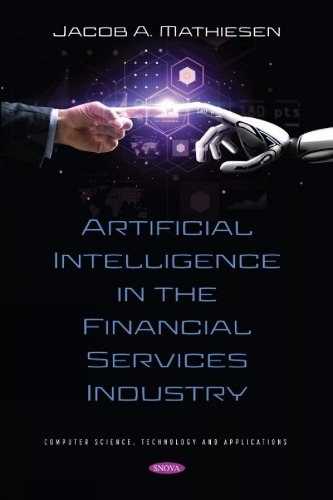
Artificial intelligence in the financial services industry
Today, the financial services sector is facing a period of rapid disruption and innovation, and artificial intelligence (AI) is at the heart of these changes. Artificial intelligence can be used to gather enormous amounts of data, detect abnormalities, and solve complex problems. Financial institutions are already experimenting extensively with AI strategies to enhance and streamline financial institutions, BSA and AML compliance, CRA requirements, fraud detection, and real estate valuations, all while reducing cost levels. This book looks at how artificial intelligence is affecting the financial services industry.
Artificial intelligence in the design process : The impact on creativity and team collaboration
Discusses how to include artificial intelligence (AI) systems in the early stages of the design process. Today designers need new tools capable of supporting them in dealing with the increasing project's complexity and empowering their performances and capabilities. AI systems appear to be powerful means to enhance designers' creativity. This assumption was tested in a workshop where sixteen participants collaborated with three AI systems throughout the creative phases of research, sketching, and color selection. Results show that designers can access a broader level of variance and inspiration while reducing the risk of fossilization by triggering lateral thinking through AI-generated data. Therefore, AI could significantly impact the creative phases of the design process if applied consciously. Being AI systems intelligent agents, the book treats the Human-AI collaboration as a collaboration between human agents, proposing a set of guidelines helpful to achieving an efficient partnership with the machine.

Artificial intelligence in pharmacy
Artificial intelligence (AI) is a branch of computer science that deals with the problem-solving by the aid of symbolic programming. It has greatly evolved into a science of problem-solving with huge applications in business, health care, and engineering. One of the pivotal applications of AI is the development of the expert system. With the advent of big data and Al, robots are now becoming more trustworthy for doctors, and a large number of institutions are now employing robots along with human supervision to carry out activities that were previously done by humans...
Artificial intelligence in drug design
Looks at applications of artificial intelligence (AI), machine learning (ML), and deep learning (DL) in drug design. The chapters in this book describe how AI/ML/DL approaches can be applied to accelerate and revolutionize traditional drug design approaches such as: structure- and ligand-based, augmented and multi-objective de novo drug design, SAR and big data analysis, prediction of binding/activity, ADMET, pharmacokinetics and drug-target residence time, precision medicine and selection of favorable chemical synthetic routes. How broadly are these approaches applied and where do they maximally impact productivity today and potentially in the near future.
Artificial intelligence in dentistry
Provides an introduction to next-generation applications and technologies for improving diagnostic accuracy and prediction of treatment outcomes in dentistry through the use of artificial intelligence (AI) and machine learning (ML). The authors attempt to bridge the gap between dental research and global health outcomes, as well as provide a comprehensive guide to general and clinical aspects of dental and oral health issues and the etiology, prevalence, assessment, and management of these conditions.
Artificial intelligence for marketing management
Artificial intelligence (AI) has driven businesses to adopt new business practices rapidly, enhance product development and services, has helped to power AI-based market intelligence and customer insights, and improve customer relationship management. This timely book addresses the use of AI in marketing.
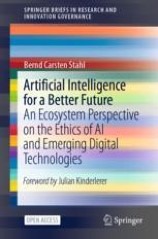
Artificial Intelligence for a better future : An ecosystem perspective on the ethics of AI and emerging digital technologies
This book proposes a novel approach to Artificial Intelligence (AI) ethics. AI offers many advantages: better and faster medical diagnoses, improved business processes and efficiency, and the automation of boring work.
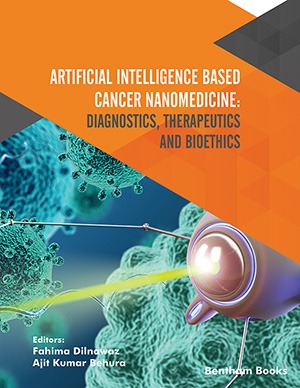
Artificial intelligence based cancer nanomedicine : Diagnostics, therapeutics and bioethics
Nanomedicine is evolving with novel drug formulations devised for multifunctional approaches towards diagnostics ad therapeutics. Nanomedicine-based drug therapy is normally explored at a fixed dose. The drug action is time-dependent, dose-dependent and patient-specific. To overcome challenges of nanomedicine testing, artificial intelligence (AI) serves as a helping tool for optimizing the drug and dose parameters. Real time conversions between these two features enables upgradation of patient data acquisition and improved design of nanomaterials. In this scenario, AI-based pattern analysis and algorithms models can greatly improve accuracy of diagnostics and therapeutics.
Artificial intelligence and national security
Analyses the implications of the technical, legal, ethical and privacy challenges as well as challenges for human rights and civil liberties regarding Artificial Intelligence (AI) and National Security. It also offers solutions that can be adopted to mitigate or eradicate these challenges wherever possible. As a general-purpose, dual-use technology, AI can be deployed for both good and evil. The use of AI is increasingly becoming of paramount importance to the governments mission to keep their nations safe. However, the design, development and use of AI for national security poses a wide range of legal, ethical, moral and privacy challenges. This book explores national security uses for Artificial Intelligence (AI) in Western Democracies and its malicious use. This book also investigates the legal, political, ethical, moral, privacy and human rights implications of the national security uses of AI in the aforementioned democracies. It illustrates how AI for national security purposes could threaten most individual fundamental rights, and how the use of AI in digital policing could undermine user human rights and privacy.
Artificial intelligence and machine learning in health care and medical sciences : Best practices and pitfalls
Provides a detailed review of the latest methods and applications of artificial intelligence (AI) and machine learning (ML) in medicine. With chapters focusing on enabling the reader to develop a thorough understanding of the key concepts in these subject areas along with a range of methods and resulting models that can be utilized to solve healthcare problems, the use of causal and predictive models are comprehensively discussed. Care is taken to systematically describe the concepts to facilitate the reader in developing a thorough conceptual understanding of how different methods and resulting models function and how these relate to their applicability to various issues in health care and medical sciences. Guidance is also given on how to avoid pitfalls that can be encountered on a day-to-day basis and stratify potential clinical risks.
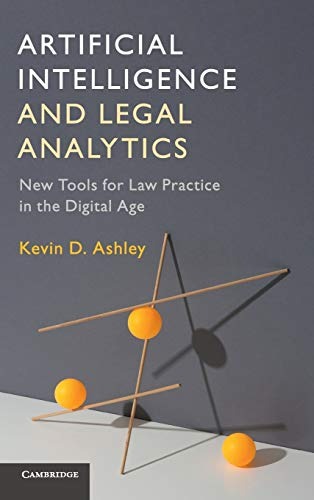
Artificial intelligence and legal analytics : new tools for law practice in the digital age
The field of artificial intelligence (AI) and the law is on the cusp of a revolution. This book - designed to explain computational processes to non-programmers - describes how text analytic programs will change the practice of law, specifically by connecting computational models of legal reasoning directly with legal text.

Artificial intelligence and knowledge engineering applications : A bioinspired approach ; 1st international work-Conference on the interplay between natural and artificial computation, IWINAC 2005, Las Palmas, Canary Islands, Spain, June 15-18, 2005, Proceedings, Part II
The computational paradigm considered here is a conceptual, theoretical andformal framework situated above machines and living creatures (two instantia-tions), sufficiently solid, and still non-exclusive, that allows us:1. to help neuroscientists to formulate intentions, questions, experiments, meth-ods and explanation mechanisms assuming that neural circuits are the psy-chological support of calculus;2. to help scientists and engineers from the fields of artificial intelligence (AI)and knowledge engineering (KE) to model, formalize and program the com-putable part of human knowledge;3. to establish an interaction framework between natural system computation(NSC) and artificial system computation (ASC) in both directions, fromASC to NSC (in computational neuroscience), and from NSC to ASC (inbioinspired computation).
Artificial Intelligence : Applications and innovations
It's about the science of artificial intelligence (AI). AI is the study of the design of intelligent computational agents. This book provides a valuable resource for researchers, scientists, professionals, academicians and students dealing with the new challenges and advances in the areas of AI and innovations. This book also covers a wide range of applications of machine learning such as fire detection, structural health and pollution monitoring and control. Provides insight into prospective research and application areas related to industry and technology / Discusses industry- based inputs on success stories of technology adoption / Discusses technology applications from a research perspective in the field of AI / Provides a hands- on approach and case studies for readers of the book to practice and assimilate learning
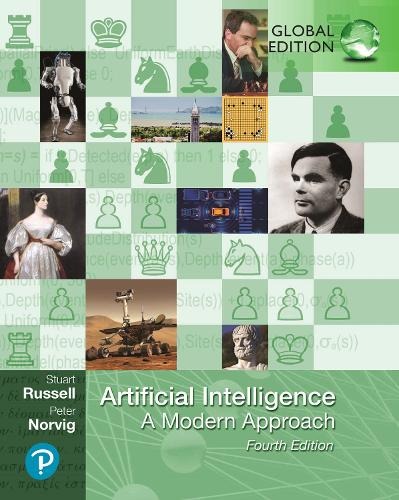
Artificial intelligence : A modern approach ; global ed.
Explores the full breadth and depth of the field of artificial intelligence (AI). The 4th edition brings readers up to date on the latest technologies, presents concepts in a more unified manner, and offers new or expanded coverage of machine learning, deep learning, transfer learning, multi agent systems, robotics, natural language processing, causality, probabilistic programming, privacy, fairness, and safe AI
An Intuitive Exploration of Artificial Intelligence : Theory and Applications of Deep Learning
This book develops a conceptual understanding of Artificial Intelligence (AI), Deep Learning and Machine Learning in the truest sense of the word. It is an earnest endeavor to unravel what is happening at the algorithmic level, to grasp how applications are being built and to show the long adventurous road in the future.

An Introduction to Optical Wireless Mobile Communications
Discusses existing conventional radio frequency (RF)-based wireless access technology and presents the challenges that can impact the requirements of the future wave of new wireless services in the context of artificial intelligence (AI) driven autonomous systems and machine-type communications. The relationship between visible light communications (VLC) and light fidelity (LiFi), is explored, and the major advantages of VLC and LiFi such as security and data density, and discuss existing research challenges are also introduced. Channel modeling techniques are provided for mobile multiuser scenarios, and will introduce key building blocks to achieve LiFi cellular networks achieving orders of magnitude improvements of area spectral efficiency compared to state-of-the-art. Challenges that arise from moving from a static point-to-point visible light link to a LiFi network that is capable of serving hundreds of mobile and fixed nodes are discussed. An overview of recent standardization activities and the commercialization challenges of this disruptive technology is also provided.
