



الصفحة 194
الصفحة 194

Artificial neural networks : Formal Models and Their Applications – ICANN 2005 ; 15th International Conference, Warsaw, Poland, September 11-15, 2005, Proceedings, Part II
The second volume contains 162 contributions related to Formal Models and their Applications and deals with new neural network models, supervised learning algorithms, ensemble-based learning, unsupervised learning, recurent neural networks, reinforcement learning, bayesian approaches to learning, learning theory, artificial neural networks for system modeling, decision making, optimalization and control, knowledge extraction from neural networks, temporal data analysis, prediction and forecasting, support vector machines and kernel-based methods, soft computing methods for data representation, analysis and processing, data fusion for industrial, medical and environmental applications, non-linear predictive models for speech processing, intelligent multimedia and semantics, applications to natural language processing, various applications, computational intelligence in games, and issues in hardware implementation.

Artificial neural networks - ICANN 2006 ; Vol.4132 : 16th International Conference, Athens, Greece, September 10-14, 2006, Proceedings, Part II
This book includes the proceedings of the International Conference on Artificial Neural Networks (ICANN 2006) held on September 10-14, 2006 in Athens, Greece, with tutorials being presented on September 10, the main conference taking place during September 11-13 and accompanying workshops on perception, cognition and interaction held on September 14, 2006. The ICANN conference is organized annually by the European Neural Network Society in cooperation with the International Neural Network Society, the Japanese Neural Network Society and the IEEE Computational Intelligence Society. It is the premier European event covering all topics concerned with neural networks and related areas.

Artificial neural networks - ICANN 2006 ; Vol.4131 : 16th International Conference, Athens, Greece, September 10-14, 2006, Proceedings, Part I
This book includes the proceedings of the International Conference on Artificial Neural Networks (ICANN 2006) held on September 10-14, 2006 in Athens, Greece, with tutorials being presented on September 10, the main conference taking place during September 11-13 and accompanying workshops on perception, cognition and interaction held on September 14, 2006. The ICANN conference is organized annually by the European Neural Network Society in cooperation with the International Neural Network Society, the Japanese Neural Network Society and the IEEE Computational Intelligence Society. It is the premier European event covering all topics concerned with neural networks and related areas.
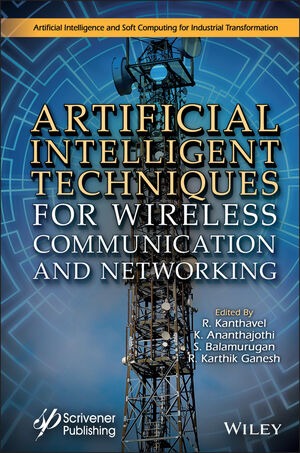
Artificial Intelligent Techniques for Wireless Communication and Networking
Wireless communication and networking based on AI concepts and techniques are explored in this book, specifically focusing on the current research in the field by highlighting empirical results along with theoretical concepts. The possibility of applying AI mechanisms towards security aspects in the communication domain is elaborated; also explored is the application side of integrated technologies that enhance AI-based innovations, insights, intelligent predictions, cost optimization, inventory management, identification processes, classification mechanisms, cooperative spectrum sensing techniques, ad-hoc network architecture, and protocol and simulation-based environments.
Artificial Intelligence with Python
Introduces readers to various topics and examples of programming in Python, as well as key concepts in artificial intelligence. Python programming skills will be imparted as we go along. Concepts and code snippets will be covered in a step-by-step manner, to guide and instill confidence in beginners. Complex subjects in deep learning and machine learning will be broken down into easy-to-digest content and examples. Artificial intelligence implementations will also be shared, allowing beginners to generate their own artificial intelligence algorithms for reinforcement learning, style transfer, chatbots, speech, and natural language processing.
Artificial intelligence techniques for satellite image analysis
The main objective of this book is to provide a common platform for diverse concepts in satellite image processing. In particular it presents the state-of-the-art in Artificial Intelligence (AI) methodologies and shares findings that can be translated into real-time applications to benefit humankind. Interdisciplinary in its scope, the book will be of interest to both newcomers and experienced scientists working in the fields of satellite image processing, geo-engineering, remote sensing and Artificial Intelligence. It can be also used as a supplementary textbook for graduate students in various engineering branches related to image processing.

Artificial intelligence in pharmacy
Artificial intelligence (AI) is a branch of computer science that deals with the problem-solving by the aid of symbolic programming. It has greatly evolved into a science of problem-solving with huge applications in business, health care, and engineering. One of the pivotal applications of AI is the development of the expert system. With the advent of big data and Al, robots are now becoming more trustworthy for doctors, and a large number of institutions are now employing robots along with human supervision to carry out activities that were previously done by humans...
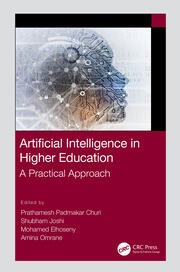
Artificial intelligence in higher education : A practical approach
Highlights the broad field of artificial intelligence applications in education, regarding any type of artificial intelligence that is correlated with education. It discusses learning methodologies, intelligent tutoring systems, intelligent student guidance and assessments, intelligent education chatbots, and artificial tutors and presents the practicality and applicability implications of AI in education. The book offers new and current research along with case studies showing the latest techniques and educational activities. Will find interest with academicians which includes teachers, students of various disciplines, higher education policymakers who believe in transforming the education industry, research scholars who are pursuing their Ph.D. or Post Doc. in the field of Education Technology, Education, and Learning, etc. and those working in the area of Education Technology and Artificial Intelligence such as industry professionals in education management and e-learning companies
Artificial intelligence in drug design
Looks at applications of artificial intelligence (AI), machine learning (ML), and deep learning (DL) in drug design. The chapters in this book describe how AI/ML/DL approaches can be applied to accelerate and revolutionize traditional drug design approaches such as: structure- and ligand-based, augmented and multi-objective de novo drug design, SAR and big data analysis, prediction of binding/activity, ADMET, pharmacokinetics and drug-target residence time, precision medicine and selection of favorable chemical synthetic routes. How broadly are these approaches applied and where do they maximally impact productivity today and potentially in the near future.

Artificial intelligence for multimedia signal processing
Artificial intelligence technologies are also actively applied to broadcasting and multimedia processing technologies. A lot of research has been conducted in a wide variety of fields, such as content creation, transmission, and security, and these attempts have been made in the past two to three years to improve image, video, speech, and other data compression efficiency in areas related to MPEG media processing technology. Additionally, technologies such as media creation, processing, editing, and creating scenarios are very important areas of research in multimedia processing and engineering. This book contains a collection of some topics broadly across advanced computational intelligence algorithms and technologies for emerging multimedia signal processing as: Computer vision field, speech/sound/text processing, and content analysis/information mining.
Artificial intelligence for customer relationship management : Solving customer problems
This book describes a number of applications of Artificial Intelligence in the field of Customer Relationship Management with the focus of solving customer problems. We design a system that tries to understand the customer complaint, his mood, and what can be done to resolve an issue with the product or service. To solve a customer problem efficiently, we maintain a dialogue with the customer so that the problem can be clarified and multiple ways to fix it can be sought. We introduce dialogue management based on discourse analysis: a systematic linguistic way to handle the thought process of the author of the content to be delivered. We analyze user sentiments and personal traits to tailor dialogue management to individual customers. We also design a number of dialogue scenarios for CRM with replies following certain patterns and propose virtual and social dialogues for various modalities of communication with a customer.

Artificial intelligence for customer relationship management : Keeping customers informed
Providing a forum for the exchange of ideas in AI, this book provides a concise yet comprehensive coverage of methodologies, tools, issues, applications, and future trends for professionals, managers, and researchers in the CRM field together with AI and IT professionals.
Artificial Intelligence for Cloud and Edge Computing
Discusses the future possibilities of AI with cloud computing and edge computing. Aims to conduct analyses, implementation and discussion of many tools (of artificial intelligence, machine learning and deep learning and cloud computing, fog computing, and edge computing including concepts of cyber security) for understanding integration of these technologies. Readers can quickly get an overview of these emerging topics and get many ideas of the future of AI with cloud, edge, and in many other areas. Topics include machine and deep learning techniques for Internet of Things based cloud systems; security, privacy and trust issues in AI based cloud and IoT based cloud systems; AI for smart data storage in cloud-based IoT; blockchain based solutions for AI based cloud and IoT based cloud systems.This book is relevent to researchers, academics, students, and professionals. Presents fusion of cloud computing services and AI technology for bringing a significant change in the technology industry; Includes self-assessment problems for increasing knowledge of real world problems, i.e., how AI and cloud/edge computing can change business for the better; Provides innovative results of integrations of AI in other applications such as healthcare, finance, manufacturing, transportation, agriculture, etc.

Artificial intelligence based nutrition app
As AI becomes a giant trend in the business world, mobile apps are one of the usage areas, which people can benefit from. People can automate their tasks with AI-based mobile apps. As the mobile app understand how processes work, it can automate some procedures and reduce the duration of them. In this way, people can save time and improve their productivity. In addition, personalized content also improves user engagement and meets user expectations more. Many other features of AI can be integrated into mobile apps and improve user experience.
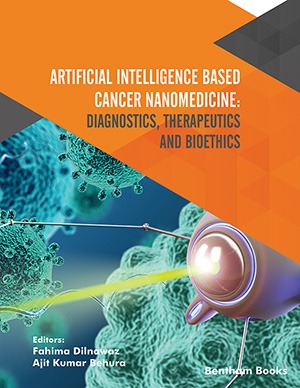
Artificial intelligence based cancer nanomedicine : Diagnostics, therapeutics and bioethics
Nanomedicine is evolving with novel drug formulations devised for multifunctional approaches towards diagnostics ad therapeutics. Nanomedicine-based drug therapy is normally explored at a fixed dose. The drug action is time-dependent, dose-dependent and patient-specific. To overcome challenges of nanomedicine testing, artificial intelligence (AI) serves as a helping tool for optimizing the drug and dose parameters. Real time conversions between these two features enables upgradation of patient data acquisition and improved design of nanomaterials. In this scenario, AI-based pattern analysis and algorithms models can greatly improve accuracy of diagnostics and therapeutics.
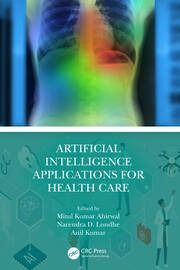
Artificial Intelligence Applications for Health Care
Covers topics on health care and artificial intelligence. Data sets related to biomedical signals (ECG, EEG, EMG) and images (X-rays, MRI, CT) are explored, analyzed, and processed through different computation intelligence methods. Applications of computational intelligence techniques like artificial and deep neural networks, swarm optimization, expert systems, decision support systems, clustering, and classification techniques on medial datasets are explained. Survey of medical signals, medial images, and computation intelligence methods are also provided.
Artificial intelligence and national security
Analyses the implications of the technical, legal, ethical and privacy challenges as well as challenges for human rights and civil liberties regarding Artificial Intelligence (AI) and National Security. It also offers solutions that can be adopted to mitigate or eradicate these challenges wherever possible. As a general-purpose, dual-use technology, AI can be deployed for both good and evil. The use of AI is increasingly becoming of paramount importance to the governments mission to keep their nations safe. However, the design, development and use of AI for national security poses a wide range of legal, ethical, moral and privacy challenges. This book explores national security uses for Artificial Intelligence (AI) in Western Democracies and its malicious use. This book also investigates the legal, political, ethical, moral, privacy and human rights implications of the national security uses of AI in the aforementioned democracies. It illustrates how AI for national security purposes could threaten most individual fundamental rights, and how the use of AI in digital policing could undermine user human rights and privacy.
Artificial intelligence and machine learning in health care and medical sciences : Best practices and pitfalls
Provides a detailed review of the latest methods and applications of artificial intelligence (AI) and machine learning (ML) in medicine. With chapters focusing on enabling the reader to develop a thorough understanding of the key concepts in these subject areas along with a range of methods and resulting models that can be utilized to solve healthcare problems, the use of causal and predictive models are comprehensively discussed. Care is taken to systematically describe the concepts to facilitate the reader in developing a thorough conceptual understanding of how different methods and resulting models function and how these relate to their applicability to various issues in health care and medical sciences. Guidance is also given on how to avoid pitfalls that can be encountered on a day-to-day basis and stratify potential clinical risks.
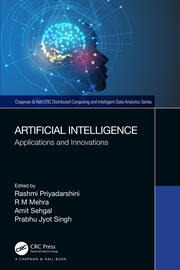
Artificial Intelligence : Applications and innovations
It's about the science of artificial intelligence (AI). AI is the study of the design of intelligent computational agents. This book provides a valuable resource for researchers, scientists, professionals, academicians and students dealing with the new challenges and advances in the areas of AI and innovations. This book also covers a wide range of applications of machine learning such as fire detection, structural health and pollution monitoring and control. Provides insight into prospective research and application areas related to industry and technology / Discusses industry- based inputs on success stories of technology adoption / Discusses technology applications from a research perspective in the field of AI / Provides a hands- on approach and case studies for readers of the book to practice and assimilate learning
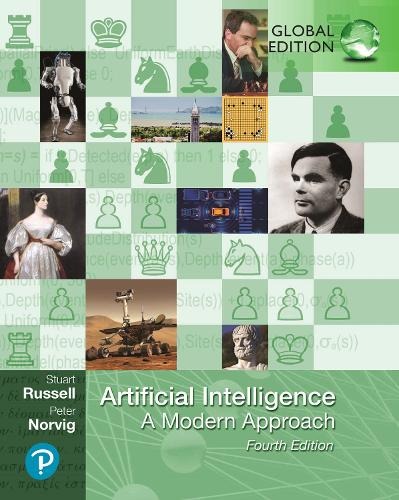
Artificial intelligence : A modern approach ; global ed.
Explores the full breadth and depth of the field of artificial intelligence (AI). The 4th edition brings readers up to date on the latest technologies, presents concepts in a more unified manner, and offers new or expanded coverage of machine learning, deep learning, transfer learning, multi agent systems, robotics, natural language processing, causality, probabilistic programming, privacy, fairness, and safe AI
