



الصفحة 180
الصفحة 180
Biotechnology for Fuels and Chemicals : The Twenty-Ninth Symposium
In Biotechnology for Fuels and Chemicals: The Twenty-Ninth Symposium, leading US and international researchers from academia, industry, and government exchange cutting-edge technical information and update current trends in the development and application of biotechnology for sustainable production of fuels and chemicals. This symposium emphasizes advances in biotechnology to produce high-volume, low-price products from renewable resources, while improving the environment. The major areas of interest include advanced feedstock production and processing, enzymatic and microbial biocatalysis, bioprocess research and development, opportunities in biorefineries, and commercialization of biobased products. International and domestic progress on producing liquid biofuels, especially ethanol and biodiesel, is highlighted, and related topics, including bioseparations and optimal integration of biochemical and thermochemical conversion technologies, are featured.
Biotechnology for fuels and chemicals : The Twenty-Eighth symposium
In Biotechnology for Fuels and Chemicals: The Twenty-Eighth Symposium, leading US and international researchers from academia, industry, and government exchange cutting-edge technical information and update current trends in the development and application of biotechnology for sustainable production of fuels and chemicals. This symposium emphasizes advances in biotechnology to produce high-volume, low-price products from renewable resources, while improving the environment. The major areas of interest include advanced feedstock production and processing, enzymatic and microbial biocatalysis, bioprocess research and development, opportunities in biorefineries, and commercialization of biobased products.
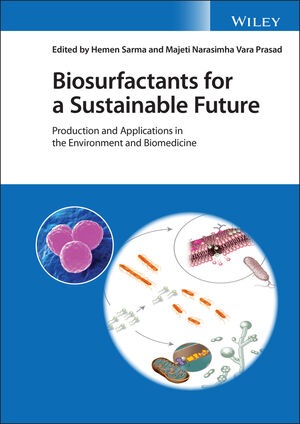
Biosurfactants for a sustainable future : Production and applications in the environment and biomedicine
The book emphasizes the different techniques that are used for the production of biosurfactants from microorganisms and their characterization. Various aspects of biosurfactants, including structural characteristics, developments, production, bio-economics and their sustainable use in the environment and biomedicine, are addressed, and the book also presents metagenomic strategies to facilitate the discovery of novel biosurfactants producing microorganisms.
Biosolids treatment processes ; Vol.6
The past 30 years have seen the emergence of a growing desire worldwide to take positive actions to restore and protect the environment from the degrading effects of all forms of pollution: air, noise, solid waste, and water. The Handbook of Environmental Engineering series guides readers to answer the fundamental questions facing pollution in the modern era – How serious is pollution? Is the technology needed to abate it not only available, but feasible? Among the topics included in this, the sixth edition, are: biosolids, flotation thickening, anaerobic and aerobic digestion, pressurized ozonation, lime stabilization, elutriation and polymer conditioning, and animal waste treatment.
Biosensing for the 21st Century
Covers trends in modern biotechnology All aspects of this interdisciplinary technology, where knowledge, methods and expertise are required from chemistry, biochemistry, microbiology, genetics, chemical engineering and computer science, are treated

Biosensing : International Research and Development
The goal of this book is to disseminate information on the worldwide status and trends in biosensing R&D to government decisionmakers and the research community. The contributors critically analyze and compare biosensing research in the United States with that being pursued in Japan, Europe and other major industrialized countries.

Bioresonance therapy and telemedicine
The aim of our research project is to highlight the Medical application of Physics although we as Pharmacologist remain often focused on the value of Pedications to resolve any disease however we noticed Some complicated medical problems such as antibiotic Resistance where we cannot find any responsive Chemical therapy therefore we referred to the history of Bio resonance therapy however we were also concerned To report the medical value by following some patients Whom were treated and to analyze the mechanism in Which this therapy is effective, and for which diseases And we also hope that this established device for Targeting Bacteria, viruses can hold a hope for patients Who are diagnosed with Corona, there is a proof of Principle for that hypothesis since the scientist Rife has Invented this therapy by interference destruction wave Which could destroy specifically this bacteria upon its Frequency wave without possible

Bioreactors for Tissue Engineering : Principles, Design and Operation
This volume addresses the issue of mechanical conditioning of the tissue, and describes the use of techniques such as MRI for monitoring tissue growth. It also deals with the application of bioreactor technology to tissue engineering products.
Bioproducts From Canadas Forests : New Partnerships in the Bioeconomy
For the first time, this opportune book provides a comprehensive treatment of the many innovative, non-timber bioproducts that may be derived from Canada’s vast forests, including their potential economic, social and environmental impacts. It also offers a balanced discussion of the technological, policy and regulatory issues surrounding the emerging global bioeconomy. This book will not only be of interest to Canadian forestry professionals and entrepreneurs, but also to those interested in the contribution of forestry to the bioeconomy worldwide.
Bioprocessing Technology for Production of Biopharmaceuticals and Bioproducts
Written for industrial and academic researchers and development scientists in the life sciences industry, Bioprocessing Technology for Production of Biopharmaceuticals and Bioproducts is a guide to the tools, approaches, and useful developments in bioprocessing. This important guide: •Summarizes state-of-the-art bioprocessing methods and reviews applications in life science industries •Includes illustrative case studies that review six milestone bio-products •Discuses a wide selection of host strain types and disruptive bioprocess technologies
Biopolymers in nutraceuticals and functional foods
Comprehensive book covers new applications of biopolymers in the research and development of industrial scale nutraceutical and functional food grade products.
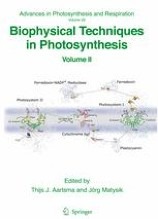
Biophysical Techniques in Photosynthesis ; Vol. II
Since the first volume on Biophysical Techniques in Photosynthesis Research, published in 1996, new experimental techniques and methods have been devised at a rapid pace. The present book is a sequel which complements the first volume (Volume 3 in the Series) by providing a comprehensive overview of the most important new techniques developed over the past ten years, especially those that are relevant for research on the mechanism and fundamental aspects of photosynthesis. The contributions are written by leading scientists in their field. The book has 5 sections: Imaging; Structure; Optical and laser spectroscopy; Magnetic resonance; Theory. Each chapter describes the basic concepts of the technique, practical applications and scientific results. Possibilities and limitations from a technical as well as a scientific point of view are addressed, allowing the reader not only to recognize the potential of a particular method for his/her own quest, but also to assess the resources that are required for implementation. The book is intended for use by graduate students and researchers in photosynthesis as well as in (bio)physics, (bio)chemistry and biology in general.
Biophysical Aspects of Transmembrane Signaling
Transmembrane signaling is one of the most significant cell biological events in the life and death of cells in general and lymphocytes in particular. Until recently biochemists and biophysicists were not accustomed to thinking of these processes from the side of a high number of complex biochemical events and an equally high number of physical changes at molecular and cellular levels at the same time. Both types of researchers were convinced that their findings are the most decisive, having higher importance than the findings of the other scientist population. Both casts were wrong. Life, even at cellular level, has a number of interacting physical and biochemical mechanisms, which finally build up the creation of an "excited" cell that will respond to particular signals from the outer or inner world.

Biophotonics and Coherent Systems in Biology
Biophotonics and Coherent Systems in Biology offers a timely research volume derived from papers submitted at the 3rd International Alexander Gurwitsch Conference. Biophotonics and Coherent Systems in Biology covers the major aspects of modern biophotonics and related biological and biophysical problems of interest to researchers today.Key topics include: Coherency of biophoton emission and its related physical and biological properties , Biological effects of microwaves, Photon emission from living samples, starting from human bodies up to cell cultures, Fundamental role of water in bioenergetics and the influence of electromagnetic fields upon hydrophobic-hydrophilic balance
Biophotonics ; Optical science and engineering for the 21st century
Biophotonics: Optical Science and Engineering in the 21st Century serves as an ideal aid to the research and development of these areas integrating light, photonics, and biological systems.Key topics include: Fluctuation Correlation Spectroscopy in Cells: Determination of Molecular Aggregation ,Using GFP and FRET Technologies for Studying Signaling Mechanisms of Apoptosis in a Single Living Cell, Study on Protein-Protein Interaction in Single Living Cells, Functional Optical Coherence Tomography: Simultaneous In Vivo Imaging of Tissue Structure and Physiology, Imaging –Photo- and Sonodynamic Diagnosis of Cancer Mediated by Chemiluminescence Probes, Biophotonic Analysis of Spontaneous Self-Organizing Oxidative Processes in Aqueous Systems, Biophoton Emission and Defense Systems in Plants
Biophotonics
More profound understanding of the nature of light and light-matter interactions in biology has enabled many applications in the biology and medical fields. So a new discipline is born, namely biophotonics. The aim of this book is to review the current state-of-the-art of the field by means of authoritative chapters written by the world leaders of the respective fields. Biosensors, biochips, optical tomography, optical microsurgery, photodynamics therapy, bioactivation of gene, photobiology of skin, and nanobiophotonics are each introduced and recent advances presented. This book will be useful not only to physicians, biologists, physicists, chemists, materials scientists, and engineers but also to graduate students who are interested in these rapidly developing fields.
Biopharmaceutics applications in drug development
This book introduces fundamental concepts, methods, and advances in the areas of dissolution, absorption, and permeability and their key applications in dosage form performance. Case studies are used to discuss the applications of biopharmaceutic strategies in the development of successful drugs, with a specific focus on the applications of biopharmaceutic strategies in the development of successful drugs. The book presents an integrated view in linking pharmaceutic to the biological consequences of drug products and leverages those for decision making in drug development.
Biopharmaceutics : From fundamentals to industrial practice
Beginning with an expansive introduction to the basics of biopharmaceutics and the context that underpins the field, the included resources go on to discuss how biopharmaceutics are integrated into product development within the pharmaceutical industry. Explorations of how the regulatory aspects of biopharmaceutics function, as well as the impact of physiology and anatomy on the rate and extent of drug absorption, follow.
Biopharmaceutical manufacturing progress, trends and challenges
Source of the latest innovative research and technical development in biomanufacturing systems. It is organised into 2 parts: 1) Manufacturing of recombinant therapeutic proteins (e.g. therapeutic antibodies, biosimilars/biogenerics) and 2) Manufacturing aspects of cell and gene therapy. Each with selected chapters on the following topics for both up- and downstream, such as: Advanced process strategies, especially continuous manufacturing, Advanced culture techniques, especially single-use systems, Process transfer, scale-up/scale-down models, Processing advances/Manufacturing productivity/efficiency, Model-assisted process understanding and development/Digital Twins, Process controls and analytics, Quality control, Quality by design, Facility design and full-scale commercial systems, manufacturing technology innovation.

Biopharmaceutical drug design and development
Biopharmaceutical Drug Design and Development, Second Edition, updates the widely successful first edition, published in 1999. This new, expanded edition investigates the dozens of new biopharmaceutical drugs that have become available since the publication of the first edition. Among the drugs discussed are ones in the categories of monoclonal antibodies for in-vivo use, cytokines, growth factors, enzymes, immunomodulators, thrombolytics, and immonotherapies including vaccines. Additionally, the volume examines new and emerging technologies, such as bioinformatics, DNA microarrays, transgenics, therapeutic gene delivery, stem cells, nucleic acid-based therapeutics, and macromolecular drug delivery. Authors also study pharmacogenetics in the clinic and changes in biologic drug approval at the FDA. Biopharmaceutical Drug Design and Development, Second Edition, is a worthy sequel in the discussion on the dynamic, exciting field of biotechnology.
