


تحسين النتائح
ترتيب حسب
من
الى


This book presents a comprehensive collection of 21 contributions from leading scientists in this field covering a broad spectrum of topics and presenting recent progress concerning instrumentation, data analysis and modeling, biological systems, particles, colloids, synthetic macromolecules, interacting systems. Due to the versatility of this fascinating and powerful technique, information and original publications are widespread and comprehensive collections are rare. Therefore, this volume presents a valuable source for biologists, chemists, materials scientists, and physicists interested in most recent information, results and development related to this important analytical method.
This book reports recent mathematical developments in the Programme "Analysis, Modeling and Simulation of Multiscale Problems", which started as a German research initiative in 2006. Multiscale problems occur in many fields of science, such as microstructures in materials, sharp-interface models, many-particle systems and motions on different spatial and temporal scales in quantum mechanics or in molecular dynamics. The book presents current mathematical foundations of modeling, and proposes efficient numerical treatment.
Analysis of Computer and Communication Networks presents the academic and research communities with mathematical theory and techniques necessary for analyzing and modeling high-performance global networks, such as the Internet.
Contact mechanics was and is an important branch in mechanics which covers a broad field of theoretical, numerical and experimental investigations. In this carefully edited book the reader will obtain a state-of-the-art overview on formulation, mathematical analysis and numerical solution procedures of contact problems. The contributions collected in this volume summarize the lectures presented during the 4th Contact Mechanics International Symposium (CMIS) held in Hannover, Germany, 2005, by leading scientists in the area of contact mechanics.

The physical and chemical mechanisms as well as the sizes of these processes are quite different. So are the motivations for studying them scientifically.The super- 8 nova is a thermo-nuclear explosion on a scale of 10 cm. Astrophysicists try to understand them in order to get insight into fundamental properties of the universe. In hows around airfoils of commercial airliners at the scale of 3 10 cm shock waves occur that influence the stability of the wings as well as fuel consumption in ight. This requires appropriate design of the shape and structure of airfoils by engineers. Knocking occurs in combustion, a chemical 1 process, and must be avoided since it damages motors. The scale is 10 cm and these processes must be optimized for efficiency and environmental conside- tions. The common thread is that the underlying ?uid ?ows may at a certain scale of observation be described by basically the same type of hyperbolic s- tems of partial differential equations in divergence form, called conservation laws. Astrophysicists, engineers and mathematicians share a common interest in scientific progress on theory for these equations and the development of computational methods for solutions of the equations. Due to their wide applicability in modeling of continua. A substantial portion of mathematical research is related to the analysis and numerical approximation of solutions to such equations. Hyperbolic conservation laws in two or more space dimensions still poseone of the main challenges to modern mathematics.
This book comprises a selection of papers from IFSA 2007 on new methods for analysis and design of hybrid intelligent systems using soft computing techniques. Soft Computing (SC) consists of several computing paradigms, including fuzzy logic, neural networks, and genetic algorithms, which can be used to produce powerful hybrid intelligent systems for solving problems in pattern recognition, time series prediction, intelligent control, robotics and automation. Hybrid intelligent systems that combine several SC techniques are needed due to the complexity and high dimensionality of real-world problems. Hybrid intelligent systems can have different architectures, which have an impact on the efficiency and accuracy of these systems, for this reason it is very important to optimize architecture design. The architectures can combine, in different ways, neural networks, fuzzy logic and genetic algorithms, to achieve the ultimate goal of pattern recognition, time series prediction, intelligent control, or other application areas.
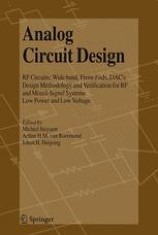
Analog Circuit Design contains the contribution of 18 tutorials of the 14th workshop on Advances in Analog Circuit Design. Each part discusses a specific todate topic on new and valuable design ideas in the area of analog circuit design. Each part is presented by six experts in that field and state of the art information is shared and overviewed. This book is number 14 in this successful series of Analog Circuit Design, providing valuable information and excellent overviews of analog circuit design, CAD and RF systems.

This volume is intended to provide researchers and graduate students with the basic aspects of the continuum modeling of electroelastic interactions in solids. A concise treatment of linear, nonlinear, static and dynamic theories and problems is presented. The emphasis on formulation and understanding of problems useful in device applications rather than solution techniques of mathematical problems. The mathematics used in this book is minimal.
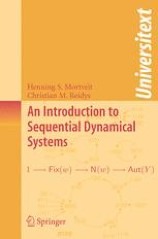
This text is the first to provide a comprehensive introduction to SDS. Driven by numerous examples and thought-provoking problems, the presentation offers good foundational material on finite discrete dynamical systems which leads systematically to an introduction of SDS. Techniques from combinatorics, algebra and graph theory are used to study a broad range of topics, including reversibility, the structure of fixed points and periodic orbits, equivalence, morphisms and reduction. Unlike other books that concentrate on determining the structure of various networks, this book investigates the dynamics over these networks by focusing on how the underlying graph structure influences the properties of the associated dynamical system.
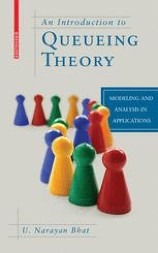
This introductory textbook is designed for a one-semester course on queueing theory that does not require a course in stochastic processes as a prerequisite. By integrating the necessary background on stochastic processes with the analysis of models, the work provides a sound foundational introduction to the modeling and analysis of queueing systems for a broad interdisciplinary audience of students in mathematics, statistics, and applied disciplines such as computer science, operations research, and engineering.
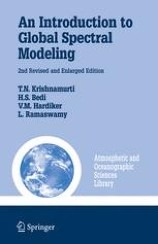
Numerical weather prediction is receiving increased attention as weather forecasters aim to improve the numerical models used to forecast the weather. This is a textbook on global spectral modeling, which is an important component for global weather forecasts at numerous operational centers. This book covers all areas of model development including numerical analysis, treatment of clouds, mountains, radiation, precipitation processes, and the surface layers over land and the ocean. The objectives of this book are to provide a systematic and sequential background for students, researchers, and operational weather forecasters in order to develop comprehensive weather forecast models. This is designed for a one semester introductory graduate level course on weather prediction methodologies. As a prerequisite it requires a basic background in meteorology, applied mathematics, and numerical analysis.
This book is introduction to the theory of continuous-time stochastic processes. A balance of theory and applications, the work features concrete examples of modeling real-world problems from biology, medicine, industrial applications, finance, and insurance using stochastic methods. No previous knowledge of stochastic processes is required. Key topics covered include: * Interacting particles and agent-based models: from polymers to ants * Population dynamics: from birth and death processes to epidemics * Financial market models: the non-arbitrage principle * Contingent claim valuation models: the risk-neutral valuation theory * Risk analysis in insurance
A self-contained introduction to algebraic control for nonlinear systems suitable for researchers and graduate students.The most popular treatment of control for nonlinear systems is from the viewpoint of differential geometry yet this approach proves not to be the most natural when considering problems like dynamic feedback and realization. Professors Conte, Moog and Perdon develop an alternative linear-algebraic strategy based on the use of vector spaces over suitable fields of nonlinear functions. This algebraic perspective is complementary to, and parallel in concept with, its more celebrated differential-geometric counterpart.Algebraic Methods for Nonlinear Control Systems describes a wide range of results, some of which can be derived using differential geometry but many of which cannot.
Algebraic Geometry provides an impressive theory targeting the understanding of geometric objects defined algebraically. Geometric Modeling uses every day, in order to solve practical and difficult problems, digital shapes based on algebraic models. In this book, we have collected articles bridging these two areas. The confrontation of the different points of view results in a better analysis of what the key challenges are and how they can be met. We focus on the following important classes of problems: implicitization, classification, and intersection. The combination of illustrative pictures, explicit computations and review articles will help the reader to handle these subjects.
This book reports on the results of an extended survey conducted across Europe within the framework of the APPRAISAL FP7 project to determine the extent to which an integrated assessment approach to air quality is being adopted, on the one hand, by regional and local authorities to develop air quality plans and, on the other, by researchers. Following a detailed analysis of the role and structure of the components of an integrated assessment study, the results of the survey are considered from a variety of perspectives.
This volume contains the papers and posters presented at the 27 NATO/CCMS International Technical Meeting on Air Pollution Modeling and Its Application held in Banff, Canada, 24-29 October 2004. The key topics at this ITM included: Role of Atmospheric Models in Air Pollution Policy and Abatement Strategies; Integrated Regional Modeling; Effects of Climate Change on Air Quality; Aerosols as Atmospheric Contaminants; New Developments; and Model Assessment and Verification. 104 participants from North and South America, Europe, Africa and Asia attended th the 27 ITM.
The book is aimed at researchers and government policy makers who wish to keep abreast of the most recent developments in air pollution modelling and air quality issues. The book emphasizes the following key topics: 1. Local and urban scale modelling; 2. Regional and intercontinental modelling; 3. Data assimilation and air quality forecast; 4. Model assessment and verification; 5. Aerosols in the atmosphere; 6. Interactions between air quality and climate change; 7. Air quality and human health.
Provides a good example of the diverse scope and standard of research achieved in simulation and gaming today. The theme of the special session at ISAGA2003 was Agent-Based Modeling Meets Gaming Simulation. Nowadays, agent-based simulation is becoming very popular for modeling and solving complex social phenomena. It is also used to arrive at practical solutions to social problems. At the same time, however, the validity of simulation does not exist in the magni?cence of the model. R. Axelrod stresses the simplicity of the agent-based simulation model through the “Keep it simple, stupid” (KISS) principle: As an ideal, simple modeling is essential.
Advances of Computational Intelligence in Industrial Systems reports the exploration of CI frontiers with an emphasis on a broad spectrum of real-world applications. Section I – Theory and Foundation presents some of the latest developments in CI.
There has been tremendous emphasis in unmanned aerial vehicles, both of fixed (airplanes) and rotary wing (vertical take off and landing, helicopters) types over the past ten years. Applications span both civilian and military domains, the latter being the most important at this stage. This edited book provides a solid and diversified reference source related to basic, applied research and development on small and miniature unmanned aerial vehicles, both fixed and rotary wing. As such, the book offers background information on the evolution of such vehicles over the years, followed by modeling and control fundamentals that are of paramount importance due to unmanned aerial vehicle model complexity, nonlinearity, coupling, inhirent instability and parameter values uncertainty. Aspects of navigation, including visual-based navigation and target tracking are discussed, followed by applications to attitude estimation on micro unmanned aerial vehicles, autonomous solar unmanned aerial vehicle, biomimetic sensing for autonomous flights in near-earth environments, localization of air-ground wireless sensor networks, decentralized formation tracking, design of an unmanned aerial vehicle for volcanic gas sampling and design of an on-board processing controller for miniature helicopters.

سوريا - اتستراد درعا - غباغب
+963-15 2050 - 15 860 380 /1/2/3 - 11 662 3900