


تحسين النتائح
ترتيب حسب
من
الى


What are the challenges and action points for agricultural sustainability in Sub-Saharan Africa? This collection of papers offers technical analyses, policy recommendations and an overview of success stories to date. Each carefully selected paper provides valuable insights for improved policy making and defines relevant strategic priorities on Africa’s sustainable transformation process, which is in line with the international development agenda. Although agriculture remains the main source of income for Africa’s population, the sector is rain-fed subjecting it to the vagaries of weather and climate change. This volume demonstrates the rationale of developing a competitive, inclusive and sustainable agribusiness sector for Africa’s food security and structural transformation.
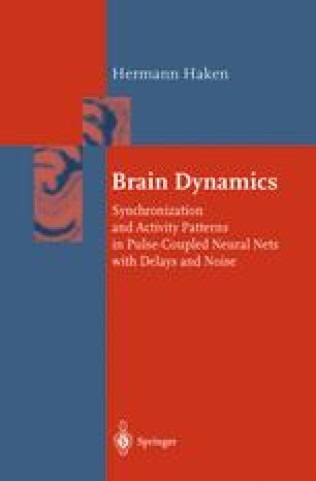
This book addresses a large variety of models in mathematical and computational neuroscience.He devotes the main part to the synchronization problem. He presents neural net models more realistic than the conventional ones by taking into account the detailed dynamics of axons, synapses and dendrites, allowing rather arbitrary couplings between neurons. He gives a complete stabile analysis that goes significantly beyond what has been known so far. He also derives pulse-averaged equations including those of the Wilson--Cowan and the Jirsa-Haken-Nunez types and discusses the formation of spatio-temporal neuronal activity pattems. An analysis of phase locking via sinusoidal couplings leading to various kinds of movement coordination is included.

This is the first book to provide a cutting edge reference to the fascinating topic of blind source separation (BSS) for convolved speech mixtures. Through contributions by the foremost experts on the subject, the book provides an up-to-date account of research findings, explains the underlying theory, and discusses potential applications. The individual chapters are designed to be tutorial in nature with specific emphasis on an in-depth treatment of state of the art techniques. Blind Speech Separation is divided into three parts:Part 1 presents overdetermined or critically determined BSS. Here the main technology is independent component analysis (ICA). ICA is a statistical method for extracting mutually independent sources from their mixtures. Part 2 addresses underdetermined BSS, where there are fewer microphones than source signals. Here, the sparseness of speech sources is very useful; we can utilize time-frequency diversity, where sources are active in different regions of the time-frequency plane.Part 3 presents monaural BSS where there is only one microphone. Here, we can separate a mixture by using the harmonicity and temporal structure of the sources. We can build a probabilistic framework by assuming a source model, and separate a mixture by maximizing the a posteriori probability of the sources.

Blast cleaning is one of the most frequently utilised surface treatment-method in modern industry. The book is the first comprehensive monograph in this subject. It provides a practical and comprehensive review of the technology. This book systematically and critically reviews the theory behind the technology, the state of current blast cleaning, surface quality aspects and the effects of blast cleaning on the performance of applied coatings.
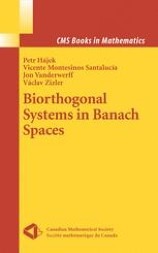
The main theme of this book is the relation between the global structure of Banach spaces and the various types of generalized "coordinate systems" - or "bases" - they possess. In this book, the authors systematically investigate the concepts of Markushevich bases, fundamental systems, total systems and their variants.

Creating some links between control feedback and biology modeling communities based on similarities in modeling, observing and perceiving alive structures, and analyzing interconnections between biological structures and subsystems was the main objective of this volume. The idea of this book was conceived in the context mentioned above with the objective to help in claiming many of the problems for control researchers, starting discussions and opening interactive debates between the control and biology communities, and, finally, to alert graduate students to the many interesting ideas at the frontier between control feedback theory and biology.

Specific binding of a ligand to a receptor is a key step in a variety of biol- ical processes, such as immune reactions, enzyme cascades, or intracellular transport processes. The ligand-receptor terminology implies that the rec- tor molecule is signi?cantly larger than the ligand, and the term "bioactive conformation" usually characterizes the conformation of a ligand when it is bound to a receptor. In a more general sense, bioactive conformation applies toanymoleculeinabiologicallyrelevantboundstateregardlessofsizecons- erations. Mostofthecontributions tothisbookaddressligandsthat aremuch smaller than their receptors. X-ray crystallography and high resolution NMR spectroscopy are the two main experimental techniques used to study bioactive conformations. The- fore, the twovolumes ofthisbookcover approachesthat use either ofthetwo techniques, or a combination thereof.

New research in mathematics education deals with the complexity of the mathematics’ classroom. The classroom teaching situation constitutes a pertinent unit of analysis for research into the ternary didactic relationship which binds teachers, students and mathematical knowledge. The classroom is considered as a complex didactic system, which offers the researcher an opportunity to gauge the boundaries of the freedom that is left with regard to choices about the knowledge to be taught and the ways of organizing the students’ learning, while giveing rise to the study of interrelations between three main elements of the teaching process the: mathematical content to be taught and learned, management of the various time dimensions, and activity of the teacher who prepares and manages the class, to the benefit of the students' knowledge and the teachers' own experience.
The edited and peer reviewed volume presents selected papers of the conference "Beyond knowlegde: the legacy of competence" It reflects the current state-of-the-art work of scholars worldwide within the area of learning and instruction with computers. Mainly, areas of computer-based learning environments supporting competence-focused knowledge acquisition but also foundational scientific work are addressed. More specific, contents cover cognitive processes in hypermedia and multimedia learning, social issues in computer-supported collaborative learning, motivation and emotion in Blended Learning and e-Learning.
This concise treatment embraces, in four parts, all the main aspects of theoretical physics (I . Mechanics and Basic Relativity, II. Electrodynamics and Aspects of Optics, III. Non-relativistic Quantum Mechanics, IV. Thermodynamics and Statistical Physics). It summarizes the material that every graduate student, physicist working in industry, or physics teacher should master during his or her degree course. It thus serves both as an excellent revision and preparation tool, and as a convenient reference source, covering the whole of theoretical physics. It may also be successfully employed to deepen its readers' insight and add new dimensions to their understanding of these fundamental concepts. Recent topics such as holography and quantum cryptography are included, thus making this a unique contribution to the learning material for theoretical physics.
This book presents elementary probability theory with interesting and well-chosen applications that illustrate the theory. An introductory chapter reviews the basic elements of differential calculus which are used in the material to follow. The theory is presented systematically, beginning with the main results in elementary probability theory. This is followed by material on random variables. Random vectors, including the all important central limit theorem, are treated next. The last three chapters concentrate on applications of this theory in the areas of reliability theory, basic queuing models, and time series. Examples are elegantly woven into the text and over 400 exercises reinforce the material and provide students with ample practice.
Aims to present a general survey of algebra, of its basic notions and main branches.Those parts of the book devoted to the systematic treatment of notions and results of algebra make very limited demands on the reader: we presuppose only that the reader knows calculus, analytic geometry and linear algebra in the form taught in many high schools and colleges. The extent of the prerequisites required in our treatment of examples is harder to state; an acquaintance with projective space, topological spaces, differentiable and complex analytic manifolds and the basic theory of functions of a complex variable is desirable, but the reader should bear in mind that difficulties arising in the treatment of some specific example are likely to be purely local in nature, and not to affect the understanding of the rest of the book.
This textbook can be used to teach electromagnetism to a wide range of undergraduate science majors in physics, electrical engineering or materials science. However, by making lesser demands on mathematical knowledge than competing texts, and by emphasizing electromagnetic properties of materials and their applications, this textbook is uniquely suited to students of materials science. Many competing texts focus on the study of propagation waves either in the microwave or optical domain, whereas Basic Electromagnetism and Materials covers the entire electromagnetic domain and the physical response of materials to these waves.
The purpose of this book is to address the challenging problem of Autonomous Navigation in Dynamic Environments, and to present new ideas and approaches in this newly emerging technical domain. The book surveys the state-of-the-art, discusses in detail various related challenging technical aspects, and addresses upcoming technologies in this field. The aim of the book is to establish a foundation for a broad class of mobile robot mapping and navigation methodologies for indoor, outdoor, and exploratory missions.Three main topics located on the cutting edge of the state of the art are addressed, from both the theoretical and technological point of views: Dynamic world understanding and modelling for safe navigation, Obstacle avoidance and motion planning in dynamic environments, and Human-robot physical interactions. Several models and approaches are proposed for solving problems such as Simultaneous Localization and Mapping (SLAM) in dynamic environments, Mobile obstacle detection and tracking, World state estimation and motion prediction, Safe navigation in dynamic environments, Motion planning in dynamic environments, Robust decision making under uncertainty, and Human-Robot physical interactions.

Visual perception is the most important of the human senses. Lack of visual perception is one of the main causes of accidents. The safety of vehicle traffic depends on how well automotive lighting supports the visual perception of the driver. This book explains the fundamentals of visual perception, like e.g. physiology of eye and brain, as well as those of automotive lighting technology, like e.g. design of headlamps and signal lights. It is an interdiciplinary approach to a fastly evolving field of science and technology, answering questions like "How does information enter our brain when driving a car?" and "What are the benefits and dangers of LED signal lighting?"
This book will examine the implications of digitalization for the understanding of humanity, conceived as a community of intelligent agency. It addresses important topics across a range of social and behavioral theories and identifies a range of novel mechanisms and their social behavioral effects. Across the book, the author highlights the expansion of intelligent processing capability brought about by digitalization and the challenges this exposes for integrating artificial and human capabilities
Records the state of the art in research on mathematics-related affect. It discusses the concepts and theories of mathematics-related affect along the lines of three dimensions. The first dimension identifies three broad categories of affect: motivation, emotions, and beliefs. The book contains one chapter on motivation, including discussions on how emotions and beliefs relate to motivation. There are two chapters that focus on beliefs and a chapter on attitude which cross-cuts through all these categories. The second dimension covers a rapidly fluctuating state to a more stable trait. All chapters in the book focus on trait-type affect and the chapter on motivation discusses both these dimensions. The third dimension regards the three main levels of theorizing: physiological (embodied), psychological (individual) and social. All chapters reflect that mathematics-related affect has mainly been studied using psychological

An increasing interest in studies of atmospheric aerosols in the context of their impact on the formation of climate, heterogeneous chemical reactions in the atmosphere affecting in particular the environmental quality, problems of visibility and human health is the cause of unusual scales of developments connected with studies of atmospheric aerosols. The necessity has arisen to analyze the latest results concerning, first of all, three aspects of the problems considered: 1. aerosol properties from data of complex field observational experiment; 2. processes of aerosol formation and interaction of aerosol with clouds, 3. aerosol as a climate-forming atmospheric component (including the problem of long-range transport). The monograph in hand is dedicated mainly to the problems of the impact of aerosol on climate processes in the atmosphere, from microphysical processes of formation and evolution of aerosol properties to the formation of macro-scale cloud sytems on aerosol particles.

For a quantitative understanding of the physics of the universe - from the solar system through the milky way to clusters of galaxies all the way to cosmology - these edited lecture notes are perhaps among the most concise and also among the most critical ones: Astrophysics has not yet stood the redundancy test of laboratory physics, hence should be wary of early interpretations. Special chapters are devoted to magnetic and radiation processes, supernovae, disks, black-hole candidacy, bipolar flows, cosmic rays, gamma-ray bursts, image distortions, and special sources. At the same time, planet earth is viewed as the arena for life, with plants and animals having evolved to homo sapiens during cosmic time. -- This text is unique in covering the basic qualitative and quantitative tools, formulae as well as numbers, needed for the precise interpretation of frontline phenomena in astrophysical research. The author compares mainstream interpretations with new and even controversial ones he wishes to emphasize.
The book describes the branch of astrophysics in which processes in the universe are investigated with experimental methods known from particle physics experiments. After a historical introduction to the basics of elementary particles, their interactions and the relevant detection techniques are described. The main body of the book concerns cosmic rays. The modern aspects of astroparticle physics are described in a chapter on cosmology. The book provides an orientation in the field of astroparticle physics that many beginners might look for. The physics issues are presented with little mathematics, and the results are illustrated by many diagrams. The reader has a chance to enter this field of astrophysics with a book that closes the gap between expert and popular level.

سوريا - اتستراد درعا - غباغب
+963-15 2050 - 15 860 380 /1/2/3 - 11 662 3900