



الصفحة 15
الصفحة 15

IUTAM symposium on chaotic dynamics and control of systems and processes in mechanics ; Proceedings of the IUTAM Symposium held in Rome, Italy, 8-13 June 2003
In recent years, careful experimental studies have been made to establish the actual occurrence and observability of the predicted dynamic phenomenaComplex dynamics have been shown to characterize the behaviour of a great number of nonlinear mechanical systemswhen the first IUTAM Symposium devoted to the general topic of nonlinear

Comprehensive utilization of magnesium slag by pidgeon process
This book introduces the harmless handling/recycling of magnesium slag , the process of magnesium silicothermic reduction (Pidgeon process)which the slag was produced, and . the magnesium resources, layout of the industry of the world. Examples and experimental data in this book are from the author group’s research programs, as well as the rencent researches in China. The book could provide precious reference to scientists and engineers in the field of recycling and environment friendly use of the industrial solid wastes. It could also be used for researchers and students who are interested in relevant field.

Compositionality and Concepts in Linguistics and Psychology
By highlighting relations between experimental and theoretical work, this volume explores new ways of addressing one of the central challenges in the study of language and cognition. The articles bring together work by leading scholars and younger researchers in psychology, linguistics and philosophy. An introductory chapter lays out the background on concept composition, a problem that is stimulating much new research in cognitive science. Researchers in this interdisciplinary domain aim to explain how meanings of complex expressions are derived from simple lexical concepts and to show how these meanings connect to concept representations.
Composites with micro- and nano-structure : Computational modeling and experiments
The book contains atomistic and continuum numerical methods and experimental validation for composite materials reinforced with particles or fibres, porous materials, homogenization and other important topics for research in this field.
Composites for building assembly : connections, members and structures
Pesents buildings developed using modular assembly approaches based on lightweight and corrosion-resistant fiber reinforced polymer (FRP) composites. Construction methods and the choice of building materials offer great opportunities for more productive and environmentally friendly solutions. This book includes valuable experimental data on large-scale structural components (beams, slabs, amd columns), connections (shear connections, wall stud connections, beam-column connections, column-column connections) and structures (composite floor system, structural sandwich assemblies, and full-scale structural demonstrations), supported with detailed numerical modelling and analytical methods.

Competition in Marketing : Two Essays on the Impact of Information on Managerial Decisions and on Spatial Product Differentiation
In her first essay Vera Magin uses primary experimental data to explore the effects of information on marketing decisions, performance, and competition. In her second essay the author discusses several approaches to measure product differentiation in spatial contexts. In doing so, she refers to the measurement of diversity and also applies methods from disciplines like spatial statistics, forestry, and geography.

Classical Methods of Statistics : With Applications in Fusion-Oriented Plasma Physics
Classical Methods of Statistics is a blend of theory and practical statistical methods written for graduate students and researchers interested in applications to plasma physics and its experimental aspects. It can also fruitfully be used by students majoring in probability theory and statistics. In the first part, the mathematical framework and some of the history of the subject are described. Many exercises help readers to understand the underlying concepts. In the second part, two case studies are presented exemplifying discriminant analysis and multivariate profile analysis. The introductions of these case studies outline contextual magnetic plasma fusion research. In the third part, an overview of statistical software is given and, in particular, SAS and S-PLUS are discussed. In the last chapter, several datasets with guided exercises, predominantly from the ASDEX Upgrade tokamak, are included and their physical background is concisely described. The book concludes with a list of essential keyword translations.
Chemoinformatics and Bioinformatics in the Pharmaceutical Sciences
Chemoinformatics and Bioinformatics in the Pharmaceutical Sciences brings together two very important fields in pharmaceutical sciences that have been mostly seen as diverging from each other: chemoinformatics and bioinformatics. As developing drugs is an expensive and lengthy process, technology can improve the cost, efficiency and speed at which new drugs can be discovered and tested. This book presents some of the growing advancements of technology in the field of drug development and how the computational approaches explained here can reduce the financial and experimental burden of the drug discovery process.

Challenges to the second law of thermodynamics : Theory and experiment
The second law of thermodynamics is considered one of the central laws of science, engineering and technology. For over a century it has been assumed to be inviolable by the scientific community. Over the last 10-20 years, however, more than two dozen challenges to it have appeared in the physical literature - more than during any other period in its 150-year history. The number and variety of these represent a cogent threat to its absolute status. This is the first book to document and critique these modern challenges. Written by two leading exponents of this rapidly emerging field, it covers the theoretical and experimental aspects of principal challenges. In addition, unresolved foundational issues concerning entropy and the second law are explored. This book should be of interest to anyone whose work or research is touched by the second law.
Cellular Automaton Modeling of Biological Pattern Formation: Characterization, Applications, and Analysis
This book focuses on a challenging application field of cellular automata: pattern formation in biological systems, such as the growth of microorganisms, dynamics of cellular tissue and tumors, and formation of pigment cell patterns. These phenomena, resulting from complex cellular interactions, cannot be deduced solely from experimental analysis, but can be more easily examined using mathematical models, in particular, cellular automaton models.

Cell Surface Receptors : A Short Course on Theory and Methods
Cell Surface Receptors: A Short Course on Theory and Methods, 3rd Edition, links theoretical insights into drug-receptor interactions described in mathematical models with the experimental strategies to characterize the biological receptor of interest.

Cell Motility
Cell motility is a fascinating example of cell behavior which is fundamentally important to a number of biological and pathological processes. It is based on a complex self-organized mechano-chemical machine consisting of cytoskeletal filaments and molecular motors. In general, the cytoskeleton is responsible for the movement of the entire cell and for movements within the cell. The main challenge in the field of cell motility is to develop a complete physical description on how and why cells move. For this purpose new ways of modeling the properties of biological cells have to be found. This long term goal can only be achieved if new experimental techniques are developed to extract physical information from these living systems and if theoretical models are found which bridge the gap between molecular and mesoscopic length scales. Cell Motility gives an authoritative overview of the fundamental biological facts, theoretical models, and current experimental developments in this fascinating area.

Cell Division Control in Plants
The molecular mechanisms controlling cell cycle progression are highly conserved in eukaryotes. In addition to the basic protein machinery involved in cell cycle regulation, higher plants have also evolved unique molecular mechanisms that allow integration of environmental, physiological, and developmental signals into networks to control proper cell division and expansion. Rapid and exciting research progress in these fields has been achieved from experimental observations on plants over the past decade. The scope of this volume is focused on the molecular basis of all aspects of cell division and cytokinesis in plants. It is an essential reference book for instructors and scientists working in the areas of molecular, cell, and developmental biology of plants. The editors of this book are veterans in the field of plant molecular biology and highly respected worldwide.
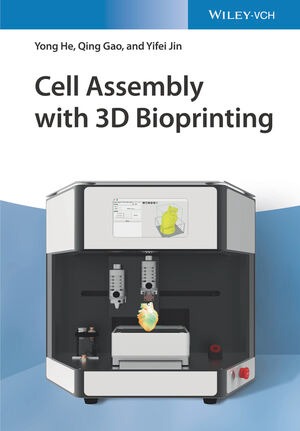
Cell assembly with 3D bioprinting
Detailed, highly illustrated chapters cover different bioprinting approaches and their applications, including coaxial bioprinting, digital light projection, direct ink writing, liquid support bath-assisted 3D printing, and microgel-, microfiber-, and microfluidics-based biofabrication. The book includes practical examples of 3D bioprinting, a protocol for typical 3D bioprinting, and relevant experimental data drawn from recent research.

CD137 Pathway : Immunology and Diseases
This comprehensive volume, written by experts in the field, covers nearly all aspects of ongoing research related to the CD137 pathway. Recent research has shown that the manipulation of CD137 pathway molecules is very promising in the treatment of cancer, viral infection, transplantation rejection and autoimmune diseases in experimental animal models. The volume includes research related to the identification and understanding of functional consequences of CD137 receptor and ligand molecules which represents a major effort in the field of immunology. CD137 Pathway: Immunology and Diseases is an ideal book for immunologists, microbiologists, cancer researchers, molecular biologists, biochemists, and pharmaceutical and biotechnology company scientists.

Capillary Forces in Microassembly : Modeling, Simulation, Experiments, and Case Study
Capillary Forces in Microassembly discusses the use of capillary forces as a gripping principle in microscale assembly. Clearly written and well-organized, this text brings together physical concepts at the microscale with practical applications in micromanipulation. Throughout this work, the reader will find a review of the existing gripping principles, elements to model capillary forces as well as descriptions of the simulation and experimental test bench developed to study the design parameters. Using well-known concepts from surface science (such as surface tension, capillary effects, wettability, and contact angles) as inputs to mechanical models, the amount of effort required to handle micro-components is predicted. These developments are then applied in a case study concerning the pick and place of balls in a watch ball bearing.
Building Physics : Heat, Ventilation, Moisture, Light, Sound, Fire, and Urban Microclimate
Presents the theoretical background of building physics, dealing with the evaluation of physical phenomena related to heat transfer and energy use in buildings, water and water vapour transfer in building structures, daylighting and electric lighting of buildings, sound transmission in building structures and protection against noise, the occurrence and spread of fires in buildings and the thermal response of cities. It contains numerical and computational evaluation methods, numerous computational case studies and examples of experimental analyses. The book demonstrates that the considered physical processes affect the quality of living and working comfort in indoor and outdoor environment.

Brodmann's : Localisation in the Cerebral Cortex
It is one of the major "classics" of the neurological world. Even today it forms the basis for so-called "localisation" of function in the cerebral cortex. Brodmann's "areas" are still used to designate functional regions in the cortex, the part of the brain that brings the world that surrounds us into consciousness, and which governs our responses to the world. For example, we use "area 4" for the "motor" cortex, with which we control our muscles, "area 17" for "visual" cortex, with which we see, and so on. This nomenclature is used by neurologists and neurosurgeons in the human context, as well as by experimentalists in various animals. Indeed, Brodmann's famous "maps" of the cerebral cortex of humans, monkeys and other mammals must be among the most commonly reproduced figures in neurobiological publishing. The most famous of all is that of the human brain. There can be few textbooks of neurology, neurophysiology or neuroanatomy in which Brodmann is not cited, and his concepts pervade most research publications on systematic neurobiology.

Brilliant light in life and material sciences
This book aim to create a synchrotron radiation facility, CANDLE, as an international laboratory for advanced research in life and material sciences. About 50 researchers from NATO, partner countries and Armenia gathered at Yerevan to discuss modern trends in developments of advanced light sources with high spectral brilliance and applications in basic and applied research in a wide range of fields. Research with high brilliant photon beams are used, for example for practical applications in pharmacy, electronics and nanotechnology. Such practical relevance promoted the design and construction of now more than 50 such facilities worldwide. Overview and specialized talks on the status and highlights of newly constructed light sources (ALBA, SPEAR3, European XFEL Facility, Siberian Synchrotron Radiation Center, CANDLE), on instrumentation and development of experimental techniques, and frontier research in life and material sciences using synchrotron radiation have been presented.
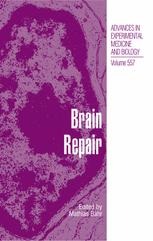
Brain Repair
Brain Repair, addresses all relevant issues underlying the mechanisms of brain damage, brain plasticity and post-traumatic reorganisation after CNS lesions. This book is divided the three major sections that follow; cellular and molecular basis of brain repair, plasticity and reorganisation of neural networks, and experimental therapy strategies. Brain Repair is written by high profile, international experts who describe in detail the newest results from basic research and highlight new model systems, techniques and therapy approaches. Based on a careful analysis of the cellular and molecular reaction patterns of the CNS to lesions, the contributions cover possibilities for endogenous reorganisation and repair as well as exciting new therapies emerging from basic research, some of which have already been introduced into the clinics.
