


تحسين النتائح
ترتيب حسب
من
الى

This book serves as an introduction to the state of the art on data warehouse design, with many references to more detailed sources. Providing a clear and a concise presentation of the major concepts and results of data warehouse design, it can also be used as the basis of a graduate or advanced undergraduate course.
This book presents a comprehensive reference of state-of-the-art efforts and early results in the area of autonomic networking and communication.
Macromedia's architecture is like a chest filled with precious jewels, and this book is quite simply the key to open it! One of the most important tools provided with Flash is the Macromedia Component Architecture: a framework of components written in ActionScript 2, based on established design patterns, that provides a wealth of functionality you can just bolt on to your Flash applications when desired. This can save you an enormous amount of time during application development and help you improve the quality of your code. What's more, the source code is included, so if you can't find the component you need within the component architecture, you can just modify existing components to create your own!
Adobe® Acrobat® and PDF for Architecture, Engineering, and Construction is designed to appeal to the engineering mind. The book is a practical guide focusing on the applications of PDF in the solution of "engineering" problems which may arise in a number of disciplines from architecture to construction. Using real-world examples, the authors follow a project from design through build and long-term maintenance. As the sample project evolves, suitable Acrobat® tools and techniques are identified and brought into play at each stage, showing readers how to personalize the context and processes to meet their own project development and management needs.
investigates the role of artificial input delay in approximating unknown system dynamics, referred to as time-delayed control (TDC), and provides novel solutions to current design issues in TDC. Its central focus is on designing adaptive-switching gain-based robust control (ARC) for a class of Euler–Lagrange (EL) systems with minimal or no knowledge of the system dynamics parameters. The newly proposed TDC-based ARC tackles the commonly observed over- and under-estimation issues in switching gain. The consideration of EL systems lends a practical perspective on the proposed methods, and each chapter is supplemented by relevant experimental data
In the last years electronic markets, especially online auctions, have become very popular and received more and more attention in both, business (B2B) as well as in public practice (B2C and C2C). Science, however, is still far from having studied all phenomena and effects which can be observed on electronic markets. This book shows that and how software agents can be used to simulate bidding behaviour in electronic auctions. The main emphasis of this book is to apply computational economics to market theory. It summarizes the most common and up-to-date agent-based simulation methods and tools and develops the simulation software AMASE. On basis of the introduced methods a model is established to simulate bidding behaviour under uncertainty.
Computer vision entails both passive and active illumination techniques. Whereas passive techniques observe the scene statically and analyse it as is, by contrast active techniques give the scene some actions and try to facilitate the analysis. In particular, active illumination techniques project specific light, for which the characteristics are known beforehand, to a target scene to enable stable and accurate analysis of the scene.
An AKM solution is about exploiting the Web as a knowledge engineering medium, and developing knowledge-model-based families of platforms, model-configured workplaces and services.
This volume contains a collection of the papers presented during the 1st International ACM-L Workshop, which was held on November 8, 2006 during the 25th International Conference on Conceptual Modeling, ER 2006, held November 6–9,2006, in Tucson, Arizona, plus several invited papers.These papers plus the invited papers represent the current thinking in conceptual modeling research, The active model can only be realized through technology integration (e.g., AI, software engineering, information technology,cognitive science, art and sciences, philosophy, etc.)
In that book we tried very hard not to simply list everything that we knew about the product. Instead we tried to act as intelligent filters, presenting only the essential information that you need to get started. Every screen shot has been retaken and every section has been re-checked to ensure, not only that it still works, but also that it is actually still relevant. We have re-written parts where the product has changed and also added some. For example, there is a new section on Object Dependencies and a whole new chapter about Data Access Pages - helping you to put your Access database onto an intranet.
Access Control Systems: Security, Identity Management and Trust Models provides a thorough introduction to the foundations of programming systems security, delving into identity management, trust models, and the theory behind access control models. The book details access control mechanisms that are emerging with the latest Internet programming technologies, and explores all models employed and how they work. The latest role-based access control (RBAC) standard is also highlighted.
Presents cybersecurity aspects of ubiquitous and growing IoT and Cyber Physical Systems. It also introduces a range of conceptual, theoretical, and foundational access control solutions. This was developed by the authors to provide an overall broader perspective and grounded approach to solve access control problems in IoT and CPS.
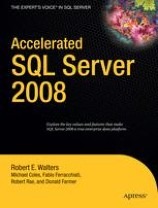
The expert tuition and approach to rapid learning in Accelerated SQL Server 2008, one of the first SQL Server 2008 books available, will enable SQL Server and other database professionals to make the leap to the 2008 release of Microsoft's flagship database management system quickly. Take full advantage of the features of SQL Server 2008, know what tools are available, and quickly realize the power and ease of use that SQL Server 2008 has to offer.
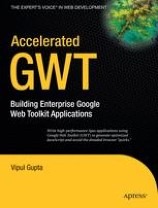
Ajax is a web development technique that takes advantage of JavaScript to display and interact dynamically with information embedded into a web page. Its emergence has made it possible to create web applications that closely resemble their desktop–based brethren. With this exciting new ability came several challenges; not only did developers have to learn JavaScript, but they were also forced to use inefficient development processes, not to mention deal with cross–platform and browser difficulties. But with the release of Google Web Toolkit (GWT), Java developers are able to continue using their favorite language to write powerful Ajax applications while using not only the Java language, but also the very same development tools they're already using on a daily basis!
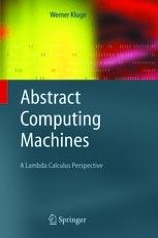
The book addresses ways and means of organizing computations, highlighting the relationship between algorithms and the basic mechanisms and runtime structures necessary to execute them using machines. It completely abstracts from concrete programming languages and machine architectures, taking instead the lambda calculus as the basic programming and program execution model to design various abstract machines for its correct implementation. The emphasis is on fully normalizing machines based on full-fledged beta-reductions as essential prerequisites for symbolic computations that treat functions and variables truly as first-class objects. Their weakly normalizing counterparts are shown to be functional abstract machines that sacrifice the flavors of full beta-reductions for decidedly simpler runtime structures and improved runtime efficiency. Further downgrading of the lambda calculus leads to classical imperative machines that permit side-effecting operations on the runtime environment.
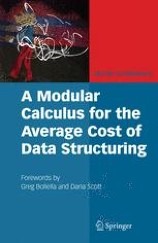
This volume, with forewords by Greg Bollella and Dana Scott, presents novel programs based on the new advances in this area, including the first randomness-preserving version of Heapsort. Programs are provided, along with derivations of their average-case time, to illustrate the radically different approach to average-case timing. The automated static timing tool applies the Modular Calculus to extract the average-case running time of programs directly from their MOQA code.
Part of the new series, Advanced Topics in Science and Technology in China, this book discusses concepts, theory, and core technologies of intelligent theory and human animation, including video based human animation, and intelligent technology of motion data management and reusing. It introduces systems developed to demonstrate the technologies of video based animation. Each chapter is independent. Lively pictures and demos will be presented to make the theory and technologies more understandable.
The book consists of two parts: the first discusses the fundamentals of matrix algebra in detail, while the second focuses on the applications of matrix algebra approaches in AI. Highlighting matrix algebra in graph-based learning and embedding, network embedding, convolutional neural networks and Pareto optimization theory, and discussing recent topics and advances, the book offers a valuable resource for scientists, engineers, and graduate students in various disciplines
This book gives a comprehensive account of Maude, a language and system based on rewriting logic. Many examples are used throughout the book to illustrate the main ideas and features of Maude, and its many possible uses. Maude modules are rewrite theories. Computation with such modules is - cient deduction by rewriting. Because of its logical basis and its initial model semantics,aMaude module defines a precise mathematical model.This means that Maude and its formal tool environment can be used in three, mutually reinforcing ways: • as a declarative programming language; • as an executable formal specification language; and • as a formal verification system. Maude’s rewriting logic is simple, yet very expressive. This gives Maude good representational capabilities as a semantic framework to formally represent a wide range of systems, including models of concurrency, distributed al- rithms, network protocols, semantics of programming languages, and models of cell biology. Rewriting logic is also an expressive universal logic,making Maude a fiexible logical framework in which many difierent logics and - ference systems can be represented and mechanized. This makes Maude a useful metatool to build many other tools, including those in its own formal tool environment. Thanks to the logic’s simplicity and the use of advanced semi-compilation techniques, Maude has a high-performance implementation, making it competitive with other declarative programming languages.
Part I of this book presents a high-level description of an artificial agent which humans can freely communicate with in their accustomed language. Part II analyzes the major constructions of natural language, i.e., intra- and extrapropositional functor - argument structure, coordination, and coreference, in the speaker and the hearer mode. Part III defines declarative specifications for fragments of English, which are used for an implementation in Java.

سوريا - اتستراد درعا - غباغب
+963-15 2050 - 15 860 380 /1/2/3 - 11 662 3900