



الصفحة 12
الصفحة 12

Complex, Intelligent, and Software Intensive Systems ; Proceedings of the 13th International Conference on Complex, Intelligent, and Software Intensive Systems (CISIS-2019)
This book presents scientific interactions between the three interwoven and challenging areas of research and development of future ICT-enabled applications: software, complex systems and intelligent systems.
Complex decision making : Theory and practice
The increasingly complex environment of today's world, characterized by technological innovation and global communication, generates myriads of possible and actual interactions while limited physical and intellectual resources severely impinge on decision makers, be it in the public or private domains. At the core of the decision-making process is the need for quality information that allows the decision maker to better assess the impact of decisions in terms of outcomes, nonlinear feedback processes and time delays on the performance of the complex system invoked.
Comparative genomics ; RECOMB 2007, International Workshop, RECOMB-CG 2007, San Diego, CA, USA, September 16-18, 2007, Proceedings
This book provides an evolutionary conceptual framework for comparative genomics, with the ultimate objective of understanding the loss and gain of genes during evolution, the interactions among gene products, and the relationship between genotype, phenotype and the environment. The many examples in the book have been carefully chosen from primary research literature based on two criteria: their biological insight and their pedagogical merit. The phylogeny-based comparative methods, involving both continuous and discrete variables, often represent a stumbling block for many students entering the field of comparative genomics. They are numerically illustrated and explained in great detail.

Communication research into the digital society : Fundamental insights from the Amsterdam School of Communication Research
Media and communication have become ubiquitous in today’s societies andaffect all aspects of life. On an individual level, they impact how we learnabout the world, how we entertain ourselves, and how we interact withothers. On an organisational level, the interactions between media andorganisations, such as political parties, NGOs, businesses and brands, shapeorganisations’ reputation, legitimacy, trust and (financial) performance, aswell as individuals’ consumer, political, social and health behaviours. Atthe societal level, media and communication are crucial for shaping publicopinion on current issues such as climate change, sustainability, diversity,and well-being.
Communicating, Networking : Interacting : The International Year of Global Understanding - IYGU
illustrates the benefits to be gained from digitally networked communication for health, education and transitioning economies in developing nations (Sierra Leone and Papua New Guinea) and developed nations. Growing powers of e-citizenship can help build sustainable futures. This small volume provides a collection of examples and ideas from which the authors hope will help build a wider resource. Understanding how to link everyday lives with global networks in the digital world in ways that add benefit for the world’s people, and the health of the planet, is an ongoing project. IYGU recognises the integral roles of networking and communication systems, as well as interactions between people, near and far, as fundamental for building better futures. The global penetration of digital devices means everyday life, present and future, is inextricably linked with information technologies
Climatic Changes and Water Resources in the Middle East and North Africa
The subject is described and discussed in three main chapters and different case studies.All topics in this book are complimentary and contribute to a comprehensive understanding of the interactions between global climate change, world water cycle and water resources. A valuable and meaningful interdisciplinary mixture of topics is combined in this book.

Click chemistry
In chemical synthesis, click chemistry is a class of simple atomic economy reactions commonly used to join two selected molecular entities. Click chemistry is not one specific reaction, but describes a method for generating products that follow examples in nature, which also generates substances by joining small modular units. In many applications, click interactions that join a biomolecule and a reporter molecule. Click chemistry is not limited to biological conditions: the concept of a 'click' reaction has been used in protein chemistry, pharmacokinetics, and many biomimetic applications. However, they have been made remarkably useful in the discovery, localization and qualification of biomolecules.

Classic Papers in Modern Diagnostic Radiology
The subject of diagnostic radiology is now very large and radiology depa- ments are involved in all areas of modern patient care.The defining event in m- ern radiology,and arguably the most significant development in radiology since Wilhelm Röntgen discovered X-rays, was the invention of the CT scanner in the 1970s.The CT scanner introduced modern cross-sectional imaging and also di- tal imaging.We now have MRI and ultrasound and these techniques are replacing many traditional X-ray procedures.The developments in radiology have been the result of a fruitful interaction between the basic sciences, clinical medicine and the manufacturers. This can be seen by looking at the various sources of these publications. Change is produced by the interactions between the various dis- plines. The editors have had a very difficult task in selecting the key discoveries and descriptions.The radiological literature is very large.Medical imaging continues to develop rapidly and these papers are the foundations of our current practice.
Chromatin and Disease
It is more evident now than ever before that dynamic organization of human genome into nucleoprotein structure, chromatin confers the unique regulatory mechanisms for most of the cellular phenomena, which include replication, transcription, DNA repair, recombination and also apoptosis. The dynamic nature of the chromatin is regulated by chromatin modifications (epigenetic alterations), remodeling, histone chaperones and functional interactions of different chromatin interacting n- histone proteins. Dysfunction of this highly inter connected machineries disturb the cellular homoeostasis, and thereby causes several diseases. As we advance in our knowledge of chromatin function and also disease mechanisms in more details, their causal relationship is becoming more evident. This has lead to the identification of chromatin function as target for new generation therapeutics.
Chaperones
Molecular chaperones interact with virtually every newly synthesized protein. Their role is not limited to this, as an increasing number of protein-protein interactions are found to be mediated by molecular chaperones. They reside in large complexes, in every cellular compartment, and to some extent even outside cells. These proteins are of interest to a large number of scientists, not only to those interested in protein biosynthesis, but also in relation to protein transport, organelle biogenesis, and cell stress.

Centrifugal Pumps
This book gives an unparalleled, up-to-date, in-depth treatment of all kinds of flow phenomena encountered in centrifugal pumps including the complex interactions of fluid flow with vibrations and wear of materials.

Central Bank Policy Mix : Issues, Challenges, and Policy Responses: Handbook of Central Banking Studies
Keynote speeches, lectures, and related teaching materials during the five years of the "Central Bank Policy Mix: Issues, Challenges and Policy Responses" flagship program of the BI Institute, the learning and research centre of Bank Indonesia. The book examines the interactions among central bank policies including monetary policy, exchange rate policy, macroprudential policy, and capital flow management and also elaborates on modeling issues and quantitative analysis of the interaction between macroeconomic variables and policy instruments.
Cellular Automaton Modeling of Biological Pattern Formation: Characterization, Applications, and Analysis
This book focuses on a challenging application field of cellular automata: pattern formation in biological systems, such as the growth of microorganisms, dynamics of cellular tissue and tumors, and formation of pigment cell patterns. These phenomena, resulting from complex cellular interactions, cannot be deduced solely from experimental analysis, but can be more easily examined using mathematical models, in particular, cellular automaton models.
Cell Surface Receptors : A Short Course on Theory and Methods
Cell Surface Receptors: A Short Course on Theory and Methods, 3rd Edition, links theoretical insights into drug-receptor interactions described in mathematical models with the experimental strategies to characterize the biological receptor of interest.

Case Studies in Environmental Archaeology
Environmental archaeology encompasses the application of biological and geological techniques to the study of human/environmental interactions. Each chapter is an original or revised work by internationally-recognized geoarchaeologists, human biologists, paleoethnobotanists, and zooarchaeologists. Each study demonstrates how and why the information obtained using environmental techniques is important to anthropologists instead of describing, critiquing, or advocating a method. These ethnographic, geological, and biological case studies successfully demonstrate the application of environmental science toward the resolution of questions related to human behavior in the past.

Carbohydrate-protein interactions : Methods and protocols
Provides new and updated tools for studying protein-carbohydrate interactions ranging from traditional biochemical methods to state-of-the-art techniques. This book focuses on four different research themes detailing methods for screening and quantifying CAZyme activity, investigating the interactions between proteins, carbohydrate ligands, methods for the visualization of carbohydrates, protein-carbohydrate complexes, structural and “omic” approaches for studying systems of CAZymes.
Cancer Prevention
This volume contains the main proceedings of the fourth international conference on "Cancer Prevention 2006," which was held during February 16–18, 2006, in St. Gallen, Switzerland. Written by international experts in the field, the book comprises a comprehensive update on the most recent developments in the upsurging fields of molecular biology and cancer genetics and their interactions with clinical epidemiology and cancer prevention at various levels: genetic/biologic predisposition and definition of high-risk groups; preclinical models and tumor prevention; prospects of surrogate endpoints and biomarkers; progress in imaging and detection of neoplastic precursor lesions.
Cancer immunotherapy : Methods and protocols
Details multiple areas of new and emerging methods to develop the next generation of immunotherapy treatments. Chapters guide readers through analysis and characterisation of the interactions between tumour and immune cells, and cell engineering tools for cancer treatment, to provide a unique and compelling set of techniques instrumental to work with, and engineer, immune cells. Written in the highly successful Methods in Molecular Biology series format, chapters include introductions to their respective topics, lists of the necessary materials and reagents, step-by-step, readily reproducible laboratory protocols, and tips on troubleshooting and avoiding known pitfalls.

Building construction : From principle to detail ; Vol.1 : Fundamentals
Construction is the means by which designing architects and engineers transform a design idea into built reality. It is from this perspective that the subject of 'building construction design' is dealt with by the architect José Luis Moro in three comprehensive volumes. Each is dedicated to the methodological, physical and functional fundamentals, the conception of a constructional solution, and finally its implementation in the constructional detail. Not only do the three volumes provide extensive content; they also ensure the greatest possible clarity in the text and graphics, in order to make it easier for learners to access the material. Importantly, they focus not only on conveying technical and scientific information, but also on demonstrating the complex relationships and interactions between design, material and construction.
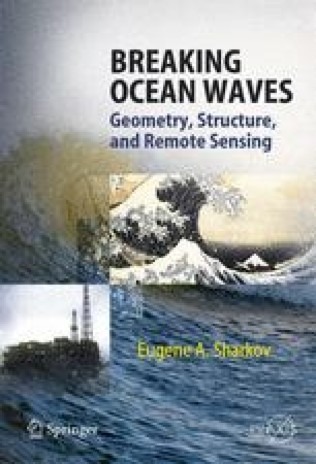
Breaking ocean waves : Geometry, structure and remote sensing
This book represents the most comprehensive description of the physical findings of an investigation into the spatio-temporal characteristics of the gravity of breaking waves and the foam activity in open sea by methods and instruments of optical and microwave remote sensing. Much emphasis is placed on the physical aspects of breaking processes necessary to measure the possibilities and limitations of remote sensing methods in specific observation cases of an oceanic surface. Numerous practical applications and illustrations are provided from air-borne, ship-borne and laboratory up-to-date experiments.
