



الصفحة 11
الصفحة 11

Bioethics in Law
The idea for Bioethics in Law began more than a decade ago, while I was studying social science and law. I was parti- larly interested in the collaborations that comprised social s- ence in law. Economic and social data in the pioneering Brandeis brief had been used to defend an early 20th-century labor law; surveys of consumer confusion had helped resolve trademark - fringement cases; psychologists’ predictions of future violence had informed capital sentencing decisions. Additionally, Kenneth Clark’s “doll studies,” cited by the Supreme Court in Brown v. Board of Education, had helped change the course of American 1 history.
Bioeconomy and Global Inequalities Socio-Ecological Perspectives on Biomass Sourcing and Production
This book explores bioeconomy and bioenergy policies across South America, Asia and Europe. It discusses how a transition away from a fossil and towards a bio-based economic order alters, reinforces and challenges socio-ecological inequalities. A series of conceptual discussions and case studies with a multidisciplinary background in the Social Science illuminate how the deployment of biomass sources from the agricultural and forestry sectors affect societal changes concerning knowledge production, land and labour relations, political participation and international trade
Biodiversity in Enclosed Seas and Artificial Marine Habitats ; Proceedings of the 39th European Marine Biology Symposium, held in Genoa, Italy, 21-24 July 2004
The main themes of the Symposium were biodiversity in enclosed and semi-enclosed seas and artificial habitats, and the restoration of degraded systems. These themes are highly relevant today both from a basic scientific point of view and from an applied approach. The papers dealing with the first theme represent current research and concerns about marine biodiversity in enclosed seas and will have wide appeal to all those interested in understanding and preserving the biodiversity of the seas and in particular of the Mediterranean and Black Seas. The papers in the second theme represent a synthesis of up-to-date knowledge on artificial habitats and how they can contribute to protection of coastal marine ecosystems, to enhancement of species diversity and biological resources and to restoration of degraded marine environments.

Big Data and Global Trade Law
Explores the relevance of global trade law for data, big data and cross-border data flows. Contributing authors from different disciplines including law, economics and political science analyze developments at the World Trade Organization and in preferential trade venues by asking what future-oriented models for data governance are available and viable in the area of trade law and policy. The collection paints the broad picture of the interaction between digital technologies and trade regulation as well as provides in-depth analyses of critical to the data-driven economy issues, such as privacy and AI, and different countries' perspectives.
Beyond Kyoto : A new global climate certificate system : Continuing Kyoto commitsments or a global ´Cap and Trade´ scheme for a sustainable climate policy?
This book shows how humankind can ‘prevent dangerous interference with the c- mate system’ without dangerous interference with the global economic system. In the two underlying studies on behalf of the Ministry of Environment and Transport of i the German federal state of Baden-Württemberg, the results have been elaborated through scientific evaluation of different climate protection systems and intensive developmental work on an efficient climate protection system. The results will be presented in nine chapters according to the following nine basic R&D steps: 1. Quantifying the ‘ultimate climate objective’ of the world community in order ‘to prevent dangerous interference with the climate system,’ thus achieving climate sustainability; 2. Development of a comprehensive standard system for evaluating the prospect of success for different climate protection systems; 3. Based on this scientific standard system, evaluation of the current Kyoto system and of the most important proposals for ‘incremental regime evolution’ of the Kyoto system. Unfortunately, it must be noted that these systems are incapable of achi- ing climate sustainability; 4. Evaluating three proposals for ‘structural regime change’ of the Kyoto system. Following this objective evaluation process and numeric comparison of the diff- ent proposals, 5. Description of the eight basic elements of GCCS and its in-depth ‘critical asse- ment;’ 6.
Benchmarking, Temporal Distribution, and Reconciliation Methods for Time Series
This book discusses the statistical methods most often applied for such adjustments, ranging from ad hoc procedures to regression-based models. The latter are emphasized, because of their clarity, ease of application, and superior results. Each topic is illustrated with many real case examples. In order to facilitate understanding of their properties and limitations of the methods discussed, a real data example, the Canada Total Retail Trade Series, is followed throughout the book.This book brings together the scattered literature on these topics and presents them using a consistent notation and a unifying view.
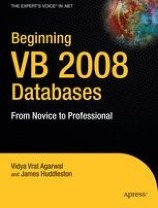
Beginning VB 2008 Databases : From novice to professional
Beginning VB 2008 Databases teaches you everything you need to know about relational databases, SQL, and ADO.NET 2.0, giving you a sound start in developing console and Windows database applications. The book also includes chapters on the SQL Server XML data type and the LINQ enhancements to the next version of Visual Basic. In addition to teaching you database basics like using SQL to communicate with databases, this book provides you with detailed, code-practical techniques to access data in Visual Basic 2008 across a range of coding situations. Code-heavy and full of practical detail, this book has been fully revised and upgraded for .NET 3.5 and offers you the best contemporary practice in this core programming area, so that you'll find yourself using it in nearly all your .NET projects.
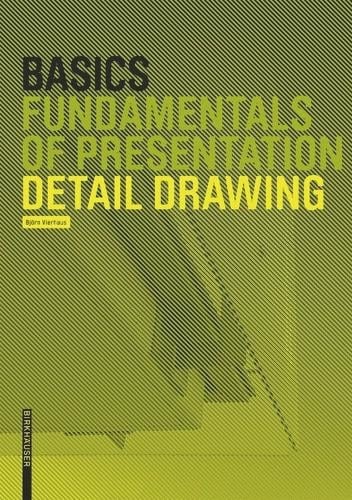
BASICS fundamentals of presentation : Detail drawing
Detailed drawings are developed on the basis of the working drawings; they form an important part of the specification and contain precise information for the tradesmen, indicating how materials are to be used and how they are to be joined. Drawings are produced in various degrees of detail. Depending on the function of the drawings, they are produced in scales from 1:20 to 1:1 in order to define the materials and method of joining, and to better illustrate the various dimensions. Basics Detailed Drawings explains, step by step, how to compose detailed designs and produce correct construction drawings, using clear examples

Basic & Clinical Pharmacology
Covers the important concepts students need to know about the science of pharmacology and its application to clinical practice. This edition has been extensively updated to provide expanded coverage of transporters, pharmacogenomics, and new drugs Delivers the knowledge and insight needed to excel in every facet of pharmacology!. Encompasses all aspects of medical pharmacology, including botanicals and over-the-counter drugs Major revisions of the chapters on immunopharmacology, antiseizure, antipsychotic, antidepressant, antidiabetic, anti-inflammatory, and antiviral drugs, prostaglandins, and central nervous system neurotransmitters New chapter on the increasingly relevant topic of cannabis pharmacology Each chapter opens with a case study, covers drug groups and prototypes, and closes with summary tables and diagrams that encapsulate important information Revised full-color illustrations provide more information about drug mechanisms and effects and help clarify important concepts Trade Name/Generic Name tables are provided at end of each chapter for easy reference when writing a chart order or prescription Includes descriptions of important new drugs released through May 2019 New and updated coverage of general concepts relating to recently discovered receptors, receptor mechanisms, and drug transporters
Banking for Family Business: A New Challenge for Wealth Management
Hints of globalization have actually been around for several decades, even though they made only a modest impact; however, the availability of global capital and advances in communication technology have emp- sized the process of internationalization and the tools available to connect and integrate business activities to answer to more complex needs of c- ents. Moreover, the financial scandals and the review of mutual fund trade activity in the US by the Attorney General Elliot Spitzer have highlighted the importance to focus all efforts on renewing the confidence of prof- sional investors and their clients who have entrusted their capital to asset managers. Therefore, there is a growing need in the market to reinforce the concept of “Shared Positive Values” among the entire industry and among its stakeholders.
B2B eCommerce : Basics, Business Models and Best Practices in Business-to-Business Online Trade
Covers the basics of business-to-business (B2B) eCommerce, where similar principles of customer targeting can be observed as in B2C eCommerce. Gerrit Heinemann highlights the specifics and business models of B2B eCommerce, analyzes the digital challenges and shows the consequences and opportunities for online sales in B2B. Recognised best-practice examples illustrate how successful B2B eCommerce can work and which risks have to be considered.
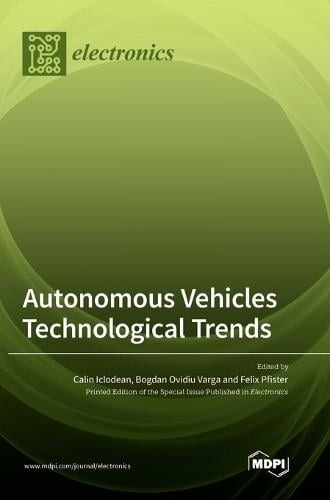
Autonomous vehicles technological trends
The automotive industry has always been synonymous with research and innovation, but nowadays the industry is adding pressure and is establishing the agenda of the researchers from the field. Visions have been provided, and the hardware and the software exist; the only question remaining is: “who is going to deliver”? To answer this question, we encouraged scientists, researchers, industry specialists, and academics to share their vision of autonomous vehicles. What will the platform look like? What kind of hardware and software is most suitable? Who will make the connection between these two interdependent environments (and how), so that in the end the AI will define the process? These are the pressing issues of the current moment, and this Special Issue will help all those interested in the topic to promote their vision and ideas.

At the crossroads : The world trading system and the Doha Round
Since its foundation in 1995 the legitimacy of the WTO – and herewith the notion of organising global trade on the basis of herewith the notion of organising global trade on the basis of concepts like trade-liberalisation, treaty-based rule of law and concepts like trade-liberalisation, treaty-based rule of law and enforceability – is challenged for very different reasons this volume not only documents the proceedings of this conference but, against the backdrop of the ongoing efforts to revive the Doha Round wants to be understood as some sort of stocktaking: What did really go wrong in Cancún? Where does the WTO stand today? Has there been any progress made since? And, finally: Is there any chance left to reach the ambitions goals postulated by the Doha Development Agenda? These and other, related questions are being discussed in the volume at hand.

Assetization : Turning Things into Assets in Technoscientific Capitalism
In this book, scholars from a range of disciplines argue that the asset—meaning anything that can be controlled, traded, and capitalized as a revenue stream—has become the primary basis of technoscientific capitalism. An asset can be an object or an experience, a sum of money or a life form, a patent or a bodily function. A process of assetization prevails, imposing investment and return as the key rationale, and overtaking commodification and its speculative logic. Although assets can be bought and sold, the point is to get a durable economic rent from them rather than make a killing on the market. Assetization examines how assets are constructed and how a variety of things can be turned into assets, analyzing the interests, activities, skills, organizations, and relations entangled in this process.
Asias New Institutional Architecture : Evolving Structures for Managing Trade, Financial, and Security Relations
This book investigates the origins and evolution of Asia’s new institutional architecture in trade, finance, and security from both a theoretical and empirical perspective. The traditional institutional equilibrium in Asia has come under heavy strain in the "post triple shocks period" - the post-Cold War, the post-financial crisis of 1997-98, and the post-9-11 attacks. The new dynamics of rivalry and cooperation among states at both the intraregional and transregional levels is now shaping a new institutional architecture. Political and business leaders from Northeast and Southeast Asia interact with each other more frequently. South Asia’s participation in the rest of Asia in recent years is truly impressive. As we show, the future institutional trajectory of Asia is still open, but we believe that the book provides a timely examination of key shifts in the region. In doing so, our hope is to provide policymakers and analysts with an institutional road map for the future.

Artificial Intelligence in Intelligent Systems ; Proceedings of 10th Computer Science On-line Conference 2021, Vol.2
This book constitutes the refereed proceedings of the artificial intelligence in intelligent systems section of the 10th Computer Science Online Conference 2021 (CSOC 2021), held online in April 2021. Artificial intelligence in intelligent systems topics are presented in this book. Modern hybrid and bio-inspired algorithms and their application are discussed in selected papers.
Artificial Intelligence and International Economic Law : Disruption, Regulation, and Reconfiguration
This book was finalized while countries around the world were still confronting a global public health crisis caused by the COVID-19 pandemic. Many came to rely on digital services as an infrastructure for social interaction and professional endeavors, including academic and educational work. The pandemic seems to have precipitated a further shift towards digital technologies and artificial intelligence. It is our hope that this book will contribute to an informed discussion about the relevance of and implications for international economic law beyond the pandemic"
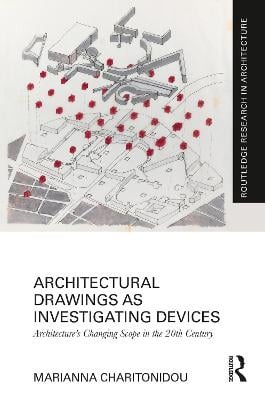
Architectural drawings as investigating devices : Architecture’s changing scope in the 20th century
Explores how the changing modes of representation in architecture and urbanism relate to the transformation of how the addressees of architecture and urbanism are conceived. Diagnoses the dominant epistemological debates in architecture and urbanism during the 20th and 21st centuries. It traces their transformations, paying special attention to Le Corbusier and Ludwig Mies van der Rohe’s preference for perspective representation, to the diagrams of Team 10 architects, to the critiques of functionalism, and the upgrade of the artefactual value of architectural drawings in Aldo Rossi, John Hejduk, Peter Eisenman, and Oswald Mathias Ungers, and, finally, to the reinvention of architectural programme through the event in Bernard Tschumi and the Office for Metropolitan Architecture (OMA). Particular emphasis is placed on the spirit of truth and clarity in modernist architecture, the relationship between the individual and the community in post-war era architecture, the decodification of design process as syntactic analogy and the paradigm of autonomy in the 1970s and 1980s architecture, the concern about the dynamic character of urban conditions and the potentialities hidden in architectural programme in the post-autonomy era.

An Archaeology of Colonial Identity : Power and Material Culture in the Dwars Valley, South Africa
This book is the based on the work of many people, and while I discuss many of them in the general context of this book in Chapter 1. The backbone of the book is based on a project, 'Farm Lives' conducted between 1999 and 2002, funded exclusively by the McDonald Institute for Archaeolog-ical Research at the University of Cambridge.
Alternative investments
Alternative Investments is the definitive guide to understanding non-traditional asset classes. Alternatives are a disparate group of investments that are distinguished from long-only, publicly traded investments in stocks, bonds, and cash (often referred to as traditional investments). Alternative investments include real estate, commodities, infrastructure, and other non-traditional investments such as private equity or debt and hedge funds.
