



الصفحة 105
الصفحة 105
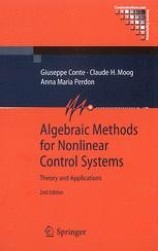
Algebraic Methods for Nonlinear Control Systems
A self-contained introduction to algebraic control for nonlinear systems suitable for researchers and graduate students.The most popular treatment of control for nonlinear systems is from the viewpoint of differential geometry yet this approach proves not to be the most natural when considering problems like dynamic feedback and realization. Professors Conte, Moog and Perdon develop an alternative linear-algebraic strategy based on the use of vector spaces over suitable fields of nonlinear functions. This algebraic perspective is complementary to, and parallel in concept with, its more celebrated differential-geometric counterpart.Algebraic Methods for Nonlinear Control Systems describes a wide range of results, some of which can be derived using differential geometry but many of which cannot.

Airglow as an Indicator of Upper Atmospheric Structure and Dynamics
The book summarizes international progress over the last few decades in upper atmosphere airglow research. Measurement methods, theoretical concepts and empirical models of a wide spectrum of upper atmospheric emissions and their variability are considered. The book contains a detailed bibliography of studies related to the upper atmosphere airglow.
AI*IA 2005 : Advances in artificial intelligence ; 9th congress of the Italian Association for Artificial Intelligence Milan, Italy, September 21-23, 2005, Proceedings
This volume collects the papers selected for presentation at the IX Congress of the Italian Association for Arti?cial Intelligence (AI*IA), 2005 On the one hand this congress continues the tradition of AI*IA in organizing its biannual s- enti?c meeting from 1989; on the other hand, this edition is a landmark in the involvement of the international community of arti?cial intelligence (AI), directly involving a broad number of experts from several countries in the P- gramCommittee. Moreover,the peculiar nature of scienti?c researchin arti?cial intelligence (which is intrinsically international) and several consolidated int- national collaborations in projects and mobility programs allowed the collection and selection of papers from many di?erent countries, all around the world, enlarging the visibility of the Italian contribution within this research ?eld. Arti?cial intelligence is today a growing complex set of conceptual, theor- ical, methodological, and technological frameworks, o?ering innovative com- tational solutions in the design and development of computer-based systems. Within this perspective, researchers working in this area must tackle a broad range of knowledge about methods, results, and solutions coming from di?erent classical areas of this discipline. The congress was designed as a forum allowing researchers to present and discuss specialized results as general contributions to AI growth.
AI in learning : Designing the future
AI (artificial intelligence) is predicted to radically change teaching and learning in both schools and industry causing radical disruption of work. AI can support well-being initiatives and lifelong learning but educational institutions and companies need to take the changing technology into account. Moving towards AI supported by digital tools requires a dramatic shift in the concept of learning, expertise and the businesses built off of it. Based on the latest research on AI and how it is changing learning and education, this book will focus on the enormous opportunities to expand educational settings with AI for learning in and beyond the traditional classroom. This book also introduces ethical challenges related to learning and education, while connecting human learning and machine learning.
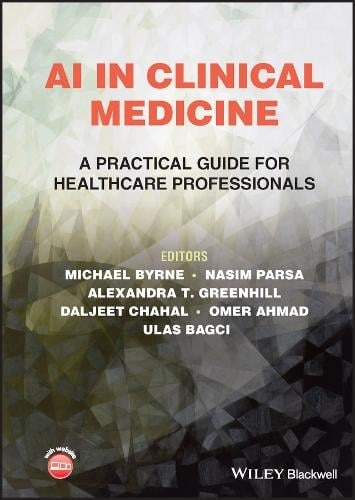
AI in clinical medicine : A practical guide for healthcare professionals
A Practical Guide for Healthcare Professionals is the definitive reference book for the emerging and exciting use of AI throughout clinical medicine. AI in Clinical Medicine: A Practical Guide for Healthcare Professionals is divided into four sections. Section 1 provides readers with the basic vocabulary that they require, a framework for AI, and highlights the importance of robust AI training for physicians. Section 2 reviews foundational ideas and concepts, including the history of AI. Section 3 explores how AI is applied to specific disciplines. Section 4 describes emerging trends, and applications of AI in medicine in the future.
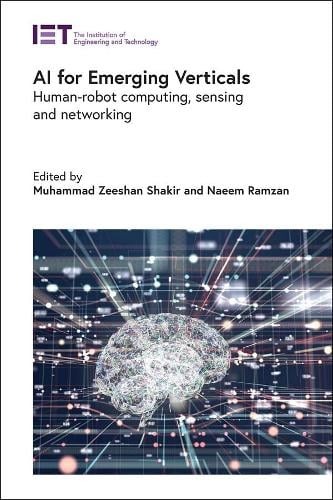
AI For Emerging Verticals : Human-robot computing, sensing and networking
Artificial intelligence (AI) and machine learning (ML) will play a major role. By adopting AI software and services, businesses can create predictive strategies, enhance their capabilities, better interact with customers, and streamline their business processes. Explores novel concepts and cutting-edge research and developments towards designing these fully automated advanced digital systems. Fostered by technological advances in artificial intelligence and machine learning, such systems potentially have a wide range of applications in robotics, human computing, sensing and networking. The chapters focus on models and theoretical approaches to guarantee automation in large multi-scale implementations of AI and ML systems; protocol designs to ensure AI systems meet key requirements for future services such as latency; and optimisation algorithms to leverage the trusted distributed and efficient complex architectures.
AI and IoT for smart city applications
Provides a valuable combination of relevant research works on developing smart city ecosystem from the artificial intelligence (AI) and Internet of things (IoT) perspective. The technical research works presented here are focused on a number of aspects of smart cities: smart mobility, smart living, smart environment, smart citizens, smart government, and smart waste management systems as well as related technologies and concepts. This edited book offers critical insight to the key underlying research themes within smart cities, highlighting the limitations of current developments and potential future directions.
Agroecological transitions : From theory to practice in local participatory design
There is wide agreement on the need to change the prevalent agricultural models, given their negative impacts and their incompatibility with current societal issues. Agroecological transition has been promoted as a potential solution to the ecological, social and economic problems generated by these models. It however involves a systemic, multi-scale and transdisciplinary process. Due to this complexity, the overall picture of what farms and food systems “actually are” and “might be” may not be apparent at the individual level. Yet individuals’ knowledge and values provide complementary insights on how to proceed in deepening ecological modernisation. Expertise can also provide landmarks to be considered in that process. Because local stakeholders’ experience and skills are key resources in the adaptation and adoption of agroecological transition, new conceptual and methodological frameworks and tools have to be developed to support them in the design process of such a complex transition. This book presents feedback from the ‘Territorial Agroecological Transition in Action’- TATA-BOX research project, which was devoted to these specific issues.
Agricultural value chains in India : Ensuring competitiveness, inclusiveness, sustainability, scalability, and improved finance
This book provides a clear holistic conceptual framework of CISS-F (competitiveness, inclusiveness, sustainability, scalability and access to finance) to analyse the efficiency of value chains of high value agricultural commodities in India. It is based on the understanding that agriculture is an integrated system that connects farming with logistics, processing and marketing. Farmer’s welfare being central to any agricultural policy makes it very pertinent to study how a value chain works and can be strengthened further to realize this policy goal.
Agent-oriented software engineering V ; 5th International workshop, AOSE 2004, New York, NY, USA, July 2004, revised selected papers
The explosive growth of application areas such as electronic commerce, ent- prise resource planning and mobile computing has profoundly and irreversibly changed our views on software systems. Nowadays, software is to be based on open architectures that continuously change and evolve to accommodate new components and meet new requirements. Software must also operate on di?- ent platforms, without recompilation, and with minimal assumptions about its operating environment and its users. Furthermore, software must be robust and ¨ autonomous, capable of serving a naive user with a minimum of overhead and interference. Agent concepts hold great promise for responding to the new realities of software systems. They o?er higher-level abstractions and mechanisms which address issues such as knowledge representation and reasoning, communication, coordination, cooperation among heterogeneous and autonomous parties, p- ception, commitments, goals, beliefs, and intentions, all of which need conceptual modelling. On the one hand, the concrete implementation of these concepts can lead to advanced functionalities.
Agent-oriented information systems II ; 6th International bi-conference workshop, AOIS 2004, Riga, Latvia, June 8, 2004 and New York, NY, USA, July 20, 2004, revised selected papers
Information systems have become the backbone of all kinds of organizations - day. In almost every sector – manufacturing, education, health care, government and businesses large and small – information systems are relied upon for - eryday work, communication, information gathering and decision-making. Yet, the in?exibilities in current technologies and methods have also resulted in poor performance, incompatibilities and obstacles to change. As many organizations are reinventing themselves to meet the challenges of global competition and e-commerce, there is increasing pressure to develop and deploy new technologies that are ?exible, robust and responsive to rapid and unexpected change. Agent concepts hold great promise for responding to the new realities of - formation systems. They o?er higher-level abstractions and mechanisms which address issues such as knowledge representation and reasoning, communication, coordination, cooperation among heterogeneous and autonomous parties, p- ception, commitments, goals, beliefs, intentions, etc., all of which need conc- tual modelling. On the one hand, the concrete implementation of these concepts can lead to advanced functionalities.
Agent-based Supply Network Event Management
Supply Chain Event Management (SCEM)" is one of the major topics in application-oriented Supply Chain Management. However, many solutions lack conceptual precision and currently available client-server SCEM-systems are ill-suited for complex supply networks in today's business environment,In this book a thorough analysis of the event management problem domain is the starting point to develop a generic agent-based approach to Supply Network Event Management. The concept is illustrated with prototypical implementations and assessed in a multi-dimensional evaluation of potential benefits. The main focus lies on practical issues of event management (e.g. semantic interoperability) and economic benefits to be achieved with agent technology in this state-of-the-art problem domain.

Agent Communication II ; International Workshops on Agent Communication, AC 2005 and AC 2006, Utrecht, Netherlands, July 25, 2005, and Hakodate, Japan, May 9, 2006, Selected and Revised Papers
Although everyone recognizes communication as a central concept in mul- agents, many no longer see agent communication as a research topic. Unf- tunately there seems to be a tendency to regard communication as a kind of information exchange that can easily be covered using the standard FIPA ACL. However, the papers in this volume show that research in agent communication is far from ?nished. If we want to develop the full potential of multi-agent s- tems, agent communication should also develop to a level beyond parameter or value passing as is done in OO approaches! In this book we present the latest collection of papers around the topic of agentcommunication.Thecollectioncomprisesofthebestpapersfromtheagent communication workshops of 2005 and 2006, enriched with a few revised agent communication papers from the AAMAS conference.

Agent and multi-agent systems : Technologies and applications ; 1st KES International Symposium, KES-AMSTA 2007, Wroclaw, Poland, May 31-June 1, 2007, Proceedings
The aim of the symposium was to provide an international forum for scientific - search in the technologies and applications of agent and multi-agent systems. Agents and multi-agent systems are related to the modern software which has long been r- ognized as a promising technology for constructing autonomous, complex and intel- gent systems. A key development in the field of agent and multi-agent systems has been the specification of agent communication languages and formalization of - tologies. Agent communication languages are intended to provide standard decla- tive mechanisms for agents to communicate knowledge and make requests of each other, whereas ontologies are intended for conceptualization of the knowledge - main.

Affordable housing for smart villages
Initiates a fresh discussion of affordability in rural housing set in the context of the rapidly shifting balance between rural and urban populations. It conceptualises affordability in rural housing along a spectrum that is interlaced with cultural and social values integral to rural livelihoods at both personal and community level. Developed around four intersecting themes: explaining houses and housing in rural settings; exploring affordability in the context of aspirations and vulnerability; rural development agendas involving housing and communities; and construction for resilience in rural communities, the book provides an overview of some of the little understood and sometimes counter-intuitive best practices on rural affordability and affordable housing that have emerged in developing economies over the last thirty years.
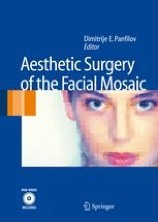
Aesthetic Surgery of the Facial Mosaic
This authoritative reference book assembles the experience of an international faculty of authors, each of whom has performed several thousand facelifts, i.e. procedures to rejuvenate and harmonize the human face. All procedures in this regard are covered and the text is accompanied by extensive artwork and photographs. The authors share their experience, including tips and tricks, as well as ways to avoid complications and pitfalls. Special emphasis is given to the concept of looking at the face as a mosaic, i.e. treating its individual parts in a harmonic way and maintaining mimic units. Combining different methods.
Advertising management : Concepts, theories, research and trends
Explores the concept of advertising and the different ways advertising is understood and evaluated. It dives deep into planning, designing, and executing advertising campaigns on different mediums. It discusses the theoretical and research parts of advertising by critically examining how over the years various hierarchical models and theories are developed by advertising experts. It examines various models and theories that explain why and how advertising is successful in persuading customers target audiences to buy a product or accept an idea for behavioural change.
Advertising in contemporary consumer culture
This is the first scholarly book dedicated to reading the work of contemporary filmmakers and their impact on modern marketing and advertising. Drawing from consumer culture theory, film and media studies, the author presents an expansive analysis of a range of renowned filmmakers who have successfully applied their aesthetic and narrative vision to commercial advertising. It challenges some traditional advertising tropes and sheds light on the changing nature of advertising in the contemporary media context. Utilising Deleuze and Guattari’s notion of assemblage, This book addresses themes of spatiality and time, narrative and aesthetics and consumer reception within a new frame of reference that re-contextualises classical concepts of genre, platform and aesthetic categories. These diverse elements are embedded into a larger discussion of the resonance of contemporary advertising for consumer culture and the implications of the hybridity characteristic of convergent media platforms for understanding the potential of advertising in the twenty-first century.

Advertising culture and translation : From colonial to global
A first comprehensive study combining and integrating advertising, culture and translation within the framework of colonial, Commonwealth, and postcolonial studies, and globalization. It addresses a number of controversial issues evident in two relatively young disciplines, as a result of decades of research and teaching in university courses. A cross-cultural approach to translational issues and the translatability of advertising cohesively is adopted here, exploring the dynamics of the conflict between the 'centre' and the 'periphery'. It introduces the concept of advertising English as lingua franca (AELF), marking new trends in the domain of varieties of English around the world (VEAW). The data examined here show the ambivalent polarity conditioning advertising and translation: both have been mutually exclusive, and both have been subject to bans, censorship and ideological control, racism, propaganda, and stereotyping. In their fundamental principles and concepts of theories and applications, however, neither discipline cannot exist outside a free market and total freedom of expression and trust
Advancing Social Simulation: The First World Congress
Agent-based modeling and social simulation have emerged as both developments of and challenges to the social sciences. The developments include agent-based computational economics and investigations of theoretical sociological concepts using formal simulation techniques. Among the challenges are the development of qualitative modeling techniques, implementation of agent-based models to investigate phenomena for which conventional economic, social, and organizational models have no face validity, and the application of physical modeling techniques to social processes. Bringing together diverse approaches to social simulation and research agendas.
