- بحث بسيط
- بحث متقدم
إجمالي الكتب: 1837 - 1854 / 3461
إجمالي الكتب: 1837 - 1854 / 3461
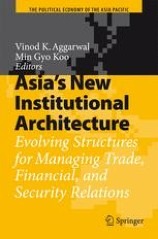
Asias New Institutional Architecture : Evolving Structures for Managing Trade, Financial, and Security Relations
This book investigates the origins and evolution of Asia’s new institutional architecture in trade, finance, and security from both a theoretical and empirical perspective. The traditional institutional equilibrium in Asia has come under heavy strain in the "post triple shocks period" - the post-Cold War, the post-financial crisis of 1997-98, and the post-9-11 attacks. The new dynamics of rivalry and cooperation among states at both the intraregional and transregional levels is now shaping a new institutional architecture. Political and business leaders from Northeast and Southeast Asia interact with each other more frequently. South Asia’s participation in the rest of Asia in recent years is truly impressive. As we show, the future institutional trajectory of Asia is still open, but we believe that the book provides a timely examination of key shifts in the region. In doing so, our hope is to provide policymakers and analysts with an institutional road map for the future.
2008
انكليزي
Business Administration
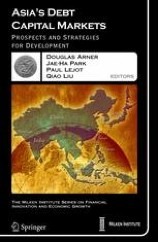
Asias debt capital markets : Prospects and strategies for development
The book has three parts. Part I describes the characteristics and historical origins of these markets. Part II examines the contemporary bond markets and shows how they contribute to general welfare, describes the relationship between the banking sector and capital markets, and assesses prospects for reform in Asia's governmental and corporate debt markets. Part III explains the micro-level impediments and obstacles that must be the first targets of any reform efforts, provides an appraisal of attempts at regional cooperation to stimulate structural reform, and lastly contributes proposals to accelerate the growth and reach of bond markets throughout Asia.
2006
انكليزي
Business Administration
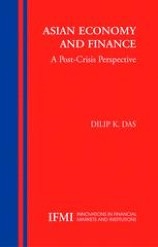
Asian economy and finance : A post-crisis perspective
Topicality of Asian economy has refused to fade for almost four decades; if anything it has been levitating. The Asian economy has changed markedly since the economic and financial crisis of 1997-1998 and is continuing to evolve. As a scholarly subject matter, Asian economy has not stopped attracting academicians, policy mandarins, decision makers in the arena of business and students of Asian economy. The Asian crisis was a cataclysmic event for the region and brought to the surface several systemic limitations, like those in the financial sector, corporate governance, regulatory oversight, legal framework, and exchange rate management. Managers of Asian economy need to get to the bottom of these acutely problematical systemic issues. Additionally, Asian economies need to change with the demands of time and devise their post-crisis development strategy. Asia’s growth model, that served it so well for four decades, is overdue for renewal so that it can re-strengthen its bonds with the ever-evolving regional and global economic reality. The old growth model is likely to be less relevant and effective in the post-crisis future of the Asian economies. It is sure to run into the wall of diminishing returns.
2005
انكليزي
Business Administration
Arts, Sciences, and Economics : A Historical Safari
This book has a rather long-winding history. It is not like anything else the present author ever wrote, as all the rest is theoretical economics in a d- tinctively mathematical dress. For the emergence of the following pages, there are several people, - cept the author, who are to have the credit, or perhaps the blame.
2006
انكليزي
Business Administration
Artificiality and sustainability in entrepreneurship : Exploring the unforeseen, and paving the way to a sustainable future
Explores the past, present, and future of artificiality and sustainability in entrepreneurship – the unforeseen consequences and ways to advance to a sustainable future. In particular, it connects artificiality, sustainability and entrepreneurship, intertwining artificial with the specific phenomenon of those novel digital technologies that provoke continuous and significant change in our lives and business. Unlike digital entrepreneurship research, which focuses on digital technology development and management, this book covers processes and mechanisms of sustainable adaptability of entrepreneurs, the business logic of start-ups, and the collaborative behaviours under the mass digital transformation, including the prevalence of artificial intelligence. Some of the questions that this book answers are as follows: How has entrepreneurship reacted to such challenges previously? What lessons have been learned and need to be carried forward? How can entrepreneurship and the artefacts of entrepreneurship respond to current challenges? What should be the mindset of the entrepreneur to assure sustainable adaptation? How to embrace and embed the new business logic?
2023
انكليزي
Business Administration
Artificial markets modeling : Methods and applications
Agent-based computational modeling with its intrinsic multidisciplinary approach is gaining increasing recognition in the social sciences, particularly in economics, business and finance. This volume is devoted to recent contributions to the field from both the social sciences and computer sciences.
2007
انكليزي
Business Administration
Artificial Intelligence, Business and Civilization : Our Fate Made in Machines
Looks at what exactly artificial intelligence is, how it can be classified, how it differentiates from other concepts such as machine learning, big data, blockchain, or the Internet-of-Things, and how it has evolved and might evolve over time.
2022
انكليزي
Business Administration
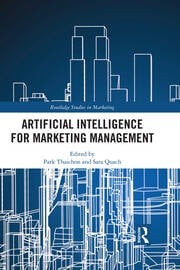
Artificial intelligence for marketing management
Artificial intelligence (AI) has driven businesses to adopt new business practices rapidly, enhance product development and services, has helped to power AI-based market intelligence and customer insights, and improve customer relationship management. This timely book addresses the use of AI in marketing.
2022
انكليزي
Business Administration
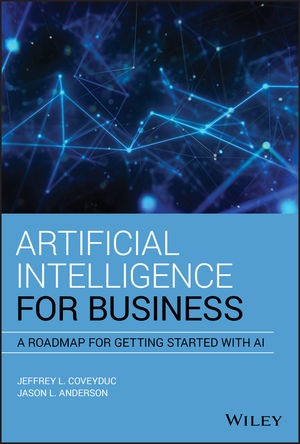
Artificial intelligence for business : A roadmap for getting started with AI
Artificial Intelligence for Business: A Roadmap for Getting Started with AI will provide the reader with an easy to understand roadmap for how to take an organization through the adoption of AI technology. It will first help with the identification of which business problems and opportunities are right for AI and how to prioritize them to maximize the likelihood of success. Specific methodologies are introduced to help with finding critical training data within an organization and how to fill data gaps if they exist.
2020
انكليزي
Business Administration
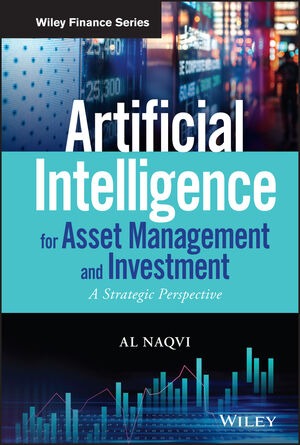
Artificial intelligence for asset management and investment : A strategic perspective
The rise of artificial intelligence is nothing short of a technological revolution. AI is poised to completely transform asset management and investment banking, yet its current application within the financial sector is limited and fragmented. Existing AI implementations tend to solve very narrow business issues, rather than serving as a powerful tech framework for next-generation finance. Artificial Intelligence for Asset Management and Investment provides a strategic viewpoint on how AI can be comprehensively integrated within investment finance, leading to evolved performance in compliance, management, customer service, and beyond.
2021
انكليزي
Business Administration
Artificial Intelligence and COVID Effect on Accounting
This book considers the effects of COVID-19 on accounting, particularly with regard to the role of artificial intelligence in accounting in the post-pandemic business environment. The contributions in the book consider a variety of sectors that have been affected by the pandemic, such as the stock market, forensic accounting, Bitcoin, as well as the economic and educational responses to the pandemic and the aftermath felt by both developing and developed countries.
2022
انكليزي
Business Administration
Artificial economics : Agent-based methods in finance, game theory and their applications
The purpose of this book is to give an up-to date view of the scientific production in the fields of Agent-based Computational Economics (mainly in Market Finance and Game Theory). Based on communications given at AE'2005 (Lille, USTL, France), this book offers a wide panorama of recent advances in ACE (both theoretical and methodological) that will interest academics as well as practitioners.
2006
انكليزي
Business Administration
ARIS design platform : Getting started with BPM
Containing tips, techniques and short cuts gained from practical experience, this book show how to use ARIS in an easy way, supporting smart methods and smart models, and displays how ARIS can be used as a powerful tool for BPM.
2007
انكليزي
Business Administration
ARIS design platform : Advanced process modelling and administration
ARIS is ranked as the leading Business Process Modelling tool in the Gartner Quadrant for Business Process Analysis and Optimization. The ARIS Design Platform is being used as a business process management (BPM) tool for projects in BPM, quality management, business analysis and design, software development, implementation of service-oriented architectures and so forth. Following on from Rob Davis’ successful introductory text, ARIS Design Platform: Getting Started with BPM, this new book covers in detail some of the more advanced concepts of using ARIS Business Architect in the new ARIS 7 Design Platform. Written in a reader-friendly style, it contains detailed explanations of key concepts combined with numerous examples, hints and tips gained from many years of practical experience of using ARIS.
2008
انكليزي
Business Administration
Approaching consumer culture : Global flows and local contexts
This collection analyzes the impact of Western consumer culture on local cultures and consumption in Southeast Europe and East Asia. Cultural, historical, economic and sociopolitical contexts are examined regarding buying behaviors, usage and customization practices and consumer activism, specifically in Bulgaria, Serbia, and Romania as cultures continue to evolve in the post-socialist era, and in China and Japan as a continuation of movements toward modernity and progress. Surprising and thought-provoking contrasts stand out as consumers balance the global with the local in terms of clothing, technology, luxury items, and food.
2018
انكليزي
Business Administration
Applied Research in Uncertainty Modeling and Analysis
For a long time uncertainty has been considered synonymous with random, stochastic, statistic, or probabilistic. Since the early sixties views on uncertainty have become more heterogeneous. In the past forty years numerous tools that model uncertainty, above and beyond statistics, have been proposed by several engineers and scientists. The tool/method to model uncertainty in a specific context should really be chosen by considering the features of the phenomenon under consideration, not independent of what is known about the system and what causes uncertainty. In this fascinating overview of the field, the authors provide broad coverage of uncertainty analysis/modeling and its application. Applied Research in Uncertainty Modeling and Analysis presents the perspectives of various researchers and practitioners on uncertainty analysis and modeling outside their own fields and domain expertise. Rather than focusing explicitly on theory, the authors use real-world examples to demonstrate the strength of the chosen methodology. Applied Research in Uncertainty Modeling and Analysis concentrates on general aspects of uncertainty, modeling, and methods, and focuses on various applications, included Biomedical Engineering, Chemical Engineering, Structural Engineering, and Transportation Engineering.
2005
انكليزي
Business Administration
Applied Research in Environmental Economics
Sustainable development, climate policy, and biodiversity conservation are examples of issues on the current political agenda in many countries. These themes are also subject to economic research, and economic insights are increasingly finding their way into the design of environmental policy. Still, the reception of academic findings by policy makers as well as the timely identification of policy-relevant questions by economic researchers often seem to be problematic. This volume attempts to vitalise the exchange between policy makers and academics. It offers a snapshot of environmental economic research on a range of policy-relevant problems.
2005
انكليزي
Business Administration
Applied Econometrics with R
This is the first book on applied econometrics using the R system for statistical computing and graphics. It presents hands-on examples for a wide range of econometric models, from classical linear regression models for cross-section, time series or panel data and the common non-linear models of microeconometrics such as logit, probit and tobit models, to recent semiparametric extensions. In addition, it provides a chapter on programming, including simulations, optimization, and an introduction to R tools enabling reproducible econometric research.
2008
انكليزي
Business Administration
إجمالي الكتب: 1837 - 1854 / 3461