



الصفحة 10
الصفحة 10
Logica Universalis : Towards a General Theory of Logic
Signifies the arrival of a new renaissance in logic, a new revival not only of logic, but of the vision of logic as a unifying tool for science as a whole, including mathematics, physics, cosmology, computer science and AI. The book and the vision behind it give logic, conceived as a scientific study of rationality, new unifying power, new perspectives, and new horizons.Universal Logic is not a new logic, but a general theory of logics, considered as mathematical structures. The name was introduced about ten years ago, but the subject is as old as the beginning of modern logic: Alfred Tarski and other Polish logicians such as Adolf Lindenbaum developed a general theory of logics at the end of the 1920s based on consequence operations and logical matrices. The subject was revived after the flowering of thousands of new logics during the last thirty years: there was a need for a systematic theory of logics to put some order in this chaotic multiplicity.

Location Theory : A Unified Approach
Although modern location theory is now more than 90 years old, the focus of researchers in this area has been mainly problem oriented. However, a common theory, which keeps the essential characteristics of classical location models, is still missing. This monograph addresses this issue. A flexible location problem called the Ordered Median Problem (OMP) is introduced. For all three main subareas of location theory (continuous, network and discrete location) structural properties of the OMP are presented and solution approaches provided. Numerous illustrations and examples help the reader to become familiar with this new location model.

Linear Optimization Problems with Inexact Data
Linear programming attracted the interest of mathematicians during and after World War II when the first computers were constructed and methods for solving large linear programming problems were sought in connection with specific practical problems—for example, providing logistical support for the U.S. Armed Forces or modeling national economies. Early attempts to apply linear programming methods to solve practical problems failed to satisfy expectations. There were various reasons for the failure. One of them, which is the central topic of this book, was the inexactness of the data used to create the models. This phenomenon, inherent in most pratical problems, has been dealt with in several ways. At first, linear programming models used "average” values of inherently vague coefficients, but the optimal solutions of these models were not always optimal for the original problem itself. Later researchers developed the stochastic linear programming approach, but this too has its limitations. Recently, interest has been given to linear programming problems with data given as intervals, convex sets and/or fuzzy sets. The individual results of these studies have been promising, but the literature has not presented a unified theory. Linear Optimization Problems with Inexact Data attempts to present a comprehensive treatment of linear optimization with inexact data, summarizing existing results and presenting new ones within a unifying framework.
Linear and Nonlinear Programming
"Linear and Nonlinear Programming" is considered a classic textbook in Optimization. While it is a classic, it also reflects modern theoretical insights. These insights provide structure to what might otherwise be simply a collection of techniques and results, and this is valuable both as a means for learning existing material and for developing new results. One major insight of this type is the connection between the purely analytical character of an optimization problem, expressed perhaps by properties of the necessary conditions, and the behavior of algorithms used to solve a problem. This was a major theme of the first and second editions. Now the third edition has been completely updated with recent Optimization Methods. Yinyu Ye has written chapters and chapter material on a number of these areas including Interior Point Methods.
Level Crossing Methods in Stochastic Models
Since its inception in 1974, the level crossing approach for analyzing a large class of stochastic models has become increasingly popular among researchers. This volume traces the evolution of level crossing theory for obtaining probability distributions of state variables and demonstrates solution methods in a variety of stochastic models including: queues, inventories, dams, renewal models, counter models, pharmacokinetics, and the natural sciences. Results for both steady-state and transient distributions are given, and numerous examples help the reader apply the method to solve problems faster, more easily, and more intuitively.
Lean Management for Small and Medium Sized Enterprises : Adapting Operations to Changing Business Environment
Provides a step-by-step guide to implementing lean at SMEs using an approach that has been tested and fine-tuned at over a hundred organizations across India, South East Asia and the Middle East. The book approaches Lean through an implementation project cycle flow and enables the reader to understand the imperative for Lean, how to diagnose current operations, how to plan and deploy Lean and shows a path for long-term sustenance.

Lean Business Systems and Beyond ; 1st IFIP TC 5 Advanced Production Management Systems Conference (APMS’2006), Wroclaw, Poland, September 18-20, 2006
Includes : foundations of computer science; software theory and practice; education; computer applications in technology; communication systems; systems modeling and optimization; information systems; computers and society; computer systems technology; security and protection in information processing systems; artificial intelligence; and human-computer interaction. Proceedings and post-proceedings of referred international conferences in computer science and interdisciplinary fields are featured.
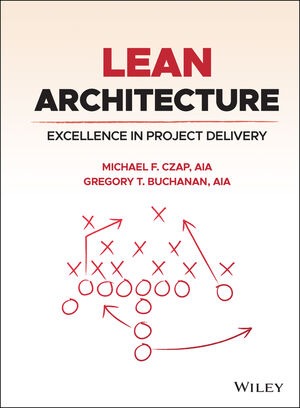
Lean Architecture : Excellence in Project Delivery
Shows readers a path to improve their project delivery via the application of lean concepts and process management. Authors Michael Czap and Gregory Buchanan challenge readers to reexamine their approach to architectural practice and projects by presenting a unique and compelling alternative. Readers will learn to: Maximize the use of their resources to deliver superior results in less time / Minimize waste, cost, and inefficiency in their firm’s operations / Move between radically different project scales while retaining efficient and effective processes

Leading edge technologies in fashion innovation : Product design and development process from materials to the end products to consumers
Offers cutting-edge knowledge on various design and product development related technologies, and applications of these technologies in fashion. Further, it envisions the future of these technologies when designing and engineering apparel-related products.
Large-scale group decision-making : State-to-the-art clustering and consensus paths
The proposed consensus models focus on the treatment of non-cooperative behaviors in the consensus-reaching process and explores the influence of trust loss on the consensus-reaching process.The logic behind is as follows: firstly, a clustering algorithm is adopted to reduce the dimension of decision-makers, and then, based on the clusters’ opinions obtained, a consensus-reaching process is carried out to obtain a decision result acceptable to the majority of decision-makers.

Large scale management of distributed systems ; 17th IFIP/IEEE International Workshop on distributed systems: operations and management, DSOM 2006, Dublin, Ireland, October 23-25, 2006, Proceedings
Presents the proceedings of the 17 IFIP/IEEE International Workshop on Distributed Systems : Operations and Management (DSOM 2006), which was held rd th in Dublin, Ireland during October 23 to 25 , 2006. In line with its reputation as one of the pre-eminent fora for the discussion and debate of advances of distributed systems management, the 2006 iteration of DSOM brought together an international audience of researchers and practitioners from both industry and academia. th DSOM 2006 was the 17 in a series of annual workshops, and it followed the footsteps of highly successful previous meetings, the most recent of which were held in Barcelona, Spain (DSOM 2005), Davis, USA (DSOM 2004), Heidelberg, Germany (DSOM 2003), Montreal, Canada (DSOM 2002) and Nancy, France (DSOM 2001). The goal of the DSOM workshops is to bring together researchers in the areas of networks, systems and services management, from both industry and academia, to discuss recent advances and foster future growth in these ?elds. In contrast to the larger management symposia, such as Integrated Management (IM) and Network Operations and Management (NOMS), the DSOM workshops are organised as sing- track programmes in order to stimulate interaction among participants.
Lagrangian Probability Distributions
Lagrangian expansions can be used to obtain numerous useful probability models, which have been applied to real life situations including, but not limited to: branching processes, queuing processes, stochastic processes, environmental toxicology, diffusion of information, ecology, strikes in industries, sales of new products, and production targets for optimum profits. This book presents a comprehensive, systematic treatment of the class of Lagrangian probability distributions, along with some of its families, their properties, and important applications.

Laboratory control system operations in a GMP environment
In Laboratory Control System Operations in a GMP Environment, readers are given the guidance they need to implement a CGMP compliant Laboratory Control System (LCS) that fits within Global Regulatory guidelines. Using the Quality Systems Approach, regulatory agencies like the FDA and the European Medicine Agency have developed a scheme of systems for auditing pharmaceutical manufacturing facilities which includes evaluating the LCS.
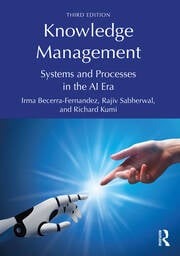
Knowledge management : Systems and processes in the AI era
Aimed at students and managers who seek detailed insights into contemporary knowledge management (KM). It explains the concepts, theories, and technologies that provide the foundation for knowledge management; the systems and structures that constitute KM solutions; and the processes for developing, deploying, and evaluating these KM solutions. It serves as a complete introduction to the subject of knowledge management, incorporating technical and social aspects, as well as concepts, practical examples, traditional KM approaches, and emerging topics. This third edition has been revised and expanded to include more coverage of emergent trends such as cloud computing, online communities, crowdsourcing and artificial intelligence.
Knowledge and Skill Chains in Engineering and Manufacturing : Information Infrastructure in the Era of Global Communications
Explores knowledge and skill chains in engineering and manufacturing in the age of global communications. Information infrastructure involves a range of activities from product planning, engineering, and manufacturing trough transportation, marketing, and repair/upgrade to returns and recycling/disposal. Distinct from the traditional engineering database, life-cycle support information has its own characteristic requirements, -- flexible extensibility, distributed architecture, multiple viewpoints, long-time archiving, and product usage information. Several authors address the architecture of the information infrastructure, its services and its requirements. Other papers focus on the knowledge and skill chains that develop in a variety of situations: the supply chain, the factory floor, the man-system interaction, etc. For each of these, state-of-the-art and state-of-research scenarios for various industrial sectors address both engineering and operations requirements in the current socio-economic environment.

Key Aspects of German Business Law : A Practical Manual
This book presents a clear and precise overview of the key aspects of German business law. It was written by attorneys involved in the daily practice of business law in Germany and is aimed at people who wish to orient themselves quickly with the German legal system and the manner in which it impacts business purchases, establishment, operations and liquidations. The first section of the book is devoted to an explanation of the major issues to be considered in acquiring or establishing a business in Germany. The second section focuses on areas of commercial law that are important for an operating business. The following sections deal with labor law as an independent part of German business law and with computer law. Furthermore, procedural law and European law are addressed. Finally, the last two sections of the book are devoted to an overview over the German tax law, which has an enormous impact on business decisions, and IP law.
Kanban-Controlled Manufacturing Systems
Kanban control systems bear a great potential to significantly improve operations. A company may reap the full benefits of kanban control only after determining an optimal or near-optimal system configuration. To do that, methods are needed to evaluate the performance and operating costs of individual system configurations. We propose an innovative construction-kit approach that enables us to build stochastic analytical models of a large class of single- and multi-product kanban systems. The presented construction-kit approach may be extended and augmented in various directions
Just-in-Time Scheduling : Models and Algorithms for Computer and Manufacturing Systems
As the field of Supply Chain Management has matured, maintaining the precise flow of goods to maintain schedules (hence, minimizing inventories) on a just-in-time basis still remains as a major challenge. This problem or challenge has resulted in a fair amount of quantitative research in the area, producing an array of models and algorithms to help ensure the precise flow of components and final products into inventories to meet just-in-time requirements.The scheduling models and algorithms presented and illustrated in the book will be done so in the context of extensive use of computer systems in a "real time context.

IT Security Controls : A Guide to Corporate Standards and Frameworks
Gives an overview of the major standards and frameworks, and a proposed architecture to meet them. The book identifies and describes the necessary controls and processes that must be implemented in order to secure your organization's infrastructure. The book proposes a comprehensive approach to the implementation of IT security controls with an easily understandable graphic implementation proposal to comply with the most relevant market standards (ISO 27001, NIST, PCI-DSS, and COBIT) and a significant number of regulatory frameworks from central banks across the World (European Union, Switzerland, UK, Singapore, Hong Kong, India, Qatar, Kuwait, Saudi Arabia, Oman, etc.). You will learn: Understand corporate IT security controls, including governance, policies, procedures, and security awareness Know cybersecurity and risk assessment techniques such as penetration testing, red teaming, compliance scans, firewall assurance, and vulnerability scans Understand technical IT security controls for unmanaged and managed devices, and perimeter controls Implement security testing tools such as steganography, vulnerability scanners, session hijacking, intrusion detection, and more

Component models and systems for grid applications ; Proceedings of the Workshop on Component Models and Systems for Grid Applications held June 26, 2004 in Saint Malo, France.
This first volume of the CoreGRID series addresses such vital issues as the architecture of the Grid, the way software will influence the development of the Grid, and the practical applications of Grid technologies for individuals and businesses alike. Part I of the book, Application-Oriented Designs, focuses on development methodology and how it may contribute to a more component-based use of the Grid. Middleware Architecture, the second part, examines portable Grid engines, hierarchical infrastructures, interoperability, as well as workflow modeling environments. The final part of the book, Communication Frameworks, looks at dynamic self-adaptation, collective operations, and higher-order components. With Component Models and Systems for Grid Applications, editors Vladimir Getov and Thilo Kielmann offer the computing professional and the computing researcher the most informative, up-to-date, and forward-looking thoughts on the fast-growing field of Grid studies.
