



الصفحة 1
الصفحة 1
Microplastic in the Environment : Pattern and Process
This book examines global plastic pollution, an issue that has become a critical societal challenge with implications for environmental and public health. This volume provides a comprehensive, holistic analysis on the plastic cycle and its subsequent effects on biota, food security, and human exposure. Importantly, global environmental change and its associated, systems-level processes, including atmospheric deposition, ecosystem complexity, UV exposure, wind patterns, water stratification, ocean circulation, etc., are all important direct and indirect factors governing the fate, transport and biotic and abiotic processing of plastic particles across ecosystem types.

Integrated Urban Water Resources Management
Growing populations and rising standards of living exert stress on water supply and the quality of drinking water. In wastewater management, new challenges are caused by new chemicals of concern, including endocrine disrupters, pharmaceuticals, hormones, and personal care products, which often pass through wastewater treatment plants unabated, but may cause serious impacts on receiving aquatic ecosystems. Advanced wastewater treatment leads to production of biosolids, which are processed in various ways, including on-land applications in agriculture. Municipal effluents, combined with increasing withdrawals of water, lead to the worsening of receiving water quality. Expert opinions indicate that the only way to deal with the current urban water management dilemmas is by integrated management and innovative delivery of water services. This book presents important aspects of Challenges in Management of Urban Water Resources, Challenges in Urban Water Supply, Urban Drainage and Water Bodies, Wastewater Treatment and Security, and Wastewater Treatment and Reuse.

Environmental Security in Harbors and Coastal Areas : Management Using Comparative Risk Assessment and Multi-Criteria Decision Analysis
This book explores the challenges facing coastal areas during the next few decades and the difficult decisions needed to prevent a repeat of the past. Establishing, maintaining or enhancing a sense of environmental security in different coastal regions and improving the management of critical infrastructure will require (i) matching human demands with available environmental resources; (ii) recognition of environmental security threats and infrastructure vulnerabilities; and, (iii) identification of the range of available options for preventing and/or minimizing natural disasters, technological failures, and/or terror actions. This book emphasizes beliefs that the convergence of seemingly disparate viewpoints and often uncertain and limited information is possible only by using one or more available risk assessment methodologies and decision-making tools such as multi-criteria decision analysis (MCDA).

Emerging Contaminants from Industrial and Municipal Waste : Removal Technologies
This book focuses on innovative treatment technologies for the elimination of emerging contaminants from wastewater and drinking water. The respective treatment processes, such as membrane bioreactors, photocatalysis, ozonation and advanced oxidation are dealt with in detail. The book also discusses sources and occurrence of emerging contaminants in municipal and industrial waste, giving a concise and critical overview of state-of-the-art analytical methods for their identification. Further important aspects covered by the book include the acute and chronic effects and overall impact of emerging contaminants on the environment.

Emerging Contaminants from Industrial and Municipal Waste : Occurrence, Analysis and Effects
This book focuses on innovative treatment technologies for the elimination of emerging contaminants from wastewater and drinking water. The respective treatment processes, such as membrane bioreactors, photocatalysis, ozonation and advanced oxidation are dealt with in detail. The book also discusses sources and occurrence of emerging contaminants in municipal and industrial waste, giving a concise and critical overview of state-of-the-art analytical methods for their identification. Further important aspects covered by the book include the acute and chronic effects and overall impact of emerging contaminants on the environment.

Efficient Management of Wastewater : Its Treatment and Reuse in Water-Scarce Countries
The book highlights non-conventional solutions within the field of wastewater treatment and reuse predominantly for professionals and decision makers. It focuses on technologies like anaerobic and extensive treatment of municipal, domestic wastewater and grey water which are reliable, sustainable, low cost and suitable for rural and sub urban areas. Additionally, particular innovative on site concepts are presented.

Computational Fluid Dynamics : Applications in Water, Wastewater and Stormwater Treatment
Provides a valuable introduction and overview of computational fluid dynamics and how it can be used in the water and wastewater industry. This book reviews procedures for conducting flow, transport, and reaction simulations using computational fluid dynamics along with specific practical examples.

Colloids for Nano- and Biotechnology
This volume contains a selection of the papers presented at the 9th Conference on Colloid Chemistry. A colloid chemical approach to nano- and biotechnology was one of the main topics of the meeting held in Siófok, Hungary in October 2007. It was organized by the Hungarian Chemical Society in cooperation with leading Hungarian universities and the Hungarian Academy of Sciences. The contributions demonstrated the progress of the field and supported that "The world of neglected dimensions" should not be neglected at all in modern material sciences and technologies. This volume is intended for professionals dealing with fundamental research or development of industrial applications, who encounter colloids, nanostructures, and interfacial phenomena during their work.
Managing Critical Infrastructure Risks
At the beginning of each year, there is a deluge of top-10 lists on just about every subject you can imagine. A top-10 list of biggest news stories, best-selling books, most popular music and movies, richest companies, and best places to visit or live. It seems everyone has his or her own top-10 list, reflecting, perhaps, differences in regional, national, and cultural values. Companies and governments most often tend to focus their top-10 lists on economic priorities, or priorities related to national defense, security, public health, and new infrastructure. This year, 2007, was no exception. Yet, increasingly, we see governments, private organizations, and companies advocating a new type of prioritization. This framework needs to reach beyond the realms of economics, world trade, and corporate management to include the environment, stakeholders, public preferences, and social goals. Moreover, corporations and individuals are not only interested in generic 10-best lists; they want lists tailored to their values, goals, and current economic and social state. For example, the U. S.
Biotechnology for Odor and Air Pollution Control
An international board of authors from universities, research institutes, and industries describe various biotechnological methods ranging from laboratory, to pilot evaluation and to full-scale process implementation. Topics include bioprocesses for the treatment of odors and air pollutants in wastewater treatment plants, rendering plants, chemical production facilities, and food and flavor manufacturing facilities. In addition to the basic microbiological and engineering aspects, the design, modeling and control of bioreactors are also presented.
Bioremediation of Soils Contaminated with Aromatic Compounds
Environmental biotechnology, which was in its infancy in the early 80's, has evolved thanks to the revolution brought about by molecular biology. Multiple successes in the biological cleanup of civil and industrial wastewater and of hydrocarbon soil pollution, demonstrate the vast power of clean technologies. In addition, the buildup of information on the activities of microorganisms as catalysts in all sorts of natural, industrial and animal environments has flourished. There is a continuing realization of the critical role of microbial processes in biological, industrial and geological systems. Since environmental biotechnology has matured, it is ready to tackle bigger challenges: the scaling up of many bioremediation systems still in progress, the search for novel biocatalysts for industrial applications, the continuing effort against common human life-threatening processes such as antibiotic resistance, the accumulation of hormone-mimicking substances (endocrine disrupters), the deposition of air-borne pesticides in the environment and, the degradation of recalcitrant contaminants. These endeavors will help prevent the contamination of food chains, protect human life and allow for human activity and economic development that do not compromise environmental sustainabijity.
Application of multi-criteria decision analysis in environmental and civil engineering
Provides a resource for students and researchers that includes current application of a multi-criteria, decision-making theory in various fields such as: environment, healthcare and engineering.
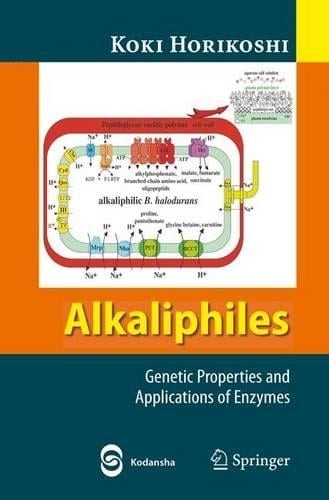
Alkaliphiles : Genetic properties and applications of enzymes
The pioneering work of Dr. Koki Horikoshi on the discovery, research and applications of alkaliphilic bacteria are described here in their entirety. The isolation, distribution and taxonomy of alkaliphilic microorganisms as well as their cell structure and physiology are discussed for a basic understanding of these entities. The molecular biology and genome sequencing of some alkaliphilic bacterial strains are also presented. Part II of the volume focuses on enzymes of alkaliphiles and their applications. These include alkaline proteases, starch-degrading enzymes and numerous others. Some of these enzymes are currently in wide commercial use as laundry detergent additives and in wastewater treatment. Alkaliphiles are a relatively recent field of research that will no doubt provide avenues to a wide range of further discoveries and applications for a new generation of workers in bioscience and technology.

Advanced Physicochemical Treatment Technologies ; Vol.5
In Advanced Physiochemical Treatment Technologies, leading pollution control educators and practicing professionals describe how various combinations of different cutting-edge process systems can be arranged to solve air, noise, and thermal pollution problems. Each chapter discusses in detail the three basic forms in which pollutants and waste are manifested: gas, solid, and liquid.
