


تحسين النتائح
ترتيب حسب
من
الى

The idea for Bioethics in Law began more than a decade ago, while I was studying social science and law. I was parti- larly interested in the collaborations that comprised social s- ence in law. Economic and social data in the pioneering Brandeis brief had been used to defend an early 20th-century labor law; surveys of consumer confusion had helped resolve trademark - fringement cases; psychologists’ predictions of future violence had informed capital sentencing decisions. Additionally, Kenneth Clark’s “doll studies,” cited by the Supreme Court in Brown v. Board of Education, had helped change the course of American 1 history.
Seeks to address the immediacy of COVID-19 by focusing on the implications of the virus in a wider interdisciplinary context Law, Humanities and the COVID Crisis</i> sets out a framework for understanding the COVID-19 virus beyond its epidemiological constraints, asking us to question the very definition of what it means to be human. Researchers from around the world offer their critical reflections on the past, present, and future of this period of sociocultural upheaval and the tremendous suffering that has laid bare fundamental imbalances in our society.
Examines social and medical responses to the disfigured face in early medieval Europe, arguing that the study of head and facial injuries can offer a new contribution to the history of early medieval medicine and culture, as well as exploring the language of violence and social interactions. Despite the prevalence of warfare and conflict in early medieval society, and a veritable industry of medieval historians studying it, there has in fact been very little attention paid to the subject of head wounds and facial damage in the course of war and/or punitive justice. The impact of acquired disfigurement —for the individual, and for her or his family and community—is barely registered, and only recently has there been any attempt to explore the question of how damaged tissue and bone might be treated medically or surgically..
This book's multi-layered emphasis on context, structural determinants of peace and conflict, and use of research for action towards social cohesion for children and youth has not been brought together in other peace psychology literature to the same extent. Children and Peace: From Research to Action will be a useful resource for peace psychology academics and students, as well as social and developmental psychology academics and students, peace and development practitioners and activists, policy makers who need to make decisions about the matters covered in the book, child rights advocates and members of multilateral organizations such as the UN.
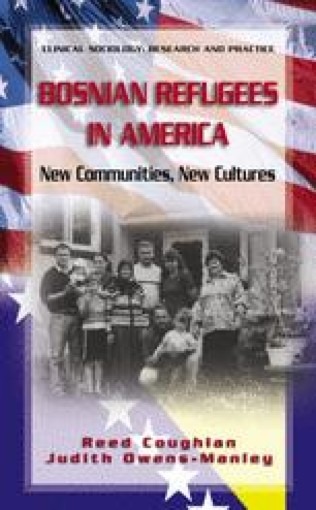
The book considers the diverse experiences of urban and rural families before the war and the effects of the timing of their departure from Bosnia upon their experience of resettlement.
The main objective of this book is to make available to an informed audience a le gal and policy oriented study on accountability for serious human rights and inter national humanitarian law violations. It is an attempt to share the lessons learnt in accountability for atrocity crimes as conducted by the International Criminal Tri bunal for Rwanda (ICTR), and the United Nations Transitional Administration in East Timor (UNTAET). The former established subsequent to egregious atrocities that took place in 1994, and the latter following the massive outburst of violence in 1999. The book is based on two cases: Rwanda and East Timor. It is expected that it will serve as reference literature to both the legal community and policy makers on accountability for heinous international crimes.

سوريا - اتستراد درعا - غباغب
+963-15 2050 - 15 860 380 /1/2/3 - 11 662 3900